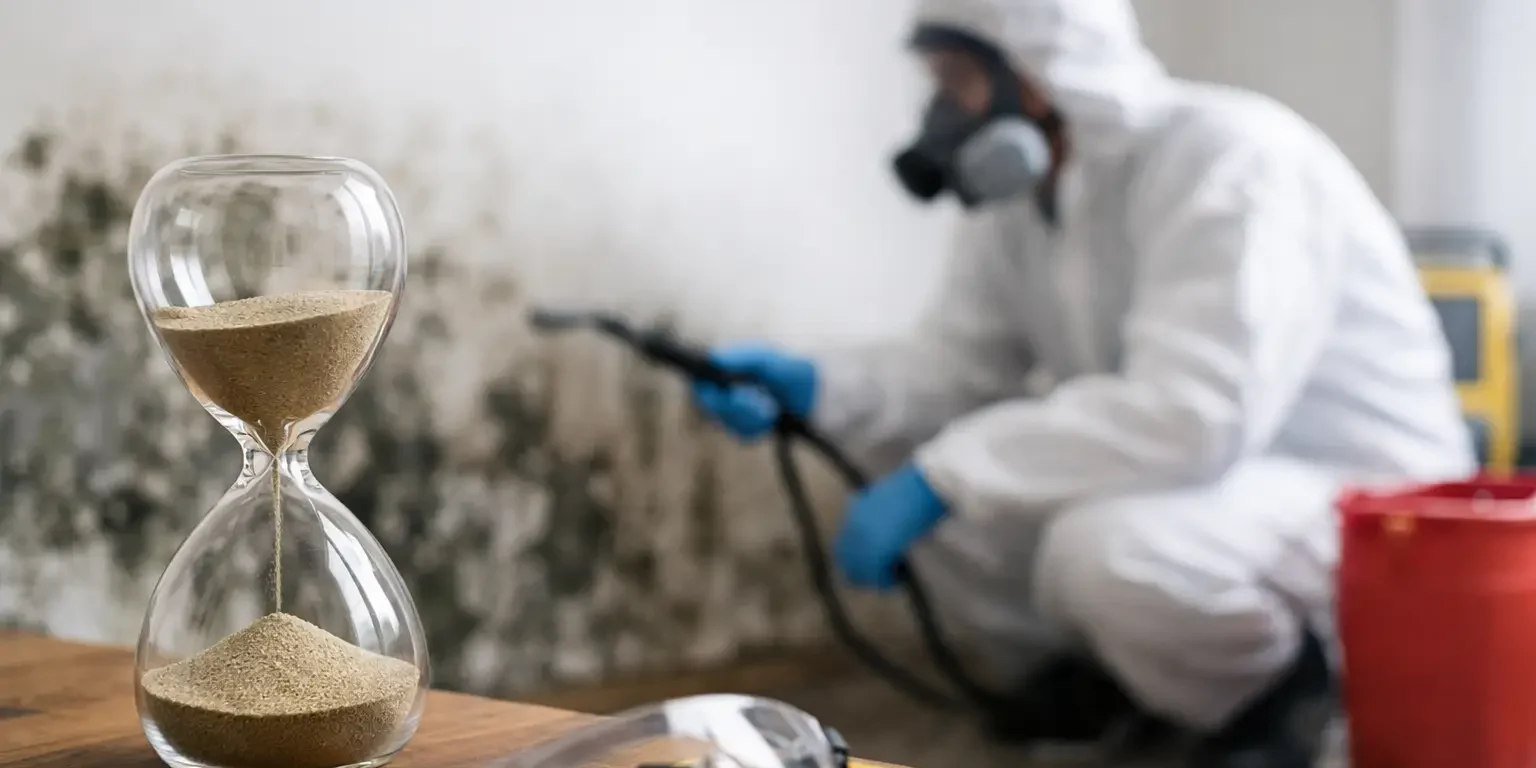
You spot mold behind a bathroom vanity or smell it in a basement after water damage, and the first question is usually not technical. It is practical: how long does mold remediation take? The honest answer is that some projects are finished in a day, while others take a week or more. The timeline depends less on the mold itself and more on how far contamination spread, whether moisture is still active, and whether the work is being handled correctly the first time.
A qualified remediation company should never promise a one-size-fits-all schedule before inspecting the property. Fast service matters, but speed without proper diagnosis can leave hidden contamination behind. For homeowners, property managers, and business owners, the real goal is not just quick removal. It is safe, standards-based cleanup that addresses the source so the mold does not return.
How long does mold remediation take in a typical property?
For a small, isolated area with a clear moisture source that has already been corrected, remediation may take one to two days. That usually includes containment, removal of affected porous materials if needed, HEPA vacuuming, cleaning, and drying verification.
A moderate project often takes three to five days. This is common when mold has spread into drywall, insulation, cabinetry, or multiple connected rooms. In those cases, the crew may need more time for controlled demolition, detailed cleaning, air filtration, and post-remediation drying.
Large or complex losses can take five to seven days or longer. Commercial spaces, occupied buildings, crawl spaces, attic systems, HVAC-related contamination, and properties with ongoing leaks tend to extend the schedule. If reconstruction is needed after remediation, that is a separate phase and adds additional time.
What affects how long mold remediation takes?
The biggest factor is moisture. Mold grows because the environment allowed it to grow, so the source of water or humidity has to be identified and corrected before cleanup can be considered complete. If there is an active roof leak, plumbing leak, drainage issue, or heavy humidity load, remediation may pause until the conditions are under control.
The size of the affected area matters too, but square footage alone does not tell the whole story. A small visible patch can be the surface sign of a much larger hidden problem inside a wall cavity, under flooring, or behind built-ins. That is why professional inspection and, when appropriate, testing are so important at the front end.
Material type also changes the timeline. Non-porous and semi-porous materials can sometimes be cleaned successfully if the damage is limited. Porous materials such as drywall, insulation, carpet padding, and certain ceiling materials often need removal. Demolition, bagging, and disposal add labor and time, especially when the work must be done under full containment.
Occupancy and access can also slow things down. A vacant basement is simpler than a busy office, an occupied apartment, or a retail location that needs phased work to reduce disruption. In those settings, careful containment and scheduling become just as important as the physical cleanup.
The mold remediation timeline, step by step
Inspection and scope development
This phase can happen the same day or within 24 hours when a company is set up for rapid response. The purpose is to determine where the mold is, how far it spread, what caused it, and what level of containment will be required.
In straightforward cases, the scope can be developed quickly. In more complicated properties, additional moisture mapping or testing may be needed before a remediation protocol is finalized. That can add a day, but it often saves several days of rework later.
Containment setup
Containment usually takes a few hours to a full day, depending on the size of the work area. This is where trained technicians separate the affected area from the rest of the building using critical barriers and negative air pressure when needed.
This step is not optional theater. Proper containment protects indoor air quality and limits cross-contamination. When unqualified contractors skip it to move faster, mold spores and dust can spread into clean areas, turning a localized issue into a larger one.
Removal and cleaning
This is the core of the project and often takes one to three days for standard residential jobs. Affected materials are removed where necessary, surfaces are cleaned, and the area is treated according to the remediation plan.
The timing depends on how much material is compromised and how accessible it is. Open basement framing is faster than removing contaminated drywall behind cabinets, inside soffits, or around mechanical systems. Commercial jobs may also require after-hours scheduling, which stretches the calendar even when total labor hours stay similar.
Drying and moisture control
If the area is still damp, drying can take another one to three days, sometimes longer. Air movers, dehumidifiers, and moisture monitoring may be needed before the space is ready for final verification.
This is one of the most misunderstood parts of the process. People often assume mold remediation is done when the visible staining is gone. In reality, if structural materials still hold excess moisture, the conditions for regrowth remain.
Final verification or clearance
Depending on the project, final verification may happen the same day the cleanup ends or the next day after drying goals are met. Some properties require a formal post-remediation evaluation or clearance testing, especially when health concerns, tenant disputes, property transactions, or commercial documentation are involved.
That extra step adds a little time, but it can provide important proof that the work area has been returned to a normal condition.
Small jobs vs. major contamination
A small bathroom ceiling affected by a minor plumbing issue may be resolved quickly. If the leak is repaired, the damaged material is limited, and the mold has not spread beyond the immediate area, the entire job can move fast without cutting corners.
A basement with chronic humidity, stored contents, and hidden wall damage is different. Even when the visible mold seems limited, remediation crews may uncover broader contamination after containment and selective demolition begin. That does not mean anyone is exaggerating the problem. It means mold problems often look smaller before the work starts.
This is also why low-price, rushed estimates can become expensive. A contractor who skips proper inspection may quote a short timeline simply because they have not identified the full scope. That may sound appealing in the moment, but it often leads to repeat remediation, indoor air complaints, or unfinished moisture issues.
Can mold remediation be done in one day?
Yes, but only in the right circumstances. A one-day remediation is realistic when the affected area is small, the moisture source has already been corrected, access is easy, and there is no need for extended drying or major material removal.
What should raise concern is a blanket promise that every mold job can be completed in one day. That kind of sales pitch puts speed ahead of procedure. A certified company should be able to explain what can be done immediately, what may require more time, and why.
How to avoid delays without rushing the job
The best way to shorten the project is to act early. Mold spreads when moisture and time work together, so a problem caught quickly is almost always easier to contain and less disruptive to fix.
It also helps to choose a company that can handle inspection, protocol development, remediation, and moisture control in a coordinated way. When diagnosis and cleanup are disconnected, delays tend to show up between phases. Clear documentation, trained crews, and standards-based work usually move faster than guesswork.
Property owners can help by making the work area accessible, removing unaffected valuables when instructed, and responding quickly to recommendations for leak repair or humidity correction. That does not replace professional remediation, but it can keep the schedule on track.
When longer is actually better
No one wants a prolonged remediation project, especially in a family home or active business. Still, a slightly longer timeline can be the right call if it means the containment is tighter, the drying is complete, and the source problem is fully corrected.
That is particularly true in older homes, multi-unit buildings, and commercial properties where hidden conditions are more common. In those settings, careful work protects more than the immediate area. It protects occupants, neighboring spaces, and the long-term value of the property.
For clients across New Jersey and nearby service areas, the best remediation companies move quickly where speed is appropriate and slow down where safety requires it. That balance matters. Mold problems are stressful enough without adding careless shortcuts.
If you are asking how long does mold remediation take, you are really asking how soon your property can be made safe again. The answer starts with a proper inspection, a clear scope, and a team that treats source correction and containment as seriously as cleanup. Done right, the process is as fast as it can be and as thorough as it needs to be.