You spot dark staining behind a dresser, smell something musty in the basement, or notice a tenant complaining about headaches after a leak. That is usually the moment the question becomes urgent: mold specialist vs contractor – who should you actually call first? The wrong choice can waste money, miss the moisture source, and leave contamination behind where it keeps spreading.
This is where many property owners get tripped up. A general contractor may be excellent at rebuilding drywall, replacing trim, or repairing a roof. But mold is not just a construction issue. It is an indoor environmental issue tied to moisture, air movement, containment, cleaning methods, and occupant safety. If the job starts with the wrong person, the problem often gets covered up instead of corrected.
Mold specialist vs contractor: the real difference
A mold specialist is trained to evaluate contamination as a health and building performance issue, not just a damaged-material issue. That means looking at where moisture came from, how far contamination may have spread, whether the affected area needs containment, and what remediation steps are required to return the space to normal conditions.
A contractor, by contrast, is typically focused on repair and reconstruction. Some contractors have real mold experience, but many do not follow formal remediation procedures. They may remove visible material and rebuild quickly without testing the extent of spread, controlling cross-contamination, or addressing airborne particles. That can leave mold inside wall cavities, HVAC pathways, insulation, subflooring, or other hidden areas.
The distinction matters because mold does not always stay where you can see it. A bathroom leak may affect the adjacent closet. A roof issue can spread into attic framing and insulation. A flooded lower level can contaminate porous contents and push spores through the air if demolition starts without proper containment.
What a mold specialist is trained to do
A qualified mold specialist starts with diagnosis. That means inspecting the affected area, identifying water intrusion or humidity problems, evaluating how building materials were impacted, and determining whether testing or sampling makes sense. Not every job needs the same level of testing, and honest specialists will say that. The point is to define the problem correctly before anyone starts tearing things apart.
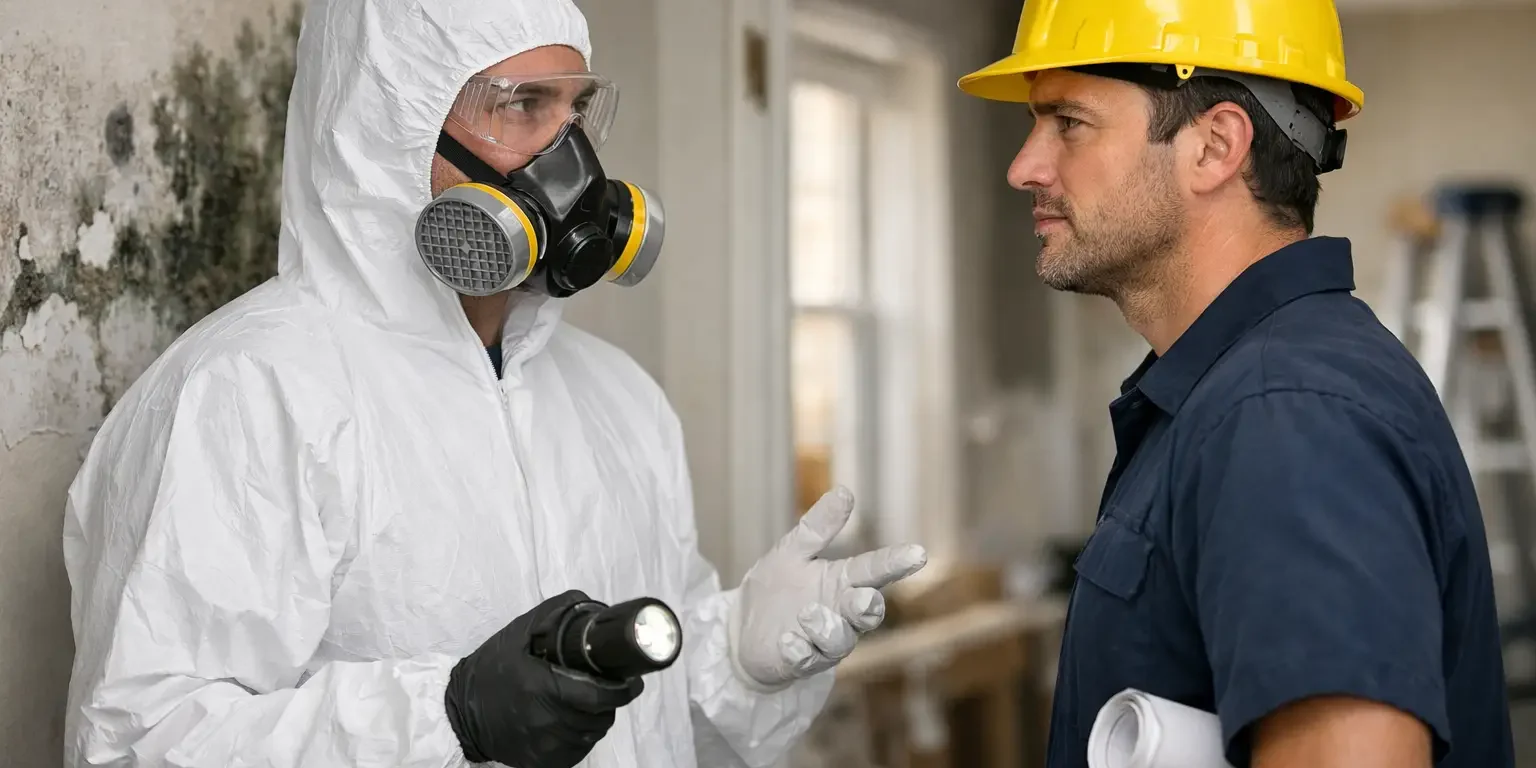
From there, a specialist develops a remediation approach based on the actual conditions. That may include isolating the work zone, using negative air pressure, removing unsalvageable porous materials, cleaning structural surfaces, filtering the air, and verifying that the moisture source has been corrected. The work should follow recognized industry procedures, not improvisation.
That standards-based process is what protects the rest of the property. If moldy drywall is ripped out without containment, spores and debris can spread into clean rooms. If contaminated materials are bagged carelessly, hallways and occupied areas can be exposed. If the leak or humidity issue remains, mold often returns even after expensive repairs.
What a contractor does well – and where the limits are
Contractors are essential once repairs are needed. If a pipe burst behind a wall, somebody may need to rebuild framing, install drywall, paint, replace cabinets, or restore flooring. That is legitimate construction work, and a good contractor plays an important role.
The problem starts when the contractor handles the entire mold issue as if it were only a demolition and rebuild job. Painting over staining, spraying a store-bought product, or replacing one visible section of drywall may make the area look better for a while. It does not tell you whether contamination spread beyond that section, whether the framing is clean, or whether the indoor air was affected during the work.
This is why the answer to mold specialist vs contractor is often not either-or. It is sequence. The specialist should evaluate and define the problem first. The contractor may come in later for rebuilding after remediation is complete, or work alongside a qualified remediation team when scopes are clearly separated.
When a mold specialist should be your first call
If the growth is visible, there is a persistent musty odor, water damage happened more than a day or two ago, or people in the building are worried about air quality, start with a mold specialist. The same applies if the contamination appears around HVAC components, inside wall cavities, under flooring, or across multiple rooms.
You should also start with a specialist if the building is occupied by children, older adults, tenants, employees, or anyone with respiratory sensitivity. Not all mold is dangerous, and scare tactics help no one. But improper disturbance can still make a manageable situation worse.
For commercial properties and managed buildings, the stakes are even higher. A rushed cleanup can create liability, disrupt operations, and trigger complaints from occupants if odor and dust spread. A documented inspection and remediation plan gives property managers a clearer path and helps avoid guesswork.
When a contractor may be enough
There are limited situations where a contractor may be the appropriate first call. If a clean water source caused obvious damage and materials were dried immediately, there may be no mold issue at all. In that case, repair work may be straightforward.
A contractor may also be enough after a mold specialist has already inspected, written the scope, and confirmed that only minor reconstruction remains. The key is that the environmental side of the problem has been addressed first. Without that step, you are relying on assumptions.
Red flags that you are talking to the wrong company
If someone recommends demolition before inspection, promises to kill all mold with a quick spray, or insists every mold issue is a major toxic emergency, step back. Reliable professionals do not diagnose from fear. They diagnose from evidence.
Be cautious if the company cannot clearly explain how it will contain the work area, protect adjacent rooms, remove contaminated materials, or correct the moisture source. The same goes for anyone who treats staining as proof of current active growth without checking whether the material is dry, whether the source is ongoing, and whether the problem has spread.
Strong remediation work is methodical. It should sound disciplined, not dramatic.
Why source correction matters more than quick cleanup
Many failed mold jobs have one thing in common: nobody fixed the reason mold grew in the first place. The visible contamination gets scrubbed or removed, but the crawl space stays damp, the bathroom exhaust still vents poorly, the roof leak continues, or the basement humidity remains high.
A mold specialist is trained to connect contamination to conditions. That matters because mold is a symptom as much as it is a substance. If the symptom is removed and the condition remains, the clock simply starts again.
For homeowners, that means repeat expense and frustration. For landlords and commercial owners, it can mean recurring complaints, damaged finishes, and avoidable vacancy or downtime.
The cost question: specialist first or contractor first?
Some people call a contractor first because it feels cheaper. On paper, it may look that way. In practice, skipping proper evaluation often leads to partial demolition, missed contamination, repeated repairs, and a second company coming in later to redo the work correctly.
Starting with a mold specialist can feel like adding a step, but it often prevents expensive mistakes. You get a clearer picture of the scope, a safer work plan, and a better chance of solving the problem once. That is especially true in homes with hidden moisture damage or in larger buildings where contamination can move beyond the original leak area.
In parts of New Jersey and nearby markets where basements, crawl spaces, coastal humidity, and storm-related water events are common, accurate diagnosis matters even more. Buildings in these conditions do not benefit from guesswork.
The best outcome usually involves both – in the right order
The most effective jobs usually involve a specialist for inspection, testing when appropriate, protocol development, and remediation, followed by a contractor for reconstruction if materials were removed. Each professional handles the part of the job they are actually trained for.
That division protects health, protects property, and protects your budget. It also creates accountability. You know who identified the source, who managed containment and cleanup, and who rebuilt the finished space.
If you are comparing companies now, ask direct questions. Who identifies the moisture source? Who decides what needs removal? How is the work area contained? What standards are followed? What happens if mold is found beyond the visible area? Clear answers are usually a sign you are speaking with the right type of professional.
For property owners who need fast, credible help, this is the practical answer to mold specialist vs contractor: call the specialist first when mold is suspected, then bring in a contractor for repairs once the contamination has been properly addressed. A wall can always be rebuilt. Your indoor air and safety need to be handled correctly from the start.