You do not need a burst pipe or major flood to end up with mold. A lot of property owners ask, can mold grow from humidity, especially when they notice a musty smell, condensation on windows, or dark spotting in bathrooms, basements, or closets. The short answer is yes. If indoor humidity stays high long enough, mold can begin growing on surfaces that collect moisture, even without obvious water damage.
That matters because humidity-driven mold problems are easy to dismiss at first. People often assume the space just feels damp, the AC needs adjusting, or the bathroom needs a better fan. Sometimes that is true. But when excess moisture remains unresolved, the problem can move from minor surface growth to a larger indoor air quality and property condition issue.
Can mold grow from humidity alone?
Yes, mold can grow from humidity alone when the moisture level in the air is high enough to keep building materials damp. Mold does not need standing water. It needs moisture, a food source, and time. Drywall, wood, insulation backing, dust, fabric, and cardboard all provide enough organic material for growth once humidity creates the right conditions.
In practical terms, this often happens in bathrooms with poor ventilation, basements with chronic dampness, attics with trapped heat and moisture, and HVAC systems that are not controlling indoor moisture properly. It can also happen in apartments, offices, and retail spaces where air circulation is limited and humidity remains elevated day after day.
The key distinction is this: humidity may not look as dramatic as a leak, but the mold risk is still real. In some buildings, it is actually harder to catch because the moisture source is spread through the air rather than coming from one obvious plumbing failure.
Why high humidity creates mold conditions
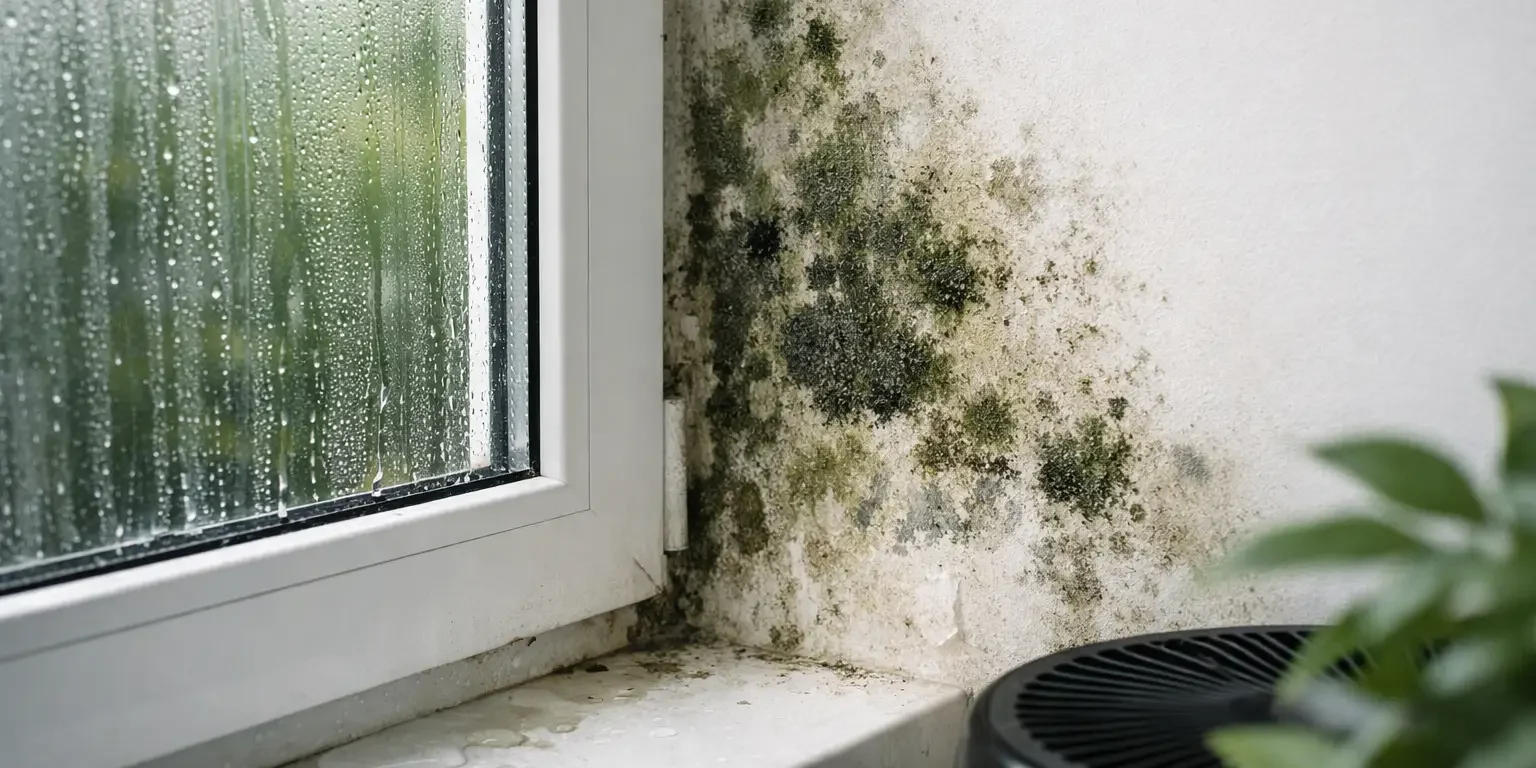
When indoor relative humidity stays too high, moisture starts settling onto cooler surfaces. That includes window frames, exterior walls, vents, pipes, ceilings, and the contents of closets or storage rooms. Over time, those surfaces can remain damp enough for mold spores to colonize.
Mold spores are already present in normal indoor and outdoor air. The issue is not whether spores exist. The issue is whether indoor conditions allow them to grow. High humidity changes the environment from dormant to active.
This is one reason professional diagnosis matters. If someone only wipes visible growth off a wall without reducing the humidity load, the mold often returns. Effective remediation depends on source correction first, not just surface cleaning.
The humidity level where problems start
There is not one magic number for every building, but indoor humidity that regularly rises above 60 percent starts increasing mold risk. The longer that level persists, the greater the chance of growth. Some sensitive areas can develop problems even sooner, especially where air movement is poor or surfaces stay cooler than the rest of the room.
That is why two homes with the same thermostat setting can behave very differently. One may stay dry because it has balanced ventilation and proper dehumidification. Another may quietly build up moisture behind furniture, inside closets, or around supply vents.
Common places mold grows when humidity is the source
Humidity-related mold often shows up where moisture lingers and people do not inspect closely. Bathrooms are common, especially around ceilings, grout lines, vanity cabinets, and exhaust fans. Basements are another major trouble spot because they naturally run cooler and can hold damp air.
Bedrooms along exterior walls, walk-in closets, laundry rooms, crawl spaces, and attics also deserve attention. In commercial buildings, you may see issues around HVAC registers, perimeter walls, storage areas, and poorly ventilated restrooms.
What makes these areas tricky is that the first visible staining may only reflect part of the problem. A small patch on painted drywall can indicate a broader moisture condition behind the surface or throughout the room.
Signs the mold problem is being driven by humidity
If you are trying to tell whether a humidity issue is feeding mold growth, patterns matter. You may notice condensation on windows in the morning, a persistent musty odor, or mildew-like spotting that keeps returning after cleaning. Paint may bubble, drywall tape may lift, or fabrics in storage may smell stale and damp.
Another clue is that the growth appears in multiple areas instead of around one leak point. If mold is showing up in corners, closets, bathroom ceilings, and lower basement walls at the same time, widespread moisture imbalance is often the more likely cause.
This does not mean you should guess. A trained mold inspector should still verify whether you are dealing with active mold, old staining, elevated airborne spores, hidden moisture, or a combination of issues.
When humidity mold becomes a health and property concern
Not all mold is dangerous, and responsible professionals should say that clearly. But that does not mean it should be ignored. Any ongoing mold growth signals a moisture problem that can spread, damage materials, and affect indoor air quality.
For homeowners, that can mean ruined drywall, warped trim, damaged contents, and recurring odor. For property managers and business owners, it can also mean tenant complaints, occupant discomfort, disrupted operations, and larger remediation costs if the issue expands.
People with asthma, allergies, or respiratory sensitivity may notice symptoms sooner, but even in buildings without health complaints, a persistent moisture condition should be corrected quickly. The longer the environment stays favorable to growth, the more complicated cleanup can become.
What to do if you suspect mold from humidity
Start with moisture control, not panic. If indoor humidity is consistently high, use a hygrometer to confirm readings and pay attention to where condensation forms. Running bathroom exhaust fans, improving airflow, servicing HVAC equipment, and using dehumidification can help reduce conditions that support growth.
But if mold is already visible, repeated DIY cleaning is not always the right answer. Bleach and store-bought sprays do not solve hidden moisture, and improper disturbance can spread spores to cleaner areas of the property. That is especially true if the affected area is larger than a small isolated patch, keeps returning, or appears on porous materials like drywall or insulation.
In those cases, the right next step is a professional inspection. A qualified mold specialist should identify whether humidity is the actual source, measure moisture conditions, determine how far contamination has spread, and outline a remediation plan that addresses both removal and prevention.
Why inspection comes before remediation
The biggest mistake property owners make is treating mold as a cleaning problem when it is really a moisture problem. If high humidity is driving the growth, the job is not finished until the indoor environment is brought back under control.
That is why a standards-based process matters. Proper evaluation should look at the building as a system – ventilation, insulation, air movement, HVAC performance, surface temperatures, and hidden moisture conditions. Once the source is understood, remediation can be performed with the right containment and safety procedures.
This is where certified specialists separate themselves from general contractors or fear-based sales companies. A trustworthy firm will not assume every stain is toxic, and it will not skip the diagnosis stage. It will verify the conditions, explain the scope clearly, and correct the source before calling the job complete.
For property owners in New Jersey and surrounding service areas, that level of discipline matters. In humid climates and densely occupied buildings, mold problems often come from a mix of seasonal moisture, ventilation issues, and hidden building performance defects. Certified Mold Removal Inc. approaches that process the right way – inspect first, identify the source, and remediate safely.
How to prevent humidity from causing mold again
Prevention is usually less about one product and more about controlling conditions consistently. Keep indoor humidity in a healthy range, especially in basements, bathrooms, and laundry areas. Make sure exhaust fans vent properly and are actually used. Service HVAC systems on schedule, and address condensation as soon as it appears instead of waiting for staining.
It also helps to avoid trapping still air against cool walls. Furniture pushed tightly into corners, overpacked closets, and closed-off storage rooms can all create microclimates where mold starts quietly. In some buildings, insulation or ventilation upgrades may be needed to stop recurring problems.
If mold has already appeared once, do not assume the issue is solved just because the surface looks clean. The real test is whether the moisture conditions that allowed growth in the first place have been corrected.
If your building smells musty, shows recurring spotting, or feels damp no matter how much you clean, trust the pattern. Humidity-related mold is real, and the earlier you address the source, the easier it is to protect the property and the people inside it.