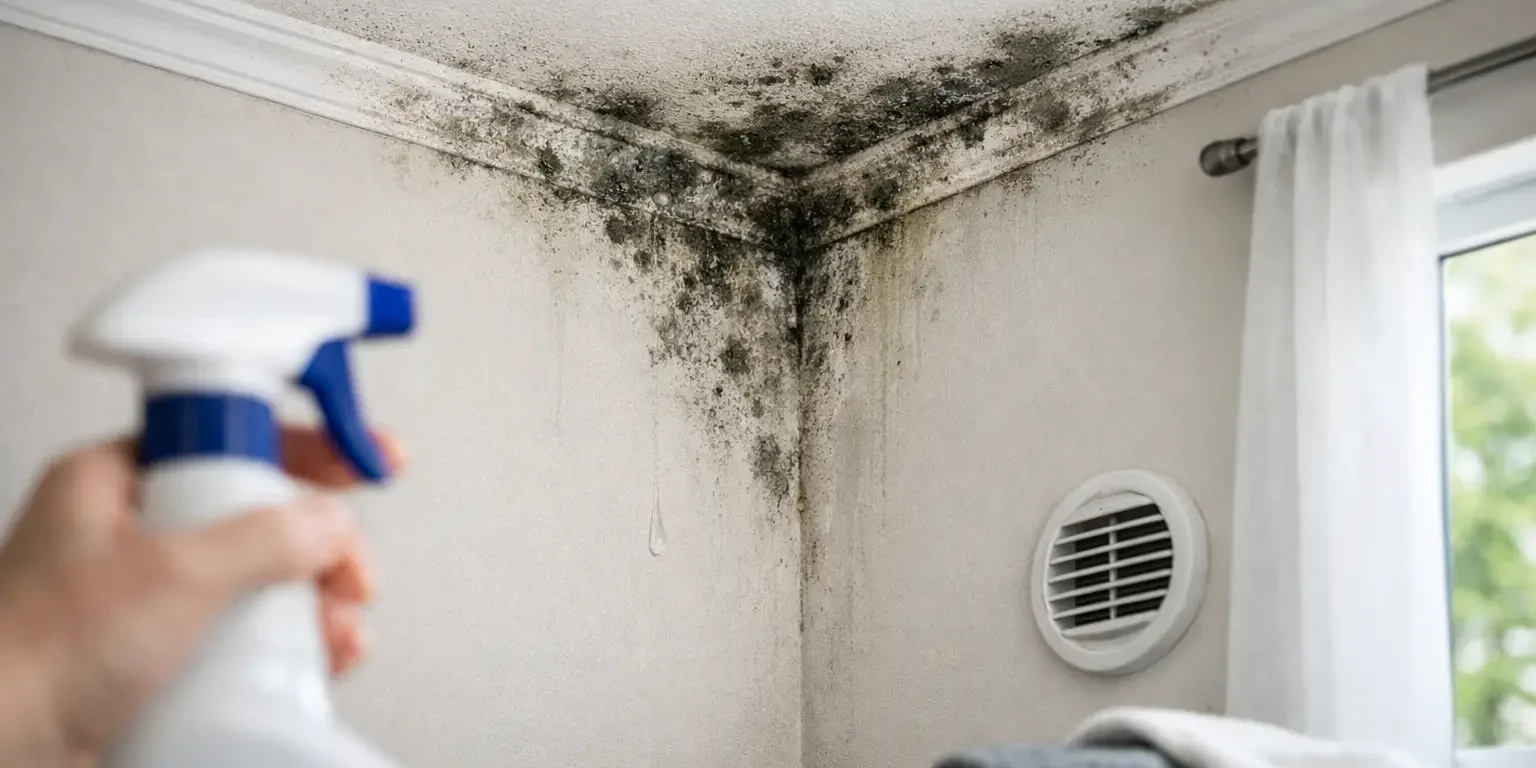
You wipe it away, repaint the wall, run a fan for a few days – and then the staining comes back. If you are asking why does mold keep returning, the answer is usually not the mold itself. The real issue is that the moisture problem, contamination behind materials, or cleanup method was never fully corrected.
That matters because recurring mold is not just a cosmetic nuisance. It can signal an active leak, elevated humidity, hidden growth inside walls, or an incomplete remediation job that left affected materials or spores behind. The longer that cycle continues, the more likely it is that damage spreads and indoor air quality suffers.
Why does mold keep returning after cleaning?
In most homes and commercial buildings, mold returns for one of three reasons. There is still moisture feeding it, there is still hidden contamination that was not removed, or the original cleanup disturbed growth without proper containment and source correction.
Mold needs moisture more than anything else. It does not require a dramatic flood to come back. A slow pipe drip inside a wall, condensation around HVAC lines, poor bathroom ventilation, a damp basement corner, or a roof leak that only appears during heavy rain can be enough. If the material stays damp or repeatedly gets humid, mold has what it needs.
The second issue is incomplete removal. Surface cleaning may make an area look better, but if mold has penetrated drywall, insulation, subflooring, baseboards, or the cavity behind a cabinet, the visible patch was only part of the problem. Painting over it or spraying store-bought products often hides the evidence without solving the condition.
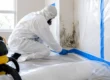
The third issue is poor remediation practice. Not all contractors handle mold correctly, and not every dark stain is dangerous mold. Proper diagnosis comes first. If someone skips inspection, ignores moisture mapping, or removes contaminated material without containment, spores can spread into adjacent areas and create a bigger problem than the one you started with.
The moisture source is usually the real culprit
When clients ask why mold keeps returning in the same spot, we look upstream. Mold is a symptom. Moisture is the cause.
Bathrooms are a common example. If the exhaust fan is undersized, broken, or not venting properly, humidity lingers on ceilings and drywall after every shower. You can scrub the ceiling as many times as you want, but if the room stays damp each day, the growth often comes back.
Basements and crawl spaces create a similar pattern. Ground moisture, poor drainage, foundation seepage, and unconditioned air can keep those areas chronically humid. Even if the mold patch is small, the conditions that support it may be present across a much larger area.
In kitchens and laundry rooms, recurring mold may point to small plumbing leaks, appliance line leaks, or condensation that goes unnoticed behind walls and cabinets. In attics, the issue may be roof intrusion, poor insulation, or ventilation imbalance that allows condensation to form on colder surfaces.
This is why standards-based remediation always starts with identifying where the water or humidity is coming from. If the source is not corrected first, cleanup becomes temporary.
Hidden mold is often missed
One reason recurring mold frustrates property owners is that the visible area can be misleading. The patch on the wall or around a window may be the last place moisture shows up, not the first place the problem started.
Water travels. A roof leak can stain one section of ceiling while wetting insulation several feet away. A pipe leak in an upper wall can move downward and saturate framing, drywall, and flooring before any obvious sign appears. HVAC systems can also distribute moisture and particulates in ways that make the source harder to trace without proper inspection.
If the visible mold was cleaned but the hidden reservoir remained, regrowth is not surprising. This is especially common after DIY cleanup or after a general contractor treats mold like ordinary dirt instead of an environmental condition that requires controlled procedures.
Signs the problem may be behind surfaces
Recurring staining, peeling paint, a persistent musty odor, warped trim, bubbling drywall, or one area that always feels damp are all clues that surface cleaning is not enough. The same is true if mold reappears quickly after treatment. Fast return usually means active moisture or concealed contamination is still present.
Why bleach and paint rarely solve it
A lot of property owners are told to use bleach, primer, or fresh paint. Those approaches may improve appearance for a short time, but they do not reliably address the reason mold came back.
Bleach is often misunderstood. On non-porous surfaces, some cleaning products can help remove residue. But on porous building materials like drywall, wood, and insulation, the issue is deeper than the surface. If the material remains damp or contaminated internally, wiping the face of it is not a complete fix.
Paint creates another false sense of resolution. If the wall was never dried properly or contaminated material was not removed, paint simply covers evidence. Moisture then builds again underneath, and the staining or spotting returns.
There is also a safety concern. Disturbing mold without the right controls can release spores into the air. That does not mean every small spot is an emergency, but it does mean aggressive DIY demolition or uncontained cleanup can make a localized issue harder to manage.
The building conditions that keep feeding mold
Some repeat mold problems are tied less to one leak and more to the way the building performs over time.
Poor ventilation is a major factor. Bathrooms, laundry rooms, and some commercial spaces generate a lot of moisture. If air exchange is poor, humidity settles on cool surfaces and supports repeated growth.
Insulation and temperature differences also matter. Cold exterior walls, around-window areas, attic sheathing, and HVAC ducts can collect condensation when warm indoor air meets cooler surfaces. In winter, this often shows up around windowsills, corners, and closets on exterior walls.
Then there is simple indoor humidity. If levels stay too high, mold can return even without an active leak. That is common in basements, older homes, tightly sealed buildings with poor ventilation, and properties recovering from prior water damage. Dehumidification can help, but only if it is part of a broader correction plan.
When recurring mold means the first remediation was incomplete
Not every remediation job is equal. If mold returned after professional work, that does not automatically mean the property has a new leak. It may mean the earlier scope was too limited, the moisture source was misdiagnosed, or contaminated materials were left behind.
A proper process should answer a few basic questions. What caused the moisture? How far did the contamination spread? Which materials can be cleaned and which must be removed? How will the work area be contained to protect the rest of the property? How will drying and clearance be verified?
If those questions were never clearly addressed, recurrence is more likely. This is one reason experienced homeowners, property managers, and business owners often prefer certified specialists over general cleanup crews. The goal is not just to make mold disappear. The goal is to return the environment to normal conditions safely and prevent the same problem from repeating.
What to do if mold keeps coming back
Start by treating repeat growth as a moisture investigation, not a cleaning project. If the area is small, isolated, and clearly tied to everyday condensation, improving ventilation and controlling humidity may solve it. But if the mold keeps returning in the same place, spreads beyond one surface, appears after water damage, or is accompanied by odor and material damage, a deeper inspection is warranted.
That inspection should focus on source identification first. The key questions are whether there is an active leak, elevated moisture in building materials, hidden contamination, or a building-performance issue such as poor ventilation or condensation. Testing is not necessary in every single case, but in many situations it helps clarify what is present, how far it has spread, and whether adjacent areas are affected.
For occupied homes, tenant spaces, offices, and commercial buildings, there is also a practical reason not to delay. Mold problems that seem minor at first can expand quietly behind walls, inside ceilings, and under flooring. By the time the staining becomes obvious, the repair scope is often larger.
In regions with humid summers, older housing stock, mixed-use buildings, and storm-related water events – including many properties across New Jersey and nearby service areas – recurring mold is especially often tied to unresolved moisture conditions rather than bad luck.
If you are still wondering why does mold keep returning, the safest answer is this: something in the environment is continuing to support it. Find that condition, correct it properly, and the cycle usually stops. When the cause is not obvious, certified inspection and remediation are not overkill – they are how you avoid paying twice for the same problem.