A musty smell that shows up every morning, gets stronger after rain, or lingers in one room is usually telling you something specific – moisture is active somewhere it should not be. That is why musty odor source detection should never start with air fresheners, bleach, or a quick wipe-down. It starts with finding where water, humidity, or hidden microbial growth is feeding the odor.
For homeowners and property managers, the mistake is often assuming the smell itself is the problem. It is not. The odor is the symptom. The real issue may be a slow plumbing leak behind a vanity, damp drywall inside a basement wall, wet insulation in an attic, or an HVAC system holding condensation and distributing that smell through the building. If the source is missed, the odor usually returns.
Why musty odor source detection requires more than a surface check
Musty odors are commonly linked to mold growth, but not every musty building has a major mold problem, and not every mold issue is obvious on sight. That matters because fear-based assumptions lead people to overspend, while casual assumptions allow water damage and indoor air quality problems to spread.
A proper evaluation looks at conditions, not just stains. Moisture history, current humidity, airflow, material type, and occupant reports all matter. A carpet that smells musty may not be the origin point. It may simply be absorbing odor from a nearby crawl space, wall cavity, or air handler. The same is true in commercial settings, where one complaint in an office suite may actually trace back to a shared roof leak or a poorly drained HVAC component.
This is also why repainting, caulking, or cleaning visible spots rarely solves the issue for long. If materials remain damp, the odor source remains active.
The most common places musty odors begin
Bathrooms are a frequent starting point because they combine humidity, plumbing, and enclosed spaces. The visible surfaces may look clean, while moisture sits behind tile, under flooring, or inside drywall around tubs and shower pans. A room that smells worse after a hot shower often points to humidity imbalance or hidden moisture, not just poor housekeeping.
Basements are another common problem area. Even without flooding, they can hold enough chronic dampness to create odor in framing, carpeting, stored contents, and lower wall materials. In older homes, moisture intrusion may come through foundation walls. In newer homes, finished basements can conceal the issue until the smell moves upstairs.
Attics are often overlooked because people associate musty odor with below-grade moisture. But roof leaks, poor ventilation, and bathroom exhaust fans discharging improperly can create damp insulation and wood sheathing overhead. In some properties, that odor enters living spaces through recessed lights, hatch openings, or duct pathways.
HVAC systems deserve close attention as well. Condensate line issues, dirty coils, wet insulation inside ductwork, or stagnant moisture in air handlers can all contribute to a persistent musty smell. If the odor intensifies when the system runs, the source may be connected to mechanical components rather than the room where the smell is noticed.
What professionals look for during musty odor source detection
A trained inspection is less about guessing and more about narrowing variables. The first step is usually pattern recognition. Does the smell appear after rainfall, after running air conditioning, or only when a room stays closed? Does it affect one area or multiple levels? Has there been a past leak, pipe repair, roof issue, or flood event? These details help define where to inspect first.
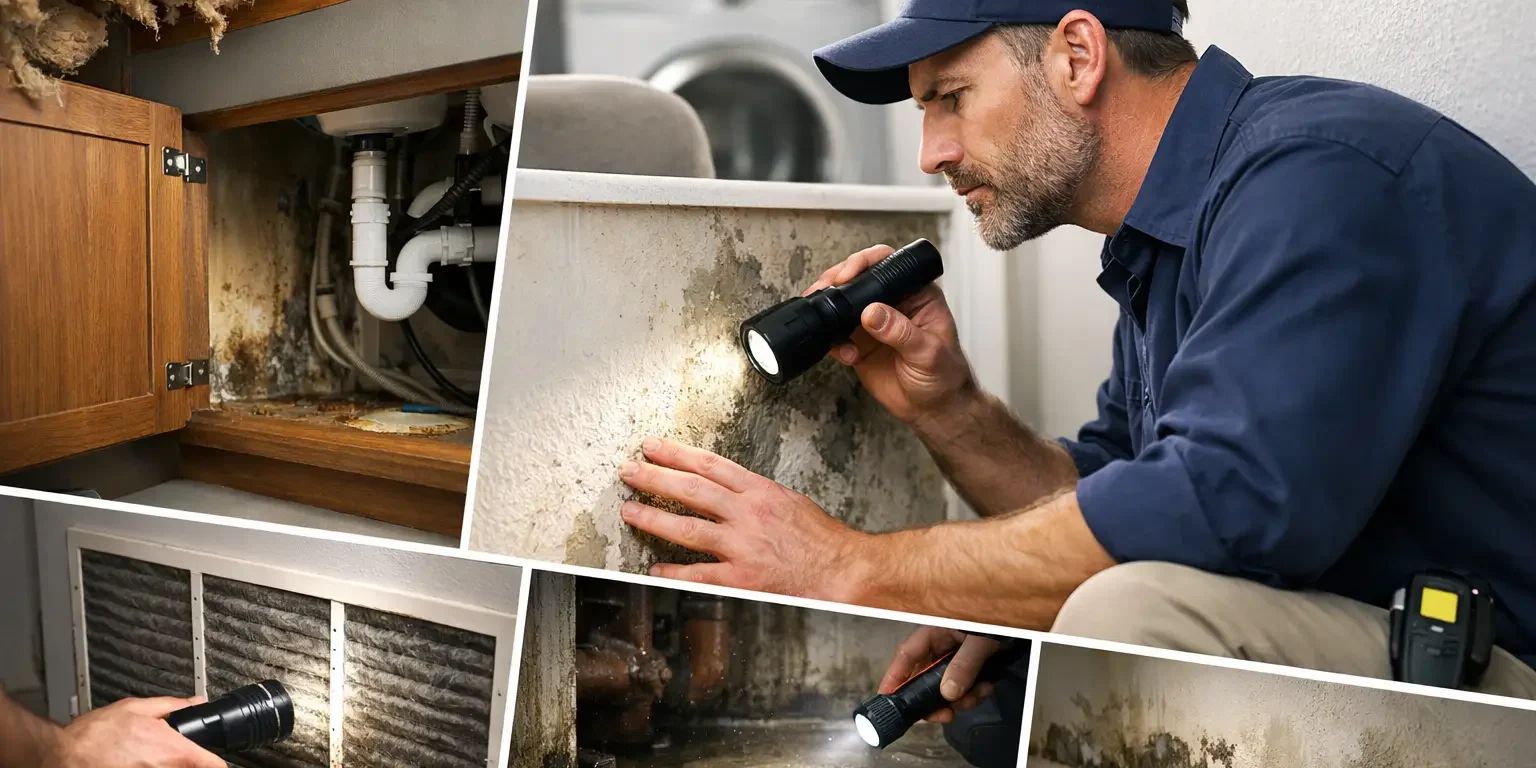
From there, professionals look for moisture pathways and concealed conditions. That can include checking baseboards for swelling, scanning walls and ceilings for elevated moisture, identifying humidity imbalances, and evaluating whether visible growth is cosmetic or part of a larger hidden problem. In many cases, odor detection is tied directly to moisture mapping because wet building materials often reveal more than the smell alone.
Testing is not always necessary, but in some situations it adds real value. If the source is not visible, if health complaints are involved, or if a property manager needs documentation for tenants, buyers, or internal records, sampling can help confirm whether microbial activity is likely contributing to indoor air concerns. The key is using testing as part of diagnosis, not as a shortcut around inspection.
Signs the odor is coming from hidden mold or moisture
The strongest clue is recurrence. If you clean an area and the smell returns, the source probably remains active behind or beneath a material. Another warning sign is when odor strength changes with weather. Rain, humidity spikes, and air conditioning cycles often reveal moisture-related building issues because they change how air moves and where dampness accumulates.
Pay attention to rooms with subtle physical changes. Peeling paint, bubbling drywall, warped trim, staining, soft flooring, or recurring condensation on windows can all support what the odor is already telling you. In multifamily and commercial properties, complaints from adjacent units or neighboring offices may also point to a shared source rather than an isolated housekeeping issue.
That said, not every musty smell means widespread contamination. Sometimes the source is limited and correctable, such as a failed wax ring at a toilet, a disconnected dryer vent, or wet materials left after a minor leak. The right response depends on scope. That is why diagnosis comes first.
Why DIY odor removal often misses the real problem
Consumers are sold a lot of quick fixes. Sprays, ozone devices, scented products, and surface cleaners may reduce odor for a short time, but they do not remove moisture inside a wall cavity or dry out contaminated subflooring. Some methods can even make the situation harder to assess by masking conditions temporarily.
Improper cleaning is another issue. Disturbing suspect growth without containment can spread particles through occupied areas. Using the wrong chemicals on porous materials may also damage surfaces without solving the source problem. For property owners trying to protect occupants, tenants, employees, or resale value, that is an expensive gamble.
A qualified mold specialist approaches the issue in the right order: identify the source, correct the moisture condition, determine whether affected materials can be cleaned or must be removed, and carry out any remediation under controlled procedures. That sequence protects indoor air quality and avoids the common cycle of repeated odor complaints.
When to call for certified help
If the smell has lasted more than a few days, keeps returning, follows a leak, or is causing concern for children, older adults, tenants, or employees, it is time to bring in a certified professional. The same is true when the source is not obvious or when the odor is tied to an HVAC system, attic, basement, crawl space, or wall cavity.
For real estate transactions and managed properties, speed matters. A documented inspection can clarify whether the issue is minor and localized or whether a broader remediation plan is needed. It can also help prevent unnecessary demolition by targeting the actual source instead of opening every suspicious area.
In regions like Monmouth County and surrounding service areas where humid summers, storms, finished basements, and mixed-age housing stock are common, musty odors are rarely random. They usually trace back to a building condition that can be identified and corrected with the right tools and experience.
Certified Mold Removal Inc. approaches these cases the way they should be handled – with inspection first, source correction before cleanup, and standards-based remediation when necessary. That protects both the property and the people inside it.
If your building smells musty, trust the pattern instead of waiting for visible damage. Odors have a source, and the sooner that source is identified, the easier it usually is to control the cost, the scope, and the disruption.