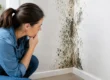
A dark spot behind a washing machine and a musty odor in a finished basement can create the same question: is there an active mold problem, and how far has it spread? Air testing vs swab testing is not a choice between a “good” test and a “bad” one. Each sample answers a different question. The right approach begins with a careful inspection, moisture investigation, and a clear reason for collecting a sample.
For homeowners, property managers, and business owners, testing should reduce uncertainty – not create fear. Not all mold is dangerous, and a laboratory result alone does not tell the full story. A certified professional considers the building conditions, visible growth, water history, occupant concerns, and sample findings before recommending the next step.
What Air Testing Measures
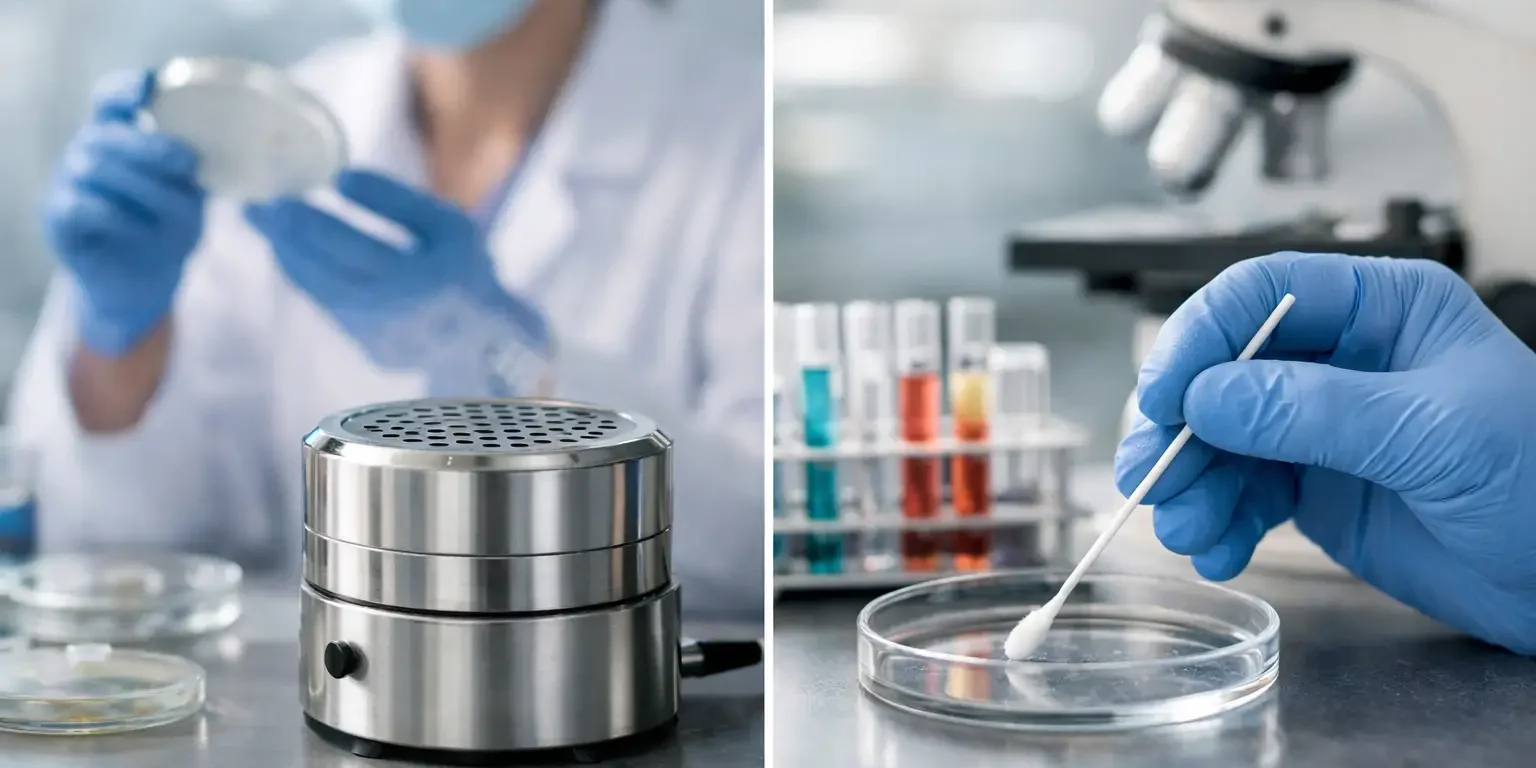
Air testing collects a measured volume of indoor air and evaluates the particles captured in that sample. In a mold investigation, the goal is usually to identify and compare airborne fungal structures in a suspected area with conditions elsewhere in the building or outdoors.
This matters because mold growth can release spores or fragments into the air, especially when materials are disturbed, wet, deteriorated, or exposed to airflow. Air samples may help identify whether a room has an elevated airborne mold condition that is not obvious during a visual inspection.
An air sample is a snapshot, not a permanent record. Indoor spore levels can change based on weather, open windows, HVAC operation, cleaning activity, foot traffic, and whether a contaminated surface was recently disturbed. That is why proper collection procedures matter. Samples should be collected under controlled, documented conditions and interpreted alongside a visual and moisture inspection.
Air testing can be especially useful when there is a persistent musty smell but no visible source, when occupants report concerns in a particular room, or when a property needs post-remediation verification. It may also help evaluate areas affected by a hidden plumbing leak, roof leak, condensation issue, or past water damage.
What air testing cannot tell you by itself
A high spore count does not automatically identify the exact location of the growth. Likewise, a low result does not prove that a building has no mold. A hidden colony behind a wall, beneath flooring, or inside a ceiling cavity may not be actively releasing enough material to affect a brief air sample.
Results must also be read carefully. Outdoor air naturally contains mold spores, and indoor levels can reflect outdoor conditions. The key is not simply whether spores are present. A qualified evaluator looks at the types of spores found, their concentrations, indoor-to-outdoor relationships, the condition of the property, and whether the findings match the suspected source.
What Swab Testing Measures
Swab testing collects material directly from a surface. A sterile swab is applied to visible staining, suspected growth, dust, residue, or another targeted area, then submitted for laboratory analysis. Depending on the analytical method, the test may identify the type or group of mold present on that surface.
Swab testing is useful when a professional needs to determine whether a suspicious spot contains mold rather than ordinary dirt, staining, or residue. It can also document visible material on a particular building surface before a remediation plan is developed.
This method is highly targeted. If a stain is on a window sill, a swab test describes that window sill. It does not establish the air quality throughout the home, the condition inside the wall, or whether similar growth exists elsewhere. For that reason, swab results should never be used to make broad claims about an entire building.
A surface sample can also be affected by how and where it is collected. Mold is not always distributed evenly across a material, and a small sample may miss the most representative area. The laboratory may confirm mold on the sampled spot, but the inspection is still needed to determine why it grew there and whether moisture has affected adjacent materials.
Air Testing vs Swab Testing: The Practical Difference
The practical difference is simple: air testing evaluates what is suspended in the air at the time of collection, while swab testing evaluates what is present on a specific surface.
If visible growth is already present on damp drywall, testing is often not the most urgent issue. The priority is identifying and correcting the moisture source, determining how far the materials are affected, and planning safe containment and removal. A surface sample may be appropriate for documentation or clarification, but it should not delay necessary action.
If there is no visible mold but there is a recurring odor after a water event, an air sample may provide useful supporting information. Even then, the inspection remains central. Moisture meters, thermal imaging when appropriate, building history, and direct examination of likely source areas are often more valuable than relying on one test result.
When a suspicious surface is visible and indoor air concerns are also present, both types of testing may be justified. For example, a commercial office with ceiling staining, an active leak history, and employee odor complaints may need a targeted surface sample plus air sampling in the affected and comparison areas. The testing plan should match the problem, not follow a one-size-fits-all package.
When Testing Is Worth the Investment
Testing is most valuable when the result will influence a decision. That may include deciding whether a suspicious material needs further investigation, documenting conditions for a property manager, evaluating an area after a significant water event, or confirming that remediation achieved normal indoor conditions.
Post-remediation air testing can be particularly useful when it is performed after the work area has been cleaned, containment has remained in place through the proper stages, and the moisture source has been corrected. A favorable clearance result is more meaningful when it is paired with a visual inspection showing no remaining debris, dust, or visible growth.
Testing may be less useful when the evidence is already clear. If materials are visibly colonized and wet due to an active leak, laboratory confirmation does not replace the need for corrective work. Spending time debating the species can distract from the issue that protects the property: stop the water, dry the affected area properly, remove contaminated materials when necessary, and correct the condition that allowed growth.
Why the Inspection Comes First
The strongest mold investigation is not built around a laboratory report. It is built around building science. Mold requires moisture, so a reliable assessment looks for the source: plumbing failures, roof intrusion, poor drainage, humidity, condensation, HVAC issues, or incomplete drying after water damage.
Without source correction, surface cleaning is only temporary. Growth can return behind a repaired wall, under a floor, or around a poorly ventilated area if the moisture condition remains. Improper cleanup can also spread dust and spores into unaffected spaces, creating a larger and more expensive problem.
A qualified inspector should explain what was observed, why a particular test is or is not recommended, and how the result will be used. Be cautious with anyone who promises to diagnose the entire property from one sample, labels every mold finding as an emergency, or recommends demolition before identifying the moisture source.
Choosing the Right Next Step
If you can see suspicious growth, avoid scrubbing, sanding, or spraying it with unverified chemicals before it is evaluated. Disturbing affected material can spread contamination and conceal evidence of the underlying issue. Take note of where the problem appears, when it started, whether there was water damage, and whether odors or symptoms are limited to a certain room.
For properties in New Jersey and nearby service areas, Certified Mold Removal Inc. approaches testing as part of a complete diagnostic process. The objective is not to sell unnecessary samples or create alarm. It is to locate the source, document conditions when testing adds value, develop an appropriate remediation protocol, and restore the area using controlled, standards-based procedures.
The best test is the one that answers a useful question. If air testing or swab testing will clarify the condition, guide safe work, or verify a successful cleanup, it can be a smart investment. If the moisture source and visible damage already tell the story, timely professional action is usually the better way to protect the people and property that depend on the space.