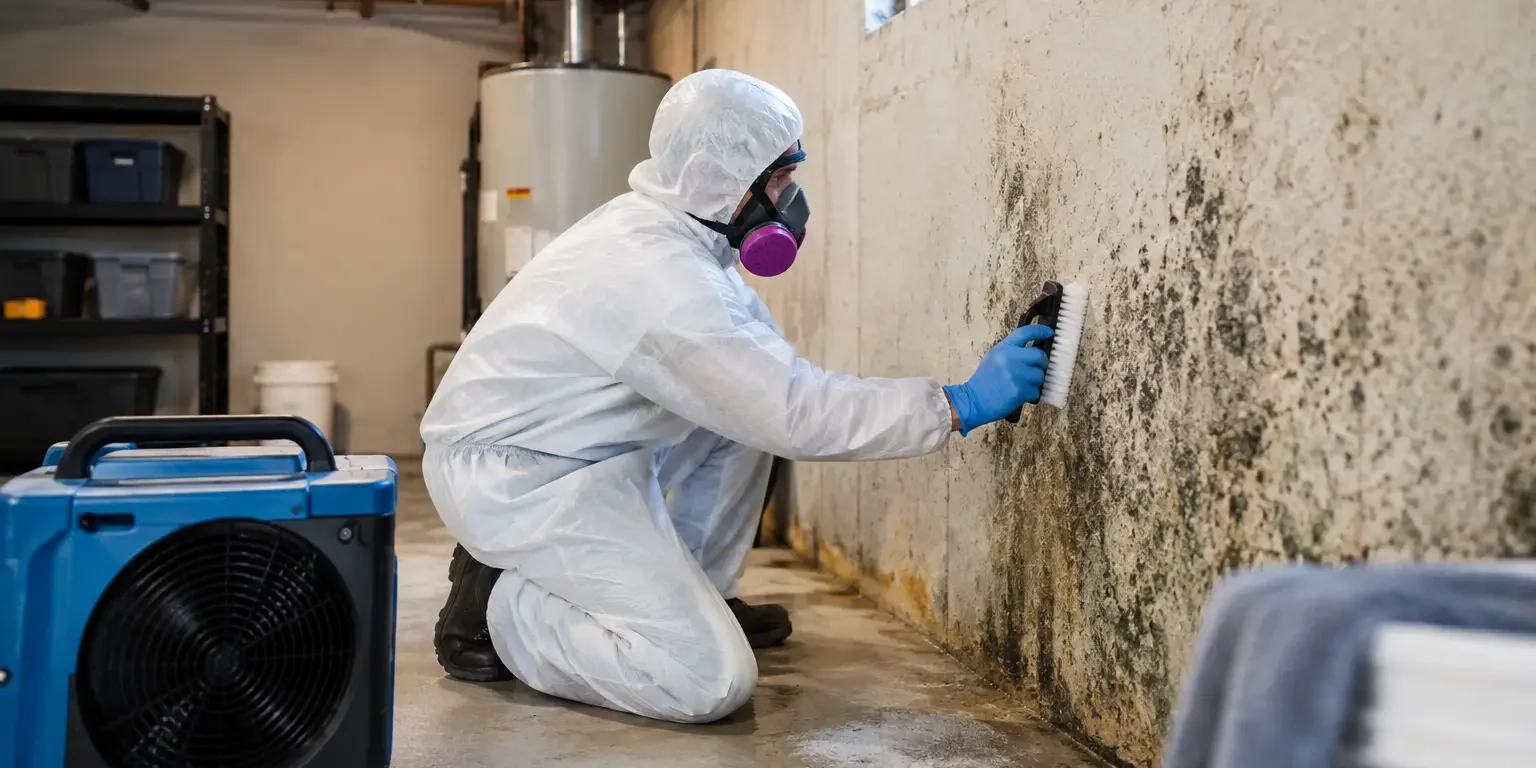
A basement can look dry and still hold enough moisture behind finished walls, beneath flooring, or around a foundation crack to support mold growth. This basement mold remediation guide explains what a responsible response looks like: find the water source, determine the extent of contamination, protect the rest of the property, and remove affected materials under proper containment. The goal is not to create fear. Not all mold is dangerous, but any ongoing moisture and visible growth deserve a timely, qualified evaluation.
Start With the Moisture Source
Mold remediation that begins with demolition instead of diagnosis often creates a costly repeat problem. Mold needs moisture, so the first question is always: where is the water coming from?
In basements, common sources include foundation seepage after rain, plumbing leaks, failed sump pumps, condensation on cold pipes, poor exterior grading, blocked gutters, and persistently high indoor humidity. A finished basement can hide these conditions for months. Musty odors, bubbling paint, warped trim, damp carpeting, or discoloration at the bottom of a wall are all reasons to investigate further.
A professional inspection should look beyond the obvious spot. The visible patch may be small while moisture has traveled through insulation, drywall, framing, or flooring materials. Moisture readings, a detailed visual assessment, and properly selected sampling can help establish whether the issue is localized or part of a broader indoor air quality concern.
Correcting the source may require plumbing repair, drainage improvements, dehumidification, or changes to how the space is ventilated and used. Until that work is addressed, cleanup alone is temporary.
When Basement Mold Can Be a DIY Job
A small area of surface growth on a nonporous item may be manageable if the moisture event is resolved, the material can be fully cleaned, and there is no musty odor or evidence of hidden damage. Even then, homeowners should use appropriate personal protection, avoid dry brushing, and dry the area completely.
The decision changes when growth covers a larger area, returns after cleaning, follows a flood or leak, or appears on porous materials such as drywall, insulation, carpet padding, ceiling tiles, or unfinished wood. Those materials can hold contamination below the surface. Scrubbing what is visible may release particles into the basement and leave the affected material behind.
Do not use bleach as a universal basement mold solution. It may discolor a surface and can be unsuitable for many porous building materials. It also does not correct the moisture condition that caused the problem. Mixing cleaning chemicals creates additional hazards and should never be part of a remediation plan.
A Basement Mold Remediation Guide to the Proper Process
Professional remediation is a controlled construction and cleaning process, not simply a spray treatment. The exact scope depends on the materials involved, the size of the affected area, whether the basement is occupied or finished, and whether contamination may have spread beyond the original moisture source.
1. Inspection, documentation, and a written scope
The work should begin with an inspection that identifies the likely moisture source, affected materials, and conditions that could allow the problem to continue. For property managers and business owners, documentation is particularly valuable because it creates a clear record of observed conditions, recommended corrective work, and the remediation plan.
When testing is appropriate, it should answer a specific question rather than be used to create alarm. For example, sampling may help compare indoor and outdoor conditions, assess questionable materials, or support a post-remediation evaluation. A credible contractor will explain what testing can and cannot tell you.
2. Containment before removal
Once the work area is defined, containment helps prevent dust and particles from spreading into finished rooms or HVAC pathways. Depending on the project, this can include sealed barriers, protected access routes, negative air equipment, and filtered air-cleaning devices.
This step is one reason unqualified tear-outs can create larger problems. Pulling out wet drywall or carpet without containment can spread debris through the home, especially when the basement connects directly to living areas. Proper containment protects occupants, workers, and unaffected portions of the building.
3. Remove materials that cannot be cleaned
Porous materials with significant contamination or water damage often need to be removed. That can include sections of drywall, insulation, carpet, padding, damaged baseboards, and other contents that cannot be reliably restored. The affected area should be removed carefully, bagged or contained before transport, and handled in a manner that limits cross-contamination.
Not every material needs replacement. Structural wood and other sound surfaces may be cleaned when they are dry, intact, and responsive to appropriate remediation methods. The right decision depends on the material, the duration of moisture exposure, and the condition found during inspection.
4. Detailed cleaning and drying
After removal, remaining surfaces require physical cleaning. HEPA vacuuming, damp wiping, and other methods are selected based on the surface and the project scope. Products alone are not remediation. Cleaning must remove settled debris, while drying confirms that moisture conditions have been brought under control.
A basement should not be closed back up while materials remain damp. Rebuilding too soon can trap moisture behind new finishes and set the stage for recurrence. Moisture verification is a practical safeguard, not an unnecessary delay.
5. Post-remediation verification and rebuild readiness
At the end of the project, the remediated area should be visually clean, dry, and free of dust or debris associated with the work. When the situation calls for it, post-remediation testing may provide an additional confirmation before reconstruction begins.
This is also the time to make smarter rebuilding choices. Use moisture-resistant materials where appropriate, keep finished wall systems away from known damp foundation surfaces, and maintain access to plumbing shutoffs, sump equipment, and other areas that need regular monitoring.
Warning Signs That Call for Fast Professional Help
Speed matters when a basement has active water intrusion or damp building materials. The longer moisture remains, the more likely it is to affect hidden areas and increase the amount of material that must be removed.
Contact a qualified mold professional promptly when you notice a strong musty odor without an obvious source, recurring mold after cleaning, water-stained drywall, wet carpet or padding, a recent flooding event, or occupants experiencing irritation that seems to improve away from the property. These symptoms do not prove mold is the cause, but they are reasonable grounds for an inspection.
For landlords, property managers, and commercial operators, quick action also reduces disruption. A contained, properly managed project is usually easier to coordinate than a larger failure that reaches occupied areas, inventory, or tenant spaces.
How to Choose a Remediation Company
Basement mold work should be handled by a company that can explain its process in plain language and support it with credentials, insurance, and documented procedures. Be cautious of anyone who promises a permanent result without discussing the moisture source, or who recommends extensive removal before inspecting the full area.
Ask how the company determines the scope, how it will protect unaffected rooms, whether it follows recognized IICRC and OSHA-informed work practices, and how it verifies that the area is dry and ready for rebuilding. You should also receive a clear explanation of what is included, what repairs fall outside the remediation scope, and what conditions could affect the final cost.
Certified Mold Removal Inc. approaches basement concerns with diagnosis first, source correction before remediation, and controlled cleanup designed to protect indoor air quality. For homeowners and property decision-makers in Monmouth County and surrounding service areas, that disciplined process can make the difference between a short-term cleanup and a lasting correction.
Keep the Basement Dry After Remediation
Prevention is usually less expensive than another remediation project. Maintain indoor humidity at a reasonable level, especially during humid summer months. Use a properly sized dehumidifier if the basement routinely feels damp, and make sure it drains correctly rather than relying on a full collection bucket.
Inspect the basement after heavy rain, check visible plumbing connections, test the sump pump, and keep stored belongings elevated off the floor. Outside, water should drain away from the foundation, gutters should discharge well away from the house, and landscaping should not direct water toward basement walls.
A dry, clean basement is not achieved by covering stains or masking odors. It comes from identifying what changed, correcting the moisture, and using a remediation process that protects the rest of the property while the affected area is restored.