A mold problem can become an indoor air quality problem the moment contaminated dust and spores are disturbed. That is why the best containment methods for mold are not simply about hanging plastic around a work area. Proper containment is a controlled system designed to keep contamination inside the affected zone while technicians correct the moisture source, remove damaged materials, and clean the space safely.
For homeowners, property managers, and business owners, the goal is straightforward: protect occupants, protect unaffected rooms, and avoid turning a localized issue into a larger restoration project. The right approach depends on the size of the affected area, the building layout, the type of material involved, and whether people are occupying the property during work.
Why Mold Containment Matters Before Removal Begins
Mold remediation involves more than treating a visible surface. Opening a damp wall, lifting wet flooring, or removing contaminated insulation can release particles that were previously contained within the building material. Without proper controls, those particles may settle in nearby rooms, travel through hallways, or be drawn into HVAC pathways.
Containment reduces that risk. It creates a defined work zone, controls airflow, and establishes a process for workers and materials to enter and leave without spreading debris. It also supports a cleaner, more accurate final evaluation of the remediated area.
Not every small spot of mold requires a full-scale containment chamber. A limited area on a nonporous surface may call for a more modest approach after the underlying moisture issue is addressed. Larger growth, contamination inside wall cavities, repeated water intrusion, or work in an occupied commercial building usually calls for more extensive controls. A qualified inspection should determine the scope before demolition or cleaning begins.
Best Containment Methods for Mold Remediation
Source control comes first
The first containment measure is stopping the condition that allowed mold to grow. A leaking pipe, roof intrusion, drainage failure, appliance leak, elevated humidity, or condensation issue must be identified and corrected. Containment can reduce cross-contamination during remediation, but it cannot solve an active moisture problem.
This is where a proper inspection protects the property owner. Cleaning visible growth without locating the source may make a room look better temporarily while hidden conditions continue behind walls, under flooring, or above ceilings. Effective remediation begins with diagnosis, not assumptions.
Physical barriers isolate the work area
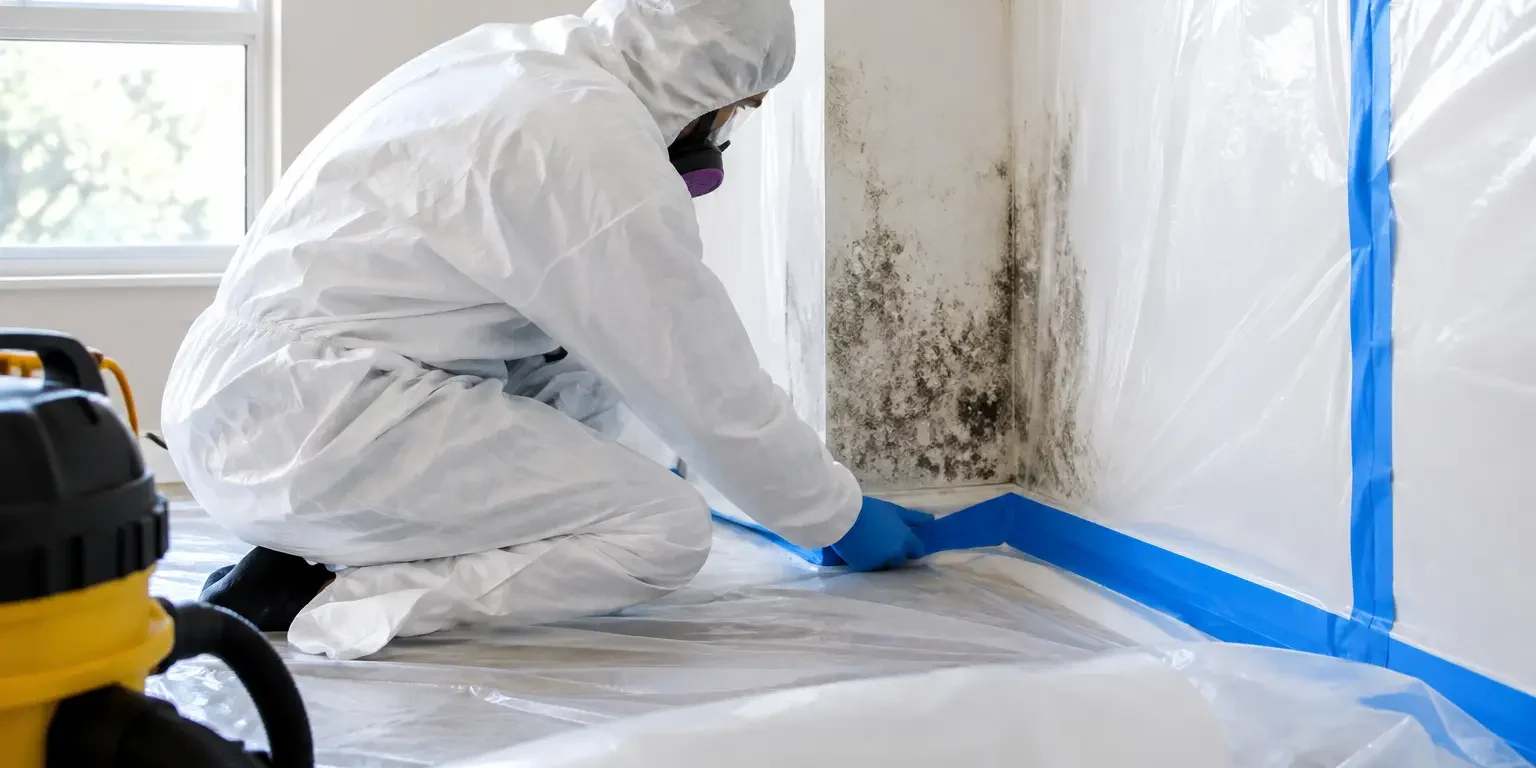
For most professional projects, physical containment begins with durable plastic sheeting installed to separate the affected area from clean portions of the property. The barrier should be securely sealed at walls, ceilings, floors, and openings. Gaps, loose edges, and poorly taped seams defeat the purpose.
In a small, contained work zone, technicians may establish limited containment around the affected material. Larger projects often require full containment, which can enclose an entire room or section of a building. The barrier design should account for doorways, windows, supply and return vents, and traffic patterns.
A properly built enclosure is not just plastic on a wall. It should be stable enough to remain intact throughout removal, cleaning, and waste handling. It should also provide a controlled entry point rather than encouraging workers to lift or break the barrier every time they move in and out.
Negative air keeps airflow moving in the right direction
Negative air pressure is one of the most important containment methods when significant mold removal is underway. A filtered air machine draws air from the containment area and exhausts it appropriately, creating lower air pressure inside the work zone than in adjacent clean areas. Air then moves into the containment rather than out of it.
This airflow direction helps keep airborne particles from escaping through small imperfections in the enclosure. High-efficiency filtration captures fine particulates before air is discharged or recirculated according to the project design.
Negative air is not a substitute for barriers. The two work together. Plastic containment limits the path of contamination, while negative pressure helps prevent air from carrying particles out of that space. The system should be checked throughout the project, particularly after barriers are installed, after demolition begins, and whenever site conditions change.
Airlocks and decontamination chambers control entry and exit
A single zipper door may be sufficient for a limited project, but larger or higher-risk work often requires an airlock or decontamination chamber. This is a staged entry area built into the containment system. It allows workers to enter and leave while reducing the chance of carrying debris into clean portions of the property.
A typical setup separates the work area from a transition space. Workers can remove disposable protective materials, wipe down equipment, and bag waste before exiting. This process matters because contamination often spreads through foot traffic, tools, gloves, clothing, and improperly handled debris rather than through airborne movement alone.
For occupied buildings, a well-planned entry and exit route is equally important. Residents, tenants, employees, and visitors should not need to pass through the work area. In commercial settings, containment planning may need to account for customer access, emergency exits, business operations, and building management requirements.
HVAC isolation prevents building-wide spread
Heating and cooling systems can move particles well beyond the original problem area. When work is occurring near supply registers, return vents, or duct openings, those pathways need careful evaluation. Depending on the conditions, the affected portion of the system may need to be temporarily shut down, isolated, or protected while remediation is underway.
Simply covering a vent with plastic is not always the right answer. Improperly blocking airflow can create equipment concerns or fail to address contamination already present in accessible components. The correct method depends on the system layout and the location of the affected area.
This is another reason to avoid unqualified demolition. Cutting into walls or ceilings near HVAC pathways without a containment plan can spread dust throughout the property and increase cleanup requirements.
Protected work practices matter as much as the enclosure
Containment is only effective when the people inside it follow disciplined procedures. Appropriate personal protective equipment, controlled removal methods, sealed waste bags, and routine cleaning of tools all reduce the chance of cross-contamination.
Porous materials that are extensively contaminated or water-damaged may need to be removed under containment rather than aggressively scrubbed in place. Nonporous and semi-porous materials may be cleaned when their condition allows. The correct decision depends on the material, the extent of growth, and whether it can be returned to a clean condition.
Work should also be performed in a manner that limits unnecessary dust. Careless tear-out, dry sweeping, or transporting unsealed debris through a home or business can undermine an otherwise well-designed containment system.
How Professionals Choose the Right Level of Containment
The best containment plan is based on conditions, not a one-size-fits-all package. A certified remediation professional considers the size of the affected area, whether mold is visible or concealed, how long moisture has been present, and which materials are involved. The presence of vulnerable occupants, such as young children, older adults, or people with respiratory sensitivities, may also affect project planning.
A small bathroom issue caused by short-term condensation is different from a concealed plumbing leak behind a kitchen wall. A damp basement with recurring humidity requires a different strategy than water damage in a multi-tenant office. Each case needs a clear protocol that defines the work area, source correction, containment approach, removal methods, cleaning process, and final verification steps.
For properties in New Jersey, New York, Pennsylvania, and Connecticut, seasonal humidity, storm-related water intrusion, older building materials, and basement moisture can all complicate mold conditions. Fast action helps limit damage, but speed should never mean skipping diagnosis or proper containment.
What Property Owners Should Avoid
Do not rely on fragrance, bleach, paint, or a surface spray to solve an active mold condition. These approaches may mask an odor or alter visible staining, but they do not correct moisture intrusion or remove contamination from damaged materials.
Avoid opening walls, removing carpeting, or running fans through an affected space before the area has been evaluated. Fans can move particles into adjacent rooms, while uncontained demolition can create a much larger cleanup issue.
Be cautious of companies that diagnose a major project before identifying the moisture source or explaining their containment procedures. A credible provider should be able to describe how the area will be isolated, how air will be controlled, how debris will be handled, and what steps will be taken before the space is returned to normal use.
A Safer Next Step When Mold Is Suspected
If you see visible growth, notice a persistent musty odor, or have had recent water damage, document the conditions and arrange a professional assessment promptly. Do not assume every stain is dangerous, but do not ignore a recurring moisture problem either.
Certified Mold Removal Inc. approaches remediation with source correction, standards-based containment, and careful cleanup so the solution addresses the building condition rather than just the symptom. The right containment plan should leave you with a dry, cleanable, and properly managed space – and the confidence that the problem was handled without spreading it further.