A mold removal project is not complete when the visible growth is gone. It is complete when the moisture source has been corrected, the work area has been properly cleaned, and clearance testing confirms the space is ready to return to normal use. This clearance testing guide explains what happens after remediation, what a qualified professional evaluates, and why a clean-looking room is not enough.
For homeowners, property managers, and business owners, post-remediation verification provides a practical answer to the question that matters most: Can people safely reenter this area? The answer should come from documented conditions and careful inspection, not a contractor’s opinion alone.
What Is Mold Clearance Testing?
Clearance testing, also called post-remediation verification, is the evaluation performed after mold cleanup and containment work. Its purpose is to determine whether the remediation area has been cleaned effectively and whether the conditions that supported mold growth have been addressed.
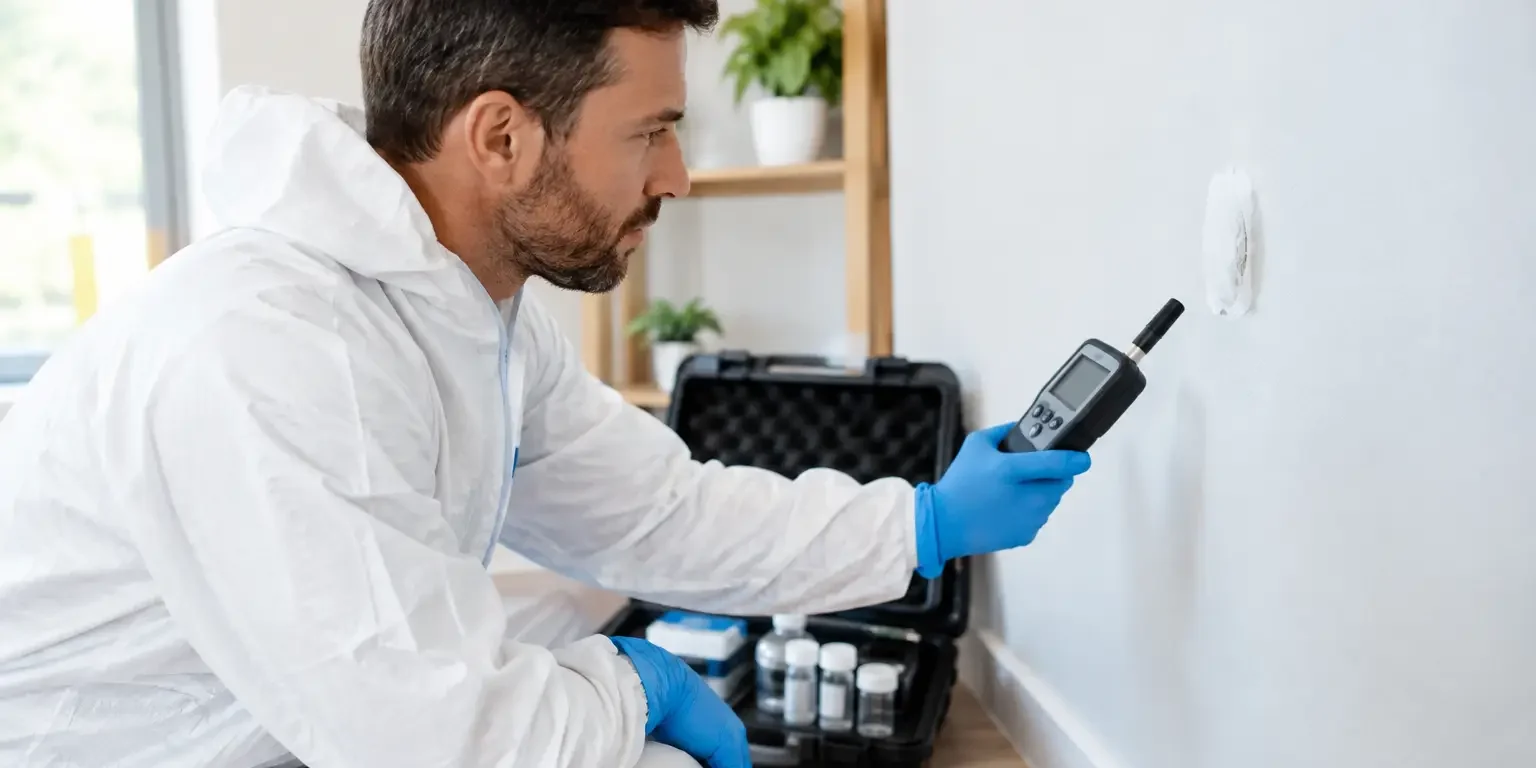
A proper clearance assessment is broader than a single air sample. The evaluator should inspect the contained work area, look for remaining debris or dust, confirm that materials were dried or removed as required, and assess whether the source of water intrusion or elevated humidity has been corrected. Sampling may be part of the process, but it should support the inspection rather than replace it.
This distinction matters. Air testing alone can be misleading if it is collected under poor conditions, interpreted without comparison samples, or used to overlook visible residue inside a wall cavity, HVAC area, or other affected location. Professional verification considers the entire remediation scope.
When Clearance Testing Should Be Performed
Testing should occur only after the remediation contractor has completed the cleaning process and the affected area is dry. If containment is still full of demolition debris, HEPA vacuuming is unfinished, or damp materials remain in place, the space is not ready for clearance.
In many projects, containment barriers remain in place during the initial inspection so the evaluator can assess the work area without exposing other parts of the property. Depending on the remediation protocol and building conditions, the evaluator may ask for air-scrubbing equipment to be turned off for a defined period before sampling. The right approach depends on the scope of work, the type of contamination, and the testing method being used.
Clearance testing is especially valuable after a significant water event, extensive visible growth, contamination inside building cavities, or remediation in spaces used by tenants, employees, children, or medically sensitive occupants. It also creates useful documentation for property managers, real estate transactions, insurance discussions, and commercial facility records.
What a Qualified Inspector Looks For
A credible clearance evaluation begins with the remediation plan. The inspector should understand which materials were affected, what was removed, what was cleaned, and where the original moisture came from. Without that baseline, it is difficult to verify whether the intended work was actually completed.
Visual and Physical Conditions
The work area should be visibly clean. There should be no remaining mold-like growth, dust accumulation, demolition debris, staining that suggests an unresolved issue, or contaminated porous materials left behind contrary to the protocol. Surfaces should also be dry. Moisture meters, thermal imaging, and humidity readings may be used where conditions warrant.
The inspector also checks for common remediation failures, such as damaged containment, dust migration outside the work area, incomplete removal behind baseboards or cabinets, or wet framing concealed by newly installed finishes. A fresh coat of paint is not evidence of a successful cleanup.
Source Correction
Mold needs moisture. If a plumbing leak, roof issue, foundation seepage, condensation problem, poor ventilation condition, or humidity imbalance remains active, mold can return after a well-executed cleanup.
That is why the source correction portion of clearance matters as much as surface cleaning. In some cases, remediation can pass visual and sampling requirements while a separate repair remains necessary. The property owner should understand that distinction clearly. Remediation addresses contamination; building repairs prevent recurrence.
Air and Surface Sampling When Appropriate
Air sampling may compare indoor conditions in the treated area with an outdoor control sample or another appropriate reference area. The goal is not necessarily to achieve a zero-spore result. Mold spores exist naturally in outdoor air, and ordinary indoor environments can contain low, variable levels as well.
Instead, the evaluator looks for results consistent with a clean, normal indoor environment and considers the types of spores detected, the relative concentrations, the property history, and inspection findings. Surface samples may be appropriate for specific questions, but they are not automatically required for every project.
A report that simply says “pass” or “fail” without explaining the locations sampled, conditions observed, methods used, and limitations offers limited value. Clear documentation is part of professional verification.
Why Independent Clearance Testing Matters
The strongest arrangement is one in which the person verifying the work is not financially tied to the remediation outcome. An independent inspector or testing professional can evaluate the project without pressure to approve their own cleanup work.
This does not mean every remediation contractor is unreliable. It means separation of duties helps protect the customer and improves confidence in the result. When one party performs the work and another party verifies it, there is a clearer accountability trail.
At Certified Mold Removal Inc., the remediation process is built around proper diagnosis, source correction, containment, and standards-based cleanup. For projects requiring post-remediation verification, customers should expect clear direction on whether independent clearance testing is appropriate and what the final documentation should include.
Understanding a Clearance Report
A useful clearance report should identify the property area evaluated, the date of inspection, the remediation scope reviewed, and the conditions found at the time of the assessment. If samples were collected, the report should state where they were taken and include the laboratory findings.
The report should also explain any limitations. For example, a closed wall cavity cannot be evaluated visually after it has been rebuilt unless that area was documented before closure. Similarly, a test represents conditions at the time of collection. It cannot guarantee that a future leak, flood, or humidity issue will not create a new problem.
If a project does not clear, that is not a reason for panic. It is an instruction to correct the remaining issue. The cause may be incomplete cleaning, moisture that has not been resolved, dust outside containment, or an area that was missed during the original scope. A qualified team should identify the reason, perform targeted corrective work, and arrange re-evaluation when the area is ready.
Common Mistakes That Undermine Clearance
The most frequent mistake is treating mold removal as a cosmetic cleaning job. Spraying a product over visible growth, painting over stained drywall, or removing only the most obvious material can leave contamination or moisture behind.
Another problem is rushing to test before the work is finished. Sampling an area while debris remains, equipment is operating in a way that alters conditions, or materials are still wet produces results that may not reflect the final environment. Testing should follow a written process, not a deadline-driven guess.
Property owners should also be cautious of fear-based claims that every mold finding creates an emergency or requires full-building demolition. Not all mold is dangerous, and not every affected area needs the same level of work. The correct scope depends on the amount of contamination, the materials involved, the moisture source, occupant needs, and the condition of the building.
A Practical Checklist Before Reoccupancy
Before a treated room, apartment, office, or commercial area is returned to use, confirm that the moisture source has been repaired or controlled, affected materials have been properly removed or cleaned, and the area is visibly free of dust and debris. Verify that drying is complete and that any required clearance inspection or testing has been documented.
For commercial properties, reoccupancy planning may also include coordinating with building management, protecting adjacent operations, and confirming that ventilation systems were evaluated when the remediation scope involved nearby air pathways. For residential properties, the priority is often making sure bedrooms, living spaces, and lower-level areas are dry, clean, and suitable for normal family use.
A reliable clearance result should provide reassurance without false promises. It confirms that the remediated area met the evaluation criteria at that time and gives you a defensible record of the work performed. When moisture is controlled and verification is handled correctly, you can move forward with confidence rather than uncertainty.