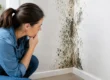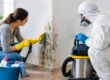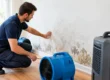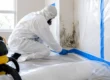
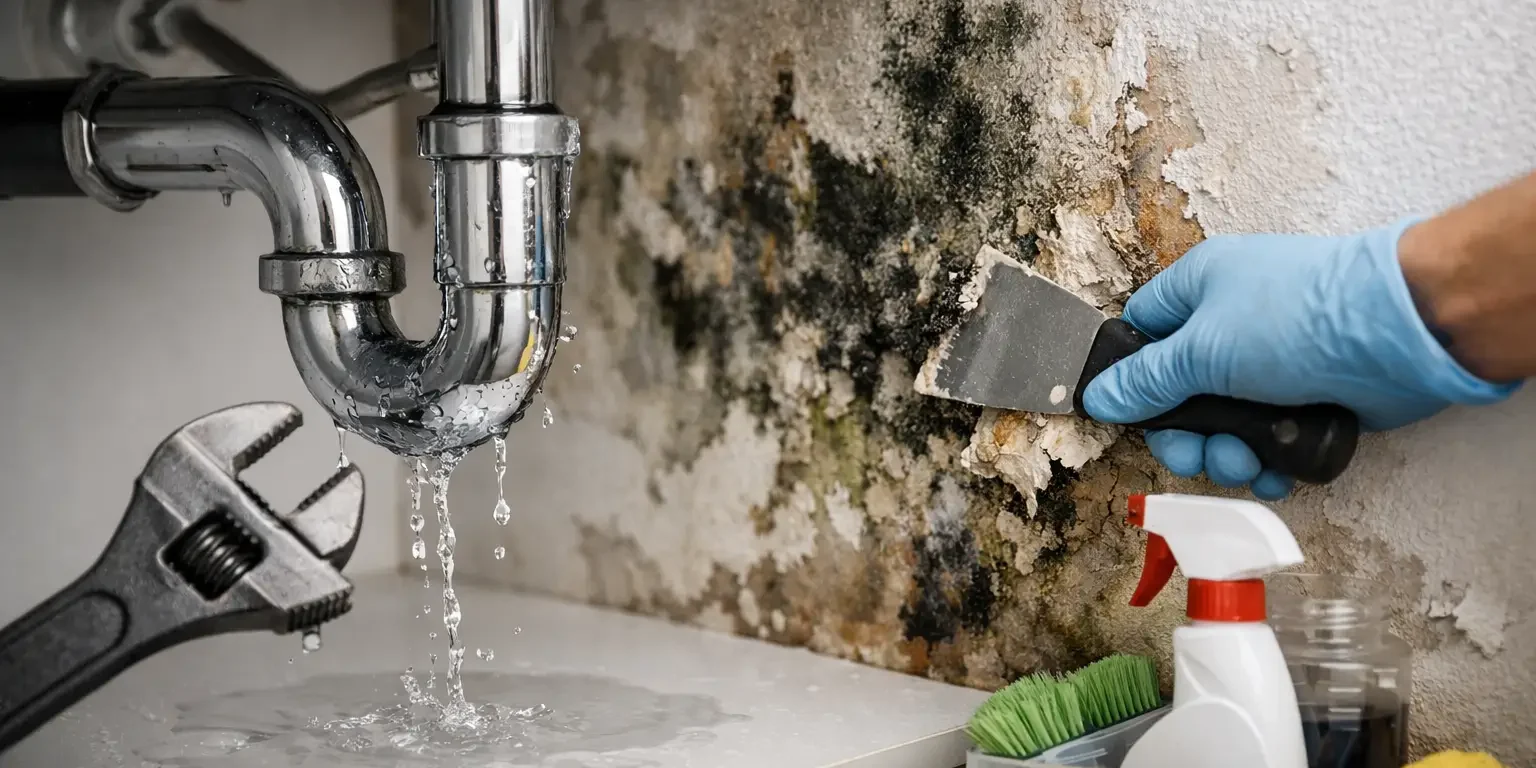
A slow drip behind a vanity can cause more damage than a dramatic pipe burst. By the time staining, a musty odor, or visible growth appears, moisture may already be affecting the wall cavity, subfloor, insulation, or adjacent rooms. Knowing how to address mold after a plumbing leak means acting quickly, but it also means avoiding shortcuts that leave hidden moisture behind.
Not every water event produces a serious mold problem, and not every dark spot is automatically hazardous. The real concern is whether building materials stayed wet long enough to support growth and whether contamination has spread beyond the area you can see. A disciplined response protects indoor air quality, limits property damage, and prevents a small repair from turning into a larger remediation project.
Stop the leak before addressing mold after a plumbing leak
Mold remediation cannot succeed if the moisture source is still active. Shut off water to the affected fixture or supply line when possible, then have the plumbing failure repaired by a qualified professional. A repaired pipe is only the first part of the job. The wet materials around it must also be evaluated and dried.
Document the damage before major cleanup begins. Take photos of visible staining, damaged finishes, standing water, and the suspected leak location. For property managers and business owners, this record can help establish the timeline of the loss, communicate with tenants or insurers, and ensure the full affected area is addressed.
If water reached electrical outlets, appliances, a ceiling below the leak, or a large portion of the building, do not enter or begin cleanup until safety risks have been assessed. Water can travel far from its original source, especially through framing, insulation, flooring layers, and duct openings.
Why drying visible surfaces is not enough
A towel, fan, or shop vacuum can remove water from a countertop or floor, but it cannot confirm that materials inside a wall or beneath flooring are dry. Porous materials such as drywall, carpet padding, insulation, particleboard, and unfinished wood can retain moisture long after the surface feels dry.
This is where many well-intended cleanup efforts fail. Homeowners may paint over a water stain, spray an odor product, or wipe visible growth from a baseboard without finding the damp material behind it. The result is often a recurring odor, returning discoloration, or mold that continues spreading out of sight.
Drying should be based on moisture conditions, not appearances. Professional moisture meters, thermal imaging, and controlled drying equipment help determine where water migrated and whether structural materials have returned to an acceptable moisture level. In a bathroom leak, for example, the affected zone may include the wall behind the fixture, the flooring around the toilet or vanity, and the ceiling in the room below.
Know when a leak needs professional mold assessment
A minor leak that was stopped immediately and fully dried may not require extensive remediation. It depends on the volume of water, how long materials remained wet, the type of materials involved, and whether mold growth or odors are present.
Professional assessment is especially appropriate when there is visible mold, a persistent musty smell, soft or swollen drywall, warped flooring, repeated plumbing leaks, or water damage inside a wall or ceiling. It is also the prudent choice when occupants have respiratory sensitivities, when the affected area is difficult to access, or when a commercial property needs a documented plan for protecting tenants or employees.
An experienced mold professional begins with diagnosis, not a sales pitch. The inspection should identify the moisture source, define the likely extent of impact, assess conditions in nearby building materials, and determine whether sampling would provide useful information. Testing is not necessary in every situation, but it can be valuable when contamination is hidden, conditions are disputed, or a property owner needs a clearer record of indoor environmental conditions.
Do not disturb suspected growth carelessly
Scrubbing, sanding, ripping out drywall, or using a household fan can release particles from a contaminated area into the indoor environment. That is particularly concerning when growth is inside a wall cavity, under flooring, or above a ceiling, where disturbing materials may spread contamination to rooms that were not originally affected.
Avoid applying bleach or heavy fragrances as a substitute for source correction and proper cleaning. Surface products may change the appearance of a stain, but they do not dry wet materials or remove contamination embedded in porous materials. They can also make it harder for an inspector to evaluate the original condition.
For a small, clearly defined area on a nonporous surface, careful cleaning and complete drying may be appropriate. The situation changes when the area is extensive, materials are damaged, growth is recurring, or the leak has affected concealed spaces. Those conditions call for trained remediation personnel, proper containment, and cleaning methods selected for the material and contamination level.
What standards-based remediation should include
Proper remediation is a controlled process, not simply demolition. The scope should match the conditions found during inspection. In many plumbing-leak cases, the work begins by isolating the affected area so particles are not carried into clean portions of the property.
Depending on the project, the process may involve moisture mapping, containment barriers, negative air controls, removal of unsalvageable porous materials, detailed cleaning of structural surfaces, and high-efficiency air filtration. Materials that can be safely cleaned and dried may be preserved. Materials that are extensively damaged or cannot be effectively cleaned may need removal.
The trade-off is clear: removing too little can leave the underlying problem in place, while removing more than necessary creates avoidable cost and disruption. A written remediation protocol gives homeowners, managers, and insurers a defined scope based on observed conditions rather than guesswork.
After cleanup, the property should be checked to confirm the area is dry and that the remediation objectives have been met. Where appropriate, post-remediation evaluation can provide added confidence before repairs such as new drywall, flooring, or paint are installed. Closing up a wall before confirming conditions are acceptable is one of the most expensive mistakes after a plumbing leak.
Protect the property while repairs are underway
Once affected materials have been addressed, correct the building conditions that contributed to the loss. Repair plumbing defects completely, replace failed seals, improve ventilation in high-humidity rooms, and make sure water-prone areas can dry properly. A bathroom exhaust fan that does not vent effectively, for example, can prolong dampness after a leak has been repaired.
Property managers should communicate clearly with occupants about restricted work areas, schedules, and any temporary steps needed to reduce exposure. Business owners may also need to plan remediation around operational hours to limit disruption while maintaining proper containment. Speed matters, but rushing without controls can create a larger problem.
For homeowners and building decision-makers across New Jersey and nearby service areas, Certified Mold Removal Inc. approaches plumbing-leak mold concerns with the same order of priorities: find the source, correct the moisture condition, define the scope, and complete remediation safely. That process is more reliable than treating a stain and hoping it does not return.
A plumbing leak does not have to become a long-term indoor air quality issue. The most useful next step is to verify that the leak is repaired, the hidden materials are dry, and any contamination is handled with a scope that fits the actual conditions.