A small patch behind a washing machine, a musty basement after heavy rain, or discoloration around a ceiling vent can all point to the same underlying issue: moisture is reaching building materials and not drying fast enough. The top causes of indoor mold are rarely mysterious, but they are often hidden. By the time mold is visible, the water source may have been active for days, weeks, or longer.
Mold is a normal part of the environment, and not all mold growth creates the same level of concern. The issue indoors is that spores can settle on damp drywall, wood, carpet, insulation, and dust, then multiply where conditions allow. The right response is not panic or a quick cover-up. It is identifying the moisture source, correcting it, and determining whether professional containment and removal are needed.
Top Causes of Indoor Mold: Moisture Has to Come First
Mold requires moisture, a food source, and suitable temperatures. Homes and commercial buildings supply plenty of organic material through paper-faced drywall, wood framing, fabrics, and ordinary household dust. That means moisture control is the practical line of defense.
A surface can feel dry when the material behind it is wet. Water may sit inside a wall cavity, beneath flooring, above a ceiling, or within insulation, where it is not obvious until staining, odor, warping, or visible growth appears. This is why an inspection should focus on conditions behind the symptom, not just the symptom itself.
Plumbing leaks and failed supply lines
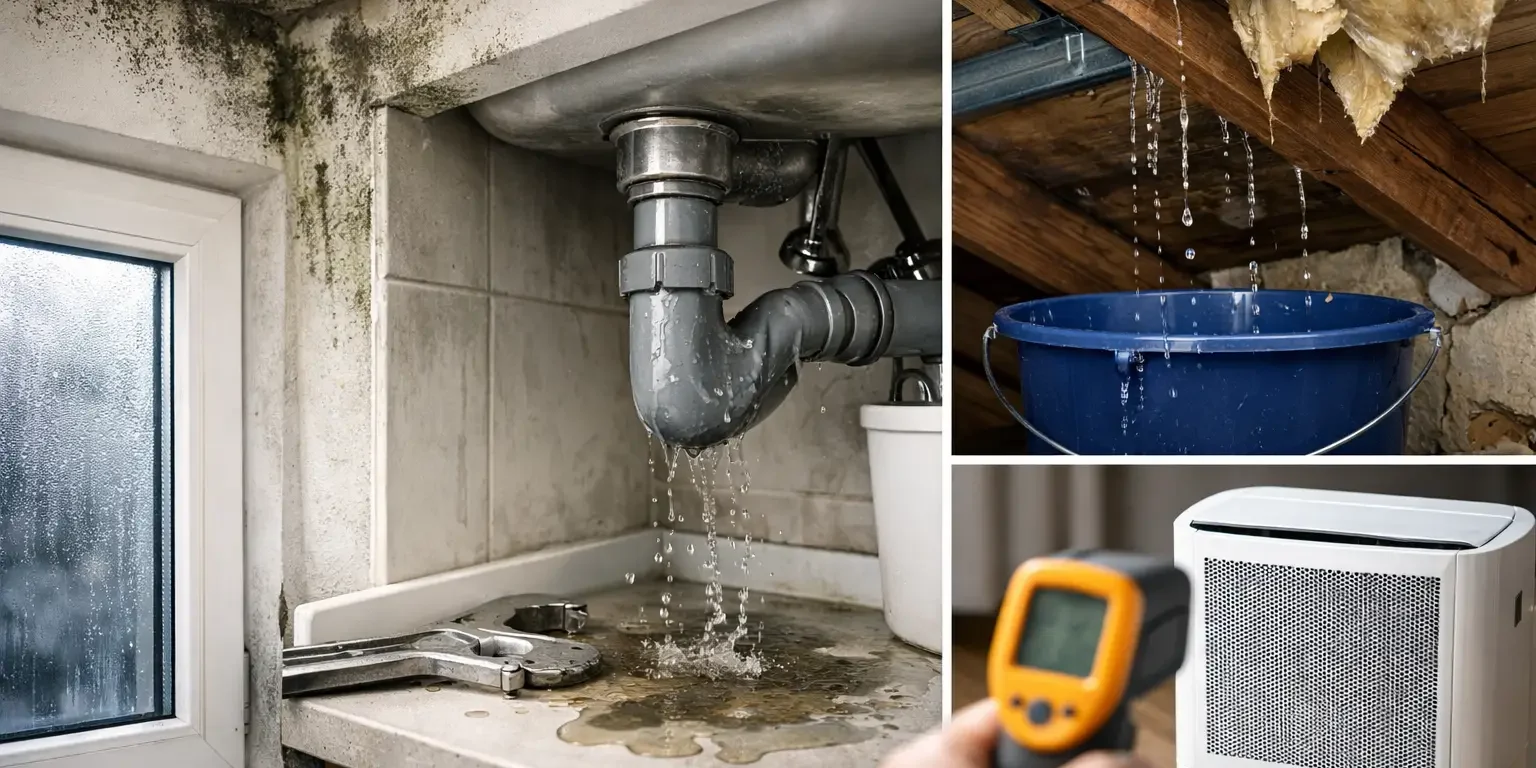
Slow plumbing leaks are among the most common causes of concealed mold. A dripping pipe under a sink, a loose toilet connection, a leaking refrigerator line, or a failed shower valve can wet nearby materials without creating a dramatic flood. In many cases, occupants only notice a persistent odor, soft flooring, peeling paint, or a darkened baseboard.
The longer a leak continues, the more likely moisture is to spread beyond the immediate plumbing area. Drywall can wick water upward, while flooring and cabinetry may hold moisture against subfloors and wall surfaces. Repairing the pipe is necessary, but it may not be sufficient if affected materials remain wet or contaminated.
Roof leaks and exterior water intrusion
Roof damage, failed flashing, clogged gutters, deteriorated siding, and gaps around windows or doors can allow rainwater into a building envelope. These issues may become visible only during wind-driven rain or after a major storm. A ceiling stain that appears to dry between storms should not be dismissed. It can indicate repeated wetting above the ceiling.
In the Northeast, freeze-thaw cycles and seasonal storms place additional stress on roofs, window seals, and exterior drainage systems. Property owners should pay close attention to attic staining, damp insulation, bubbling paint, and water marks near exterior walls. Those signs warrant a source investigation before cosmetic repairs are made.
Basement seepage and poor drainage
Basements naturally face a higher moisture burden because they sit below grade. Groundwater can enter through foundation cracks, porous masonry, failed waterproofing, or poorly directed runoff. Even when water is not visibly pooling, high moisture levels in basement walls and floors can support mold growth on stored belongings, framing, finished walls, and carpet backing.
Downspouts that empty too close to the foundation, grading that slopes toward the building, and overflowing gutters can make the problem worse. A dehumidifier may improve air conditions, but it will not correct water entering through the foundation. The appropriate solution depends on the source, the extent of moisture, and whether materials have already been damaged.
Humidity and inadequate ventilation
Indoor humidity can create mold conditions without a single leak. Bathrooms, kitchens, laundry areas, crawl spaces, and poorly ventilated basements are frequent trouble spots. Steam from showers, cooking, and clothes drying settles on cold surfaces. If that moisture has no effective path out of the building, condensation can develop on walls, windows, ducts, and ceilings.
Bathroom exhaust fans should vent outdoors, not into an attic or enclosed cavity. They also need adequate capacity and enough run time to remove moisture after bathing. Similarly, dryer vents must discharge properly outside and remain clear of lint buildup. Venting moist air into concealed areas can create extensive hidden growth before a property owner sees any warning signs.
Humidity is also affected by oversized or poorly operating air-conditioning equipment. A system that cools a space too quickly may shut off before removing enough moisture from the air. This is one reason mold concerns should not be approached with a one-size-fits-all fix. Ventilation, HVAC performance, insulation, occupancy, and weather conditions can all be part of the picture.
Flooding and water damage that was not dried correctly
Burst pipes, appliance overflows, stormwater entry, and sewer backups can saturate materials quickly. The emergency is not over when standing water is removed. Wet drywall, carpet padding, insulation, and wood framing may retain moisture long after the floor looks clean.
Rapid drying is critical after a water event. Depending on what was affected and how long materials remained wet, some contents can be dried and saved while others may need removal. Improperly drying only the visible surface can trap moisture in wall cavities or beneath flooring, creating conditions for mold growth later.
Less Obvious Conditions That Feed Mold Growth
Not every mold issue begins with a dramatic water event. Some develop slowly through building conditions that are easy to overlook.
Condensation around single-pane windows, poorly insulated exterior walls, and cold-water pipes can repeatedly wet the same areas. In closets or rooms with limited airflow, furniture placed tightly against a cold exterior wall may reduce air movement and allow dampness to linger. Stored cardboard boxes, fabrics, and paper products can then provide an easy surface for growth.
HVAC systems also deserve attention. Dirty drain pans, clogged condensate lines, poorly insulated ducts, and moisture near air handlers can contribute to mold conditions. A musty odor that starts when heating or cooling runs does not automatically prove mold in the ductwork, but it is a valid reason to inspect the system and the surrounding components rather than masking the smell with fragrance products.
Why Cleaning Visible Mold Is Not Always Enough
Wiping a small area of surface growth may be reasonable when it is isolated, the material is nonporous, and the moisture source has been fully corrected. But cleaning becomes inadequate when growth is widespread, returns after cleaning, affects porous materials, follows significant water damage, or is accompanied by persistent odors and health complaints.
Bleach, paint, and odor sprays are not remediation plans. Painting over staining may conceal evidence while moisture continues behind the wall. Disturbing a larger contaminated area without proper controls can spread spores to other parts of the property. The goal is safe correction, not simply making a surface look better.
A qualified inspection can help distinguish between a minor maintenance issue and a condition requiring a written remediation plan. Moisture readings, visual assessment, targeted sampling when appropriate, and a review of the building’s history allow the scope of work to be based on evidence. That protects property owners from both underreacting and paying for unnecessary work.
When to Call a Mold Professional
Act promptly if you see recurring growth, smell persistent mustiness, find water-damaged building materials, or suspect moisture behind walls, beneath flooring, or above ceilings. The same applies when tenants, employees, or family members report symptoms that appear connected to time spent in a particular area, though symptoms alone cannot identify a mold source.
For homeowners and property managers in New Jersey and nearby service areas, Certified Mold Removal Inc. approaches mold concerns through diagnosis first. A proper assessment identifies where moisture is coming from, what materials are affected, and whether containment and professional removal are warranted. That disciplined process helps prevent costly repeat problems.
The most useful next step is simple: do not wait for a small moisture issue to become a larger hidden one. Correct the water source, document what you find, and bring in qualified help when the extent of contamination is unclear.