A tenant reports a musty odor after a minor leak, maintenance wipes down a stained baseboard, and the issue seems contained. Two weeks later, another unit complains about air quality, and now you are dealing with tenant concerns, potential habitability questions, and the risk that hidden moisture has spread farther than anyone expected. That is exactly why mold inspection for property managers needs to happen early, before assumptions turn into larger repair costs and avoidable disputes.
Property managers are not just maintaining buildings. They are protecting occupants, preserving asset value, and documenting that problems were handled correctly. When mold is suspected, the real job is not to panic and it is not to guess. It is to determine whether there is active growth, identify the moisture source, define the extent of contamination, and decide what level of corrective action is actually necessary.
Why mold issues get complicated fast
Mold complaints rarely start with a clear picture. Tenants may notice odors before they see growth. Maintenance teams may find staining but not know whether it is old damage or active microbial growth. In multifamily and mixed-use buildings, moisture can move between wall cavities, floor assemblies, utility chases, and adjacent units. What looks minor on the surface can be isolated, or it can point to a broader building envelope or plumbing issue.
This is where many properties lose time and money. If someone jumps straight to demolition without proper diagnosis, the scope may be wrong. If someone paints over visible damage or treats it like routine housekeeping, the moisture source remains and the problem returns. Neither approach serves the property manager.
A professional inspection creates a factual starting point. It separates cosmetic concern from active contamination and helps you respond with a documented, defensible process.
What a proper mold inspection for property managers should include
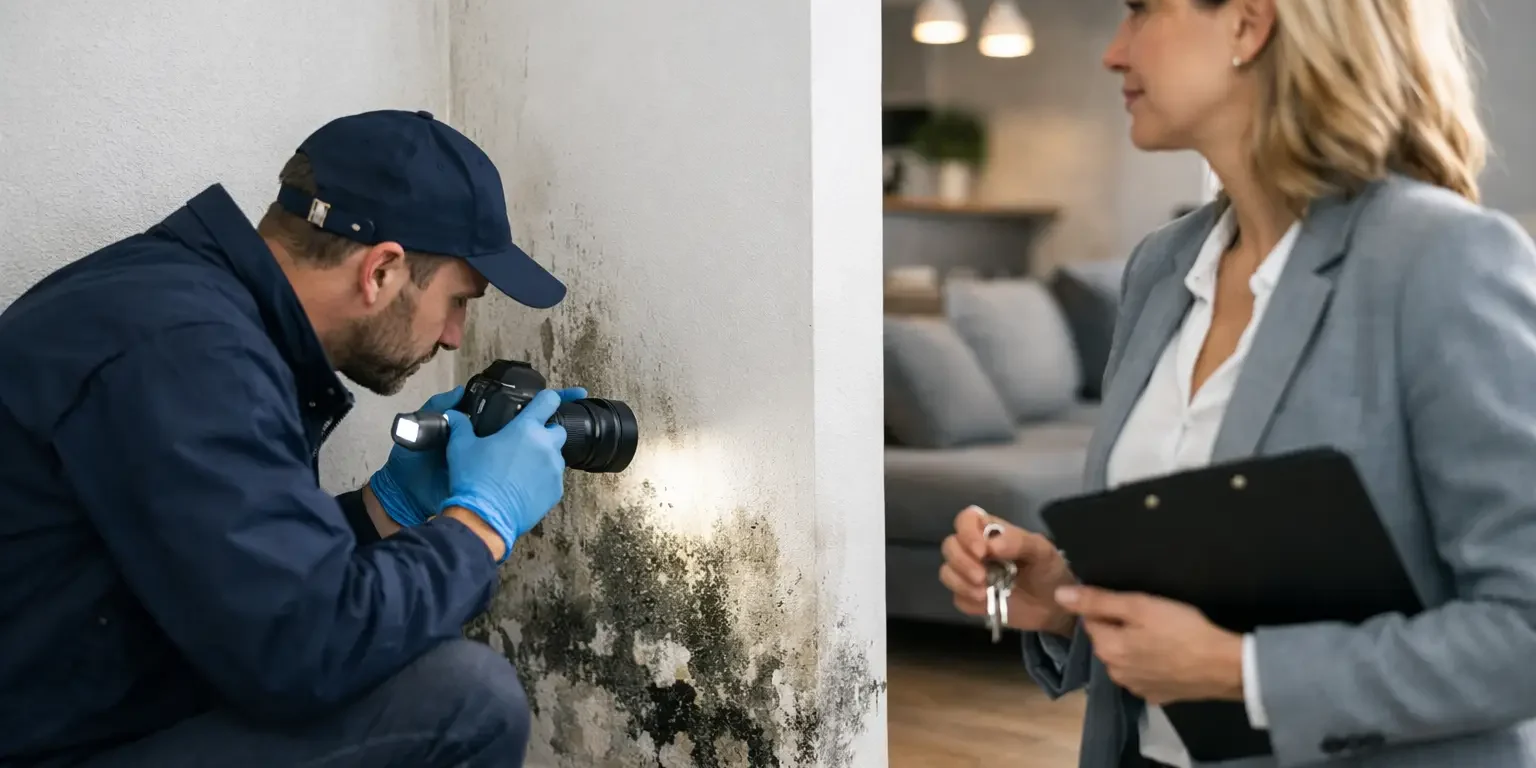
A credible inspection is more than a quick glance with a flashlight. It should begin with the building story. That includes leak history, recent water events, maintenance records, HVAC performance, tenant complaints, visible damage patterns, and any previous remediation. Without that context, even a skilled inspector may miss the reason the problem developed.
The field portion of the inspection should focus on moisture and conditions, not fear. That means looking for current or past water intrusion, elevated humidity, condensation issues, poor ventilation, plumbing failures, and building materials that may be trapping moisture. Depending on the situation, the inspection may include moisture meter readings, thermal imaging, and targeted observations in affected and adjacent areas.
Sampling can be useful, but it depends on the scenario. If mold is clearly visible and the moisture source is obvious, testing may not always be the first priority. If the concern involves hidden growth, disputed indoor air quality complaints, post-remediation verification, or uncertainty about whether contamination is present, then air or surface sampling may help clarify the condition. Good inspectors do not sell testing as a reflex. They use it when it answers a real question.
Just as important, the findings should be translated into a written scope. Property managers need clear documentation that explains what was found, where it was found, what likely caused it, and what should happen next.
The biggest mistakes property managers make
The most common mistake is treating mold like a cleaning issue instead of a moisture issue. Surface wiping may remove what is visible, but if drywall, insulation, flooring, or framing remains damp, growth often returns. Source correction has to come first.
The second mistake is relying on general contractors or maintenance staff for diagnosis when the situation calls for specialized assessment. General trades are essential once the scope is clear, but diagnosis should come from professionals who understand containment, indoor air quality, and contamination pathways. The wrong call at the beginning can multiply costs later.
The third mistake is overreacting to every mold sighting as a catastrophe. Not all mold is dangerous, and not every case requires large-scale remediation. Property managers need measured, standards-based decisions, not scare tactics. Overstating the issue can alarm tenants unnecessarily and lead to expensive work that does not match the actual condition.
When inspection should happen immediately
Some complaints can wait a day for scheduling. Others should move to the top of the list. If there has been a recent flood, a roof leak, a plumbing failure inside walls, repeated HVAC condensation, or visible growth in occupied areas, inspection should happen quickly. Speed matters because mold growth can begin within a short window after water intrusion, and the longer materials stay wet, the more likely the scope expands.
Inspection should also be prioritized when there are vulnerable occupants, recurring complaints from the same stack of units, or a pending real estate or insurance matter where documentation matters. In these cases, delay can increase both health concerns and liability exposure.
For property managers in dense housing markets across New Jersey and nearby service areas, quick response is not just a convenience. It is part of controlling disruption. The faster you identify the source and extent, the faster you can make a sound decision about repair, tenant communication, and next steps.
How inspection protects both tenants and the property
Good mold inspection does two jobs at once. It helps protect indoor conditions for occupants, and it protects the owner or management company from making unsupported decisions.
For tenants, the benefit is straightforward. You are not asking them to live around a problem while everyone guesses. You are identifying whether there is active contamination, whether the air pathways are affected, and whether containment or relocation needs to be considered during remediation.
For the property, the value is broader. Inspection helps avoid unnecessary tear-out, limits repeat work, supports maintenance planning, and creates documentation that shows the issue was addressed responsibly. If questions arise later from residents, insurers, attorneys, buyers, or asset managers, records matter.
What happens after the inspection
The inspection is the decision point, not the finish line. Once findings are in hand, the next step should be based on the actual condition of the building.
In some cases, the remedy is relatively limited. A small moisture source gets repaired, damaged material is removed in a controlled way, and the area is dried and cleaned. In other cases, the inspection may reveal concealed spread behind finishes, contamination in multiple units, or HVAC involvement that requires a more disciplined remediation plan.
This is why one-stop providers can be valuable when they are truly qualified. If the same company can inspect, test when appropriate, prepare a written remediation protocol, and complete standards-based removal, the process tends to move faster and with fewer handoff errors. What matters most is that the work follows the evidence. Inspection should lead the plan, not the other way around.
Choosing the right inspection partner
Property managers need more than availability. They need a company that can respond fast, explain the issue clearly, and keep the process grounded in technical facts. Certifications, insurance, documented procedures, and experience with occupied residential and commercial properties all matter.
Ask practical questions. Will they identify the source of moisture, not just the mold? Can they distinguish when testing is useful and when it is not? Do they provide written findings and a defined remediation scope? Do they understand containment and occupant protection if removal becomes necessary? Those answers tell you a lot.
A company like Certified Mold Removal Inc. is built around that model – diagnosis first, source correction before cleanup, and remediation performed with procedural controls that protect indoor air quality. That is the kind of approach property managers should be looking for.
Mold inspection for property managers is really about control
The hardest part of a mold complaint is often the uncertainty. You have tenants who want answers, owners who want costs contained, and a building that may be hiding the real extent of the issue behind walls or ceilings. Inspection gives you control over that uncertainty.
It tells you whether the problem is small or expanding. It tells you whether the source is active or historical. It tells you whether the next step is targeted repair, formal remediation, or further testing. Most of all, it helps you act with confidence instead of reacting under pressure.
When mold is suspected, the best outcome usually starts with a calm, fast, technically sound inspection. That first decision often determines whether the situation stays manageable or becomes the kind of building problem everyone remembers for the wrong reasons.