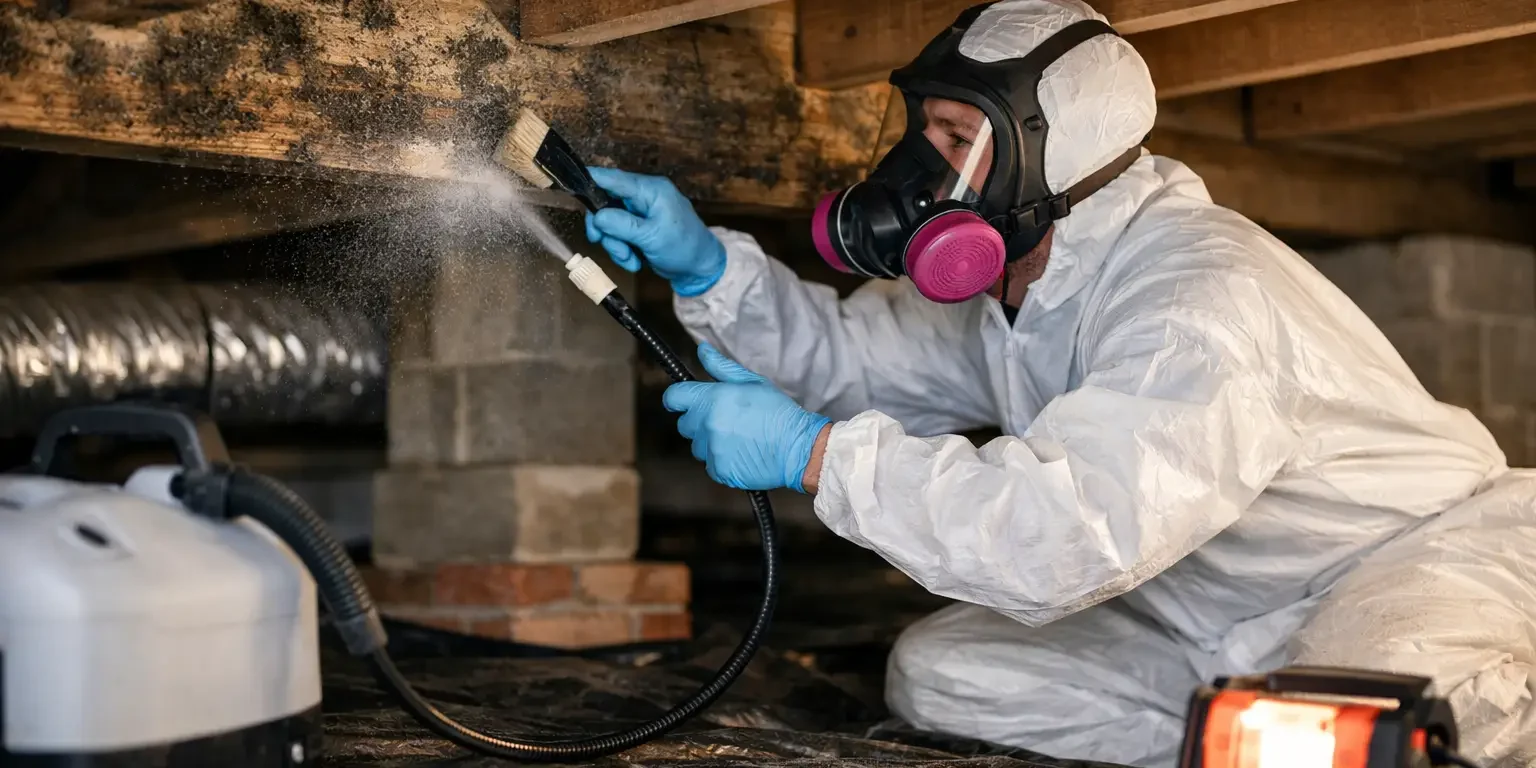
A musty smell coming up through the floors is often the first sign that something is wrong below the house. Crawl space mold removal is not just a cleanup issue – it is a building health issue. When mold grows under a home, it can affect wood framing, insulation, indoor air quality, and the overall condition of the property.
That is why the first step is not spraying chemicals and hoping for the best. A proper response starts with inspection, moisture diagnosis, and a clear remediation plan. In many cases, what looks like a mold problem is really a drainage problem, a humidity problem, or a ventilation problem that has been left unresolved.
Why crawl spaces develop mold so easily
Crawl spaces are ideal environments for microbial growth because they stay dark, damp, and poorly ventilated. Ground moisture can rise into the space, plumbing leaks can go unnoticed, and humid outdoor air can become trapped under the home. Add wood joists, subflooring, paper-faced insulation, or stored materials, and mold has a surface it can colonize quickly.
In older homes, the problem is often tied to missing vapor barriers, open foundation vents, or long-term condensation. In newer homes, the issue may come from improperly managed moisture, HVAC duct sweating, or insulation installed without enough protection from ground humidity. The exact cause matters because mold removal without source correction is usually temporary.
Not all mold growth in a crawl space means a severe health emergency. That said, any active growth under the structure should be taken seriously. Spores can move into living areas through gaps, ductwork, plumbing penetrations, and what building professionals call the stack effect, where air from lower areas rises through the home.
What proper crawl space mold removal includes
Effective crawl space mold removal is a controlled process, not a cosmetic one. The goal is to remove contamination safely, prevent cross-contamination, and correct the conditions that caused the growth in the first place.
A professional team typically begins with a visual inspection and moisture assessment. That may include checking wood moisture levels, looking for signs of water intrusion, evaluating insulation condition, and identifying whether the growth is limited to surface materials or has affected structural components. If needed, sampling can help confirm what is present and guide the scope of work.
Containment is often necessary, especially when growth is extensive or when the crawl space connects easily to occupied areas. This step matters more than many property owners realize. Disturbing mold without containment can spread spores into the home, which is one reason untrained cleanup often makes conditions worse.
Once the area is controlled, contaminated materials may need to be removed. This can include damaged insulation, debris, or porous materials that cannot be properly cleaned. Wood framing and other salvageable surfaces are then treated using methods appropriate to the condition of the material and the extent of growth. In some projects, physical cleaning is enough. In others, sanding or abrasive removal is needed to address deeper surface contamination.
The final stage is not optional – the moisture source must be corrected. That may mean improving drainage, repairing leaks, sealing the ground with a vapor barrier, addressing condensation, or changing how the crawl space is conditioned. Without that correction, mold often returns.
Why DIY crawl space mold removal often falls short
Homeowners understandably want a fast fix, especially when they find staining on joists or smell mold near floor registers. The problem is that most store-bought products are designed to clean visible surfaces, not manage a contaminated crawl space safely.
Bleach is one of the most common mistakes. It may lighten staining on some materials, but it does not solve the underlying moisture problem and is not a complete remediation strategy for porous building components. Foggers and retail sprays can also create a false sense of security. If the source remains active, the smell may fade briefly while the growth continues.
There is also the safety issue. Crawl spaces are confined, uncomfortable, and easy to misjudge. Disturbing moldy insulation, crawling through contaminated dust, or working around electrical lines and low-clearance framing presents real risk. For property managers and business owners, there is added liability if the work is done improperly and affects occupants.
Signs you may need professional help now
Some crawl space conditions can wait a few days for scheduling. Others should be addressed quickly. If the mold covers a large area, if there has been recent flooding, if wood feels soft or deteriorated, or if people in the building are noticing worsening odor or air quality, it is smart to move fast.
The same applies if you have already tried to clean the area and the smell came back. Recurrence usually means the underlying source was missed. In humid regions and coastal-adjacent parts of New Jersey and surrounding service areas, crawl spaces can stay wet long enough for mold to return faster than owners expect.
Real estate transactions are another case where timing matters. Mold growth in a crawl space can raise red flags during a sale, refinance, or tenant turnover. A documented, standards-based remediation process is far more credible than a quick cleanup with no verification of cause or scope.
The role of testing and inspection
Testing is useful when it answers a specific question. It can help distinguish between suspected mold and other staining, support a remediation protocol, or establish pre-remediation conditions for larger or more sensitive properties. But testing is not a substitute for inspection.
A thorough inspection should explain where moisture is coming from, what materials are affected, and whether the conditions below the home are likely influencing indoor air. This is where experienced, certified professionals separate themselves from general contractors or companies that lead with fear. The right approach is to diagnose first, then remediate based on evidence.
That distinction matters because not every dark mark in a crawl space requires the same response. Some homes have limited, surface-level growth tied to seasonal humidity. Others have hidden moisture and widespread contamination involving insulation, framing, and air pathways into the occupied space. The remedy should match the actual condition, not a sales script.
Preventing mold from coming back
After remediation, the crawl space needs to stay dry enough to remain stable. Prevention usually comes down to moisture control, but the exact solution depends on the house.
For some properties, the key is exterior drainage correction so water stops collecting near the foundation. For others, the biggest improvement comes from installing or replacing a ground vapor barrier, sealing open gaps, or addressing plumbing leaks. In certain situations, dehumidification or crawl space encapsulation may be appropriate. In others, those measures would be excessive if the core issue is a simple leak.
This is where trade-offs matter. Encapsulation can be a strong long-term solution, but it is not automatically necessary for every home. Surface cleaning may be enough in a limited case, but not if wet insulation and elevated wood moisture are still present. Good remediation is specific, not one-size-fits-all.
Choosing a crawl space mold removal company
If you are hiring help, ask how the company identifies the moisture source, whether containment is used when needed, what standards guide the work, and how they determine whether materials should be cleaned or removed. Those answers tell you a lot.
Be cautious of contractors who treat every mold situation like a catastrophic event or, on the other end, anyone who promises to solve it with a single spray application. A qualified firm should be able to explain the process clearly, document findings, and focus on safe correction rather than scare tactics.
For homeowners and property managers, speed matters, but procedure matters more. Certified Mold Removal Inc. builds its work around inspection, source correction, and standards-based remediation because that is what protects the building and the people in it.
A crawl space is easy to ignore until the house starts telling you otherwise. If there is mold below the structure, the smartest move is to treat it as a moisture problem with a mold consequence, not just a stain to cover up. Handle it thoroughly now, and you protect much more than the space under the floor.