A pipe bursts behind a wall on Friday night, the carpet is wet by Saturday morning, and by Monday there is already a musty smell in the room. That is how many emergency mold problems start. If you need emergency mold service after leak damage, speed matters – but so does getting the process right the first time.
The biggest mistake property owners make is treating mold as only a cleanup issue. After a leak, mold growth is usually a symptom of a larger moisture problem. If the source is not found and corrected, wiping surfaces or spraying chemicals will not solve it. It can even make the situation worse by disturbing contamination and spreading spores into the air.
When emergency mold service after a leak is actually necessary
Not every leak turns into a major mold event, and not every mold issue is dangerous. That said, some situations need immediate professional attention. If water has affected drywall, insulation, carpeting, wood framing, HVAC areas, or hidden cavities, conditions can change quickly. In many buildings, mold can begin developing within 24 to 48 hours when moisture is trapped.
Emergency service becomes especially important when the leak is not fully contained, when there is visible growth, when occupants are reporting odors or irritation, or when the affected area is large enough that cutting corners could spread contamination. The same is true for rental properties, offices, retail spaces, and multifamily buildings where one leak can affect adjacent units or create indoor air quality concerns beyond the original room.
A small supply line leak under a bathroom sink is very different from a ceiling collapse after an upstairs plumbing failure. The right response depends on the amount of water, the materials involved, how long the area stayed wet, and whether the moisture migrated into hidden spaces.
What should happen in the first 24 to 48 hours
The first priority is stopping the water source. If the leak is active, shutting off the supply, containing the spread, and protecting unaffected areas comes before anything else. Once the leak is controlled, the next step is not random demolition. It is assessment.
A qualified mold specialist should determine where moisture traveled, what materials are impacted, and whether conditions support active growth. This often means using moisture meters, thermal imaging, and a visual inspection of nearby rooms, wall cavities, flooring systems, and other areas that may not look damaged from the surface.
This stage matters because overreaction and underreaction are both expensive. If too little is removed, contamination remains. If too much is torn out without a plan, costs rise and occupants are exposed to unnecessary dust and debris. A disciplined inspection helps define the scope before remediation begins.
Why diagnosis comes before cleanup
Homeowners are often told to bleach everything and dry it out with fans. That advice is incomplete at best. Bleach is not a proper remediation plan for porous materials, and aggressive air movement without containment can push spores into clean sections of the property.
Proper emergency mold service after leak events starts with diagnosis. That means identifying the water source, confirming whether materials are salvageable, and deciding if testing or a written remediation protocol is needed. In some cases, the visible damage is only a small part of the problem. Water can wick upward into drywall, move under flooring, and remain trapped behind baseboards long after surfaces appear dry.
For commercial properties and occupied homes, procedural accuracy is not optional. It protects indoor air quality, limits cross-contamination, and creates a clear path from assessment to safe cleanup.
What certified mold remediation should include
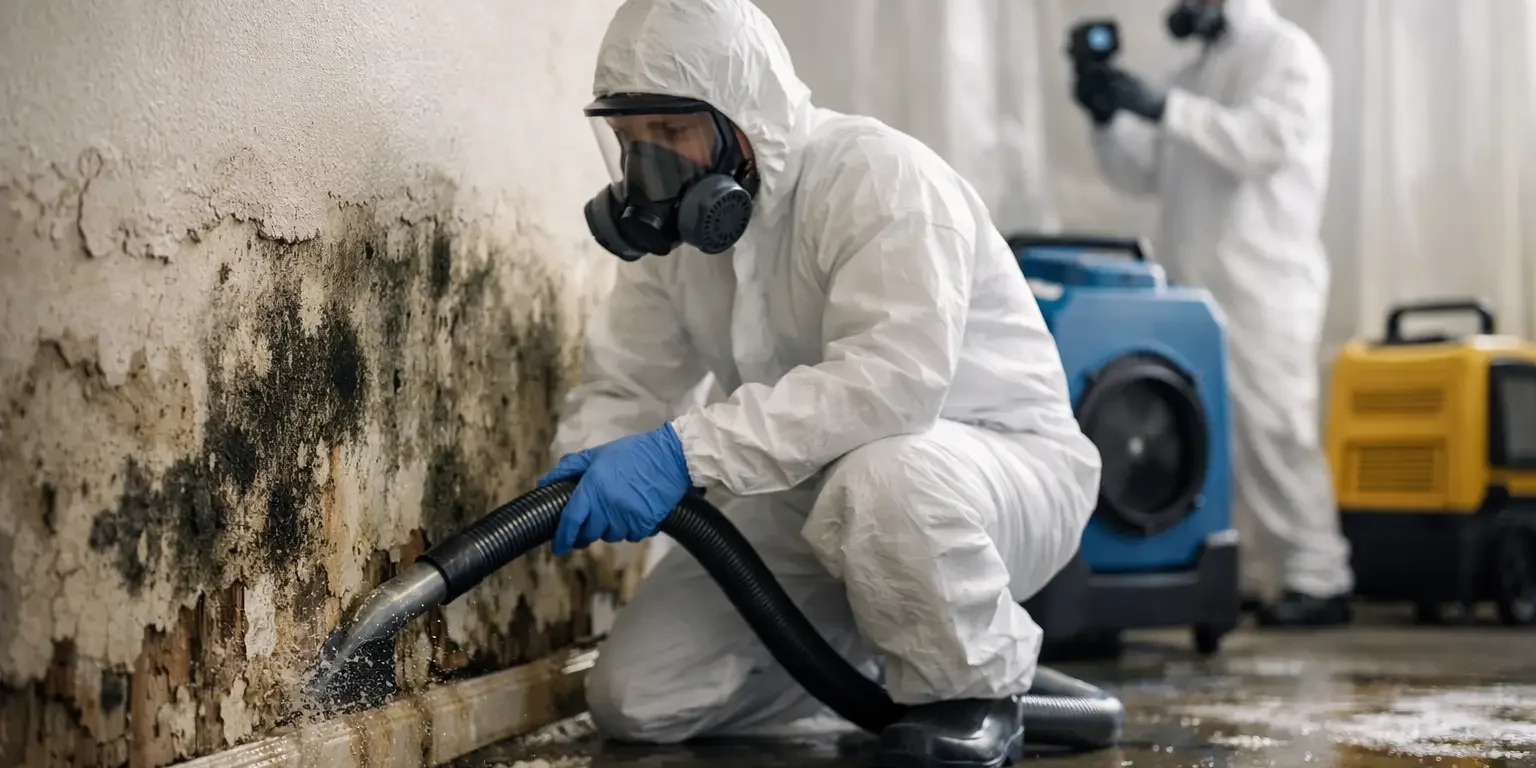
A legitimate emergency response is more than showing up with a fogger and a shop vacuum. Safe remediation follows a sequence. The source of moisture must be corrected. The affected area should be isolated when needed. Workers should use proper personal protective equipment. Contaminated materials that cannot be restored must be removed carefully. Surfaces that can be saved need detailed cleaning, not cosmetic treatment.
Containment is one of the most important distinctions between a specialist and a general contractor. If drywall with mold growth is opened without proper controls, spores and debris can spread through occupied space or HVAC pathways. That turns a localized problem into a building-wide one.
Negative air pressure, engineering controls, HEPA filtration, and controlled removal methods are not scare tactics. They are standard safeguards when the conditions call for them. The exact setup depends on the size and severity of the loss, which is why professional judgment matters.
Testing and protocols – when they help
Testing is useful when the extent of contamination is unclear, when there is a dispute about conditions, when post-remediation documentation is needed, or when occupants are concerned about air quality. It is not necessary in every case. Honest providers explain when testing adds value and when it does not.
The same is true for remediation protocols. In more complex jobs, a written protocol helps define the work, establish containment requirements, and document what has to be removed or cleaned. For property managers and business owners, that structure can be critical for tenant communication, contractor coordination, and recordkeeping.
What not to do after a leak
Panic leads to bad decisions. So does waiting too long. If you suspect mold after water damage, avoid treating it like a simple housekeeping project.
Do not paint over staining or visible growth. Do not rely on air fresheners or deodorizers to mask a musty odor. Do not run fans into unaffected rooms if contamination may already be present. And do not hire a contractor who starts cutting walls before identifying the source of the moisture and defining the containment plan.
DIY cleanup may appear cheaper in the short term, but hidden spread is where costs climb. By the time occupants notice recurring odor, staining, or respiratory irritation, contamination may already be behind walls, under flooring, or inside adjacent spaces.
How emergency service protects health, property, and cost
The goal is not just to remove what you can see. It is to return the building to a normal, safe condition without spreading contamination during the process. That protects people first, especially children, older adults, tenants, employees, and anyone sensitive to poor indoor air quality.
It also protects the structure. Wet drywall loses integrity. Wood can remain damp long after a leak ends. Flooring systems trap moisture differently depending on the material. Fast, technically sound remediation reduces the chance of progressive damage, odor absorption, and repeat work.
Cost control is another reason to act early. A contained leak response is usually far less disruptive than a delayed remediation project involving multiple rooms, tenant complaints, or business interruption. The cheapest path is rarely the lowest bid. It is the one that actually resolves the source and contamination without creating new problems.
For homes, rentals, and commercial spaces, the response is not identical
A single-family home may allow faster access and simpler decision-making. A rental property adds tenant safety and documentation concerns. Commercial buildings often involve scheduling restrictions, occupied work areas, liability concerns, and a stronger need for process control.
That is why experience matters. A provider handling emergency mold service after leak events should know how to scale the response to the building type, occupancy, and risk level. In areas across New Jersey and nearby service markets, that often means balancing urgency with careful containment so the fix does not become more disruptive than the leak itself.
How to choose the right emergency mold company
Look for a company that explains the sequence clearly: stop the source, inspect, define the scope, contain the area, remediate safely, and verify that conditions are back under control. Certifications, insurance, and standards-based procedures matter because mold work is not just demolition or janitorial cleaning.
Be cautious of companies that use fear to force a decision. Not all mold is toxic, and not every stain requires a full-scale remediation. A credible specialist will be direct about the actual risk, the urgency of the moisture issue, and the steps required to correct it.
Certified Mold Removal Inc. operates with that specialist mindset – fast response, proper diagnosis, and remediation built around safety rather than guesswork. For property owners dealing with a fresh leak or early signs of mold, that kind of disciplined process can make the difference between a controlled repair and a much larger contamination problem.
If you have had a recent leak and the space still smells damp, feels humid, or shows discoloration, do not wait for the damage to declare itself more clearly. Early action is not about panic. It is about protecting the people in the building and fixing the problem before hidden moisture turns a manageable event into a much bigger one.