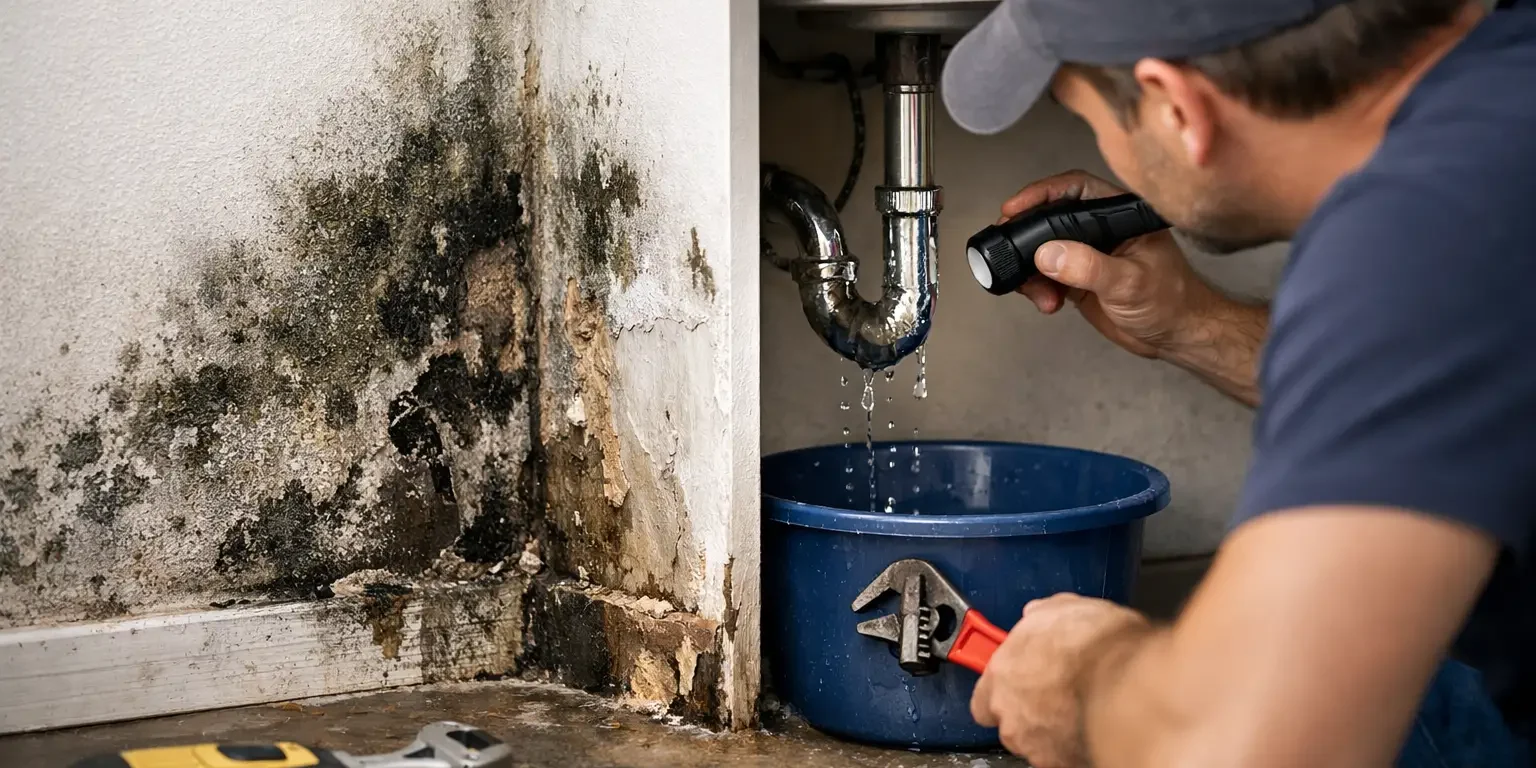
A moldy drywall stain, a musty basement, or recurring growth around a window is not the real problem. It is evidence of a moisture problem that has not been corrected. The real question behind “how to fix mold source” is: where is water or excess humidity entering, collecting, or failing to dry?
Mold cleanup without source correction is temporary at best. At worst, it hides a continuing leak inside a wall, ceiling, crawl space, or HVAC area while damage spreads. A proper response starts with diagnosis, follows with a lasting moisture repair, and only then moves to controlled mold remediation and verification.
How to Fix a Mold Source: Start With Moisture, Not Bleach
Mold needs moisture, a food source such as paper-faced drywall or wood, and enough time to grow. Buildings contain plenty of material that can support growth. The part you can control is moisture.
That is why spraying visible mold with bleach, painting over staining, or replacing a section of drywall before identifying the water source is not a repair. It may improve the appearance for a short period, but it does not address the condition that allowed mold to develop.
A qualified inspection looks beyond the visible area. The goal is to determine whether the moisture is active, intermittent, or a past event that has already been corrected. This distinction matters. A stain under a bathroom might come from a current plumbing leak, shower splash escaping a failed caulk joint, a one-time toilet overflow, or condensation on an uninsulated pipe. Each requires a different repair plan.
Not all mold is dangerous, and visible growth does not automatically mean a building-wide contamination issue. Still, recurring mold, a persistent musty odor, unexplained water staining, or symptoms that seem worse in a particular room should be investigated promptly. Delay gives moisture more time to damage building materials and can increase the scope and cost of remediation.
Find the Actual Source of Water or Humidity
The source is not always directly above or beside the mold. Water travels along framing, pipes, ductwork, and gravity paths before it becomes visible. A ceiling stain may originate from a roof penetration several feet away. Mold on an exterior-facing wall may be driven by rain intrusion, not a plumbing issue.
A thorough assessment typically combines visual inspection with moisture readings and a review of the building’s history. Ask when the problem appears. Does it worsen after heavy rain, when the air conditioner runs, after showers, or only during cold weather? Patterns often point investigators toward the cause faster than the visible growth itself.
Plumbing leaks and appliance failures
Supply-line leaks, drain leaks, failed toilet seals, damaged dishwasher connections, refrigerator water lines, and washing machine hoses can release water slowly for weeks. Slow leaks are especially troublesome because occupants may not see pooling water while cabinetry, flooring, or wall cavities remain damp.
The repair is more than tightening a fitting. The affected component must be repaired or replaced, and wet materials must be evaluated for drying or removal. If the leak occurred inside a closed cavity, drying the room air alone is rarely enough.
Roof, window, siding, and foundation intrusion
Rain-related mold often points to a building-envelope issue. Damaged flashing, missing shingles, failed window seals, cracks in masonry, clogged gutters, poor grading, or foundation seepage can introduce water repeatedly.
These problems require exterior correction before interior work is finalized. Repairing drywall while rain can still enter through the same opening simply resets the cycle. In coastal and high-rainfall parts of New Jersey, seasonal storms can expose weaknesses that stayed hidden during dry weather, so the timing of the problem is useful evidence.
Condensation and poor ventilation
Condensation occurs when warm, humid air meets a cold surface. It is common on cold-water pipes, poorly insulated exterior walls, window frames, and unconditioned areas near ductwork. Bathrooms, kitchens, laundry rooms, and basements are frequent trouble spots because they generate or hold moisture.
Here, the fix may involve insulating pipes, improving bathroom exhaust, correcting dryer venting, sealing air leaks, or maintaining indoor humidity at an appropriate level. A dehumidifier can help manage humidity, but it is not a substitute for repairing a leak or drainage problem. It is a control measure, not a cure for every mold issue.
HVAC and drainage problems
Air-conditioning systems remove moisture from indoor air. If a condensate drain is clogged, a pan overflows, insulation is damaged, or ductwork sweats, mold can develop near mechanical areas and spread odor through the building.
The system should be inspected for drainage, proper operation, and moisture around ducts or air handlers. Do not assume the HVAC system is contaminated because a nearby area has mold. It should be evaluated based on actual conditions, not fear-based claims.
Correct the Source Before Major Cleanup Begins
Once the moisture pathway is identified, make the repair that stops it. This could mean a licensed plumber replacing a failed line, a roofer correcting flashing, a contractor repairing exterior drainage, or an HVAC professional restoring condensate drainage and airflow.
Emergency drying may need to begin immediately after a leak or flood to limit further damage. That does not mean remediation should proceed blindly. The work should be planned so that the moisture source is controlled and affected materials are handled safely. If removal begins before the leak is repaired, the area may be exposed again before reconstruction is complete.
For a small, isolated area caused by a known and fully repaired incident, the solution may be straightforward. Larger areas, repeated growth, contamination inside wall or ceiling cavities, or problems affecting tenants, employees, children, older adults, or people with respiratory sensitivities deserve a more controlled approach.
Verify That the Area Is Actually Dry
A repaired pipe or patched roof is only the first checkpoint. The surrounding materials must also be dry enough to prevent continued growth. This is where many incomplete repairs fail.
Professional moisture measurement compares affected materials to normal, unaffected materials in the same building when possible. Drywall, framing, subflooring, insulation, and cabinetry can retain moisture even when the surface feels dry. Hidden moisture may require targeted removal, mechanical drying, or additional investigation.
Drying time depends on the material, the amount of water involved, airflow, temperature, humidity, and whether the cavity is open. Dense materials and enclosed spaces dry more slowly. A damp carpet pad, wet insulation, or saturated drywall may not return to a safe condition through fans alone.
If mold keeps returning after a repair, do not keep treating the surface. Reassess the source. There may be a second leak, an unsealed exterior opening, a humidity condition, or moisture trapped in materials that were never properly dried.
Remove Mold Under Proper Containment
After source correction and drying are underway, mold remediation can address the affected materials and settled debris. The proper scope depends on the size of the area, the materials involved, the location, and the likelihood that disturbance could spread particles to clean spaces.
Porous materials with established growth, including drywall, insulation, carpet padding, and some fabrics, may need removal. Nonporous or semi-porous surfaces can often be cleaned using appropriate methods, but the method must match the material and contamination level. Aggressive dry scraping, uncontrolled demolition, and household fans can spread debris beyond the original area.
For larger or concealed conditions, containment and controlled air management protect occupied areas during removal. This is why hiring a general contractor who treats mold as a quick demolition task can create avoidable risk. Proper remediation is a process: isolate the work area, remove or clean affected materials, control dust and debris, clean surrounding surfaces, and confirm the area is ready for repair.
Testing can be useful when it answers a specific question, such as evaluating a suspected hidden condition or documenting conditions after remediation. It should support the inspection and remediation plan, not replace them. A sample result without a clear source investigation can lead to unnecessary alarm or the wrong repair.
Prevent the Next Moisture Event
After repair and remediation, maintain the conditions that keep mold from returning. Check under sinks and around appliances regularly, clean gutters, keep exterior drainage moving away from the foundation, and use exhaust ventilation during showers and cooking. Address water stains and musty odors while they are still small clues, not major repair projects.
Property managers and business owners should also document leaks, repairs, drying steps, and tenant reports. Recurring issues are easier to resolve when the history is clear. In multi-unit properties, a complaint in one unit may be connected to plumbing, roof, or ventilation conditions serving another area.
If you cannot identify why mold appeared, if growth returns after a repair, or if water may be hidden behind finished surfaces, bring in a certified mold professional before beginning demolition. Certified Mold Removal Inc. approaches the problem in the correct order: identify the moisture source, establish a clear remediation protocol, and complete the work with occupant safety and indoor air quality in mind.
The most cost-effective mold repair is rarely the fastest cosmetic fix. It is the one that leaves the building dry, the source corrected, and the affected area properly restored so you can stop worrying about what may be growing out of sight.