Professional Mold Removal and Remediation Franklin Lakes, NJ
Call (201) 773-1466 For Same Day Mold Testing in pany in Franklin Lakes, NJ.
Certified Mold Removal has been providing expert mold cleanup and moisture control solutions for homeowners, and businesses in Franklin Lakes, New Jersey, since 1995. Our philosophy is straightforward: we do not just clean away the visible contamination; we find and stop the water source that caused it in the first place. This ensures a permanent solution.
Because Franklin Lakes features large, custom-built estates surrounded by dense woods and local streams, properties here face specific moisture patterns. Heavy rains and melting snow saturate the soil around these large foundations. This ground moisture puts constant pressure on your basement walls and concrete slabs, slowly weeping through tiny gaps or porous materials.
When you pair this subterranean dampness with the heavy humidity of a New Jersey summer, it creates an ideal climate for mold growth that eventually requires mold remediation. Many local homes sit on spacious, heavily shaded lots. While these trees offer great privacy, they also block sunlight from drying out the ground around your home. This allows hidden moisture to build up quietly behind finished walls and floors in your Bergen County home or office.
Certified Mold Removal Inc. Service Links:
Residential & Commercial Mold Testing & Mold Inspection in Franklin Lakes, NJ
A thorough mold inspection is never based on guesswork. At Certified Mold Removal, every evaluation begins with professional-grade, non-invasive diagnostic tools. These include infrared thermal imaging cameras and advanced moisture meters. These instruments trace hidden water intrusion inside walls and ceilings without causing unnecessary damage to your property, giving our mold inspection team a precise picture of what is happening before any work begins.
The architecture of Franklin Lakes homes presents unique challenges for mold inspection. Large colonials, modern farmhouses, and expansive custom builds all create spaces where moisture can accumulate in unexpected areas. Aging plumbing lines, complex roof designs, and outdated exterior drainage systems can leak slowly for months before a musty odor or dark stain ever appears. Our certified inspectors conduct professional mold testing as a core part of every evaluation. This enables us to deliver clear laboratory results that identify exactly what species are present, where they are concentrated, and what abatement approach is required.
For commercial properties, private offices, and businesses along Franklin Avenue, maintaining a healthy indoor environment is essential for both occupants and operations. Our commercial mold testing services provide detailed findings allowing us to wrire a clear, step-by-step mold remediation plan — addressing both surface growth and airborne contamination quickly and professionally.
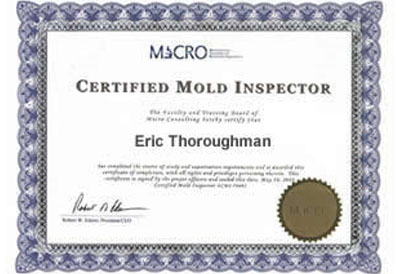
Franklin Lakes, NJ homeowners trust Eric Thoroughman of Certified Mold Removal for expert mold inspections, moisture intrusion assessments, and certified remediation protocols tailored to basement moisture and water damage situations in Bergen County.
Mold Removal for Your Basement, Crawl Space, Bathroom, Kitchen, Garage & Attic
The various areas in a large Franklin Lakes, New Jersey home experience different types of moisture challenges. Here is how mold takes hold in specific zones and how we address it:
-
Basement Mold Removal Procedures: Because many local basements are fully finished into home gyms, theaters, or living areas, moisture from the ground gets trapped directly behind drywall and beneath carpeting. If groundwater seeps through the foundation, large colonies can grow completely out of sight before showing any warning signs. It’s a critical part of a mold inspectors job to locate these hidden water issues.
-
Crawl Space Mold Remediation: Homes built with crawl spaces often suffer from ground dampness rising directly into the wooden structural beams above. We specialize in removing crawl space mold, drying the wood framing, and installing heavy-duty vapor barriers to seal out ground moisture permanently.
-
Bathroom Mold Removal: Large master suites and guest bathrooms generate a massive amount of steam daily. If exhaust fans are outdated, restricted, or venting directly into an attic instead of outside, that trapped humidity quickly turns into stubborn mold on ceilings, grout, and behind cabinetry.
-
Kitchens Mold Removal: Slow, hidden leaks under the kitchen sink, behind built-in dishwashers, or around refrigerator ice maker lines are major culprits for mold. Because these leaks are concealed by custom cabinetry, they often breed heavy mold growth beneath the flooring before they are discovered. In these cases your mold inspector wqill rely on thermal imaging to locate the exact location of these hidden moisture hot spots.
-
Garage Mold Remediation: Large multi-car garages often lack proper insulation and airflow. When you park wet or snow-covered vehicles inside, or experience rapid seasonal temperature shifts, condensation forms on the concrete floors and walls, which can quickly spread to stored items and drywall. A good mold inspection professional will carefully move these garage contents to locate hidden contamination in your garage.
-
Attic Mold Remediation: In the winter, warm air from your living spaces naturally rises. If your attic lacks proper ventilation (like ridge and soffit vents), that warm air hits the freezing underside of your roof deck, turns into water droplets, and triggers widespread attic mold on the wood sheathing. Furthermore, homeowners tend to store contents in their attic. A thorough mold inspection must always include a detailed search for hidden contamination among these stored items. This is especially critical when family belongings are kept in porous cardboard boxes, which readily absorb airborne moisture and act as a breeding ground for fungi, rather than in plastic storage bins with airtight, snap-on lids.
The Consumer Product Safety Commission (CPSC) provides excellent homeowner guides on indoor air quality and moisture reduction, which are highly helpful for maintaining large residential properties.
Franklin Lakes, NJ homeowners trust Thomas Candella of Certified Mold Removal for expert mold removal, moisture mitigation, and certified remediation project supervision tailored to basement mold, water damage, and post-flood situations in Bergen County.
Black Mold Removal & Testing - Targeted Investigation & Safe Remediation
When property owners discover dark, patchy growth on drywall or structural framing, the immediate assumption is often that they are dealing with toxic black mold (Stachybotrys chartarum). However, color alone cannot determine the biological profile. Many common, less aggressive fungal strains appear dark green or black but require entirely different handling than true toxic species. Furthermore, visual identification only scratches the surface; the real danger often rests in the microscopic, invisible fragments floating through your indoor air.
This is why professional mold testing is a non-negotiable first step before any physical cleanup begins.
At Certified Mold Removal, we partner with independent, accredited laboratories to conduct airborne and physical mold testing services. This diagnostic tests accomplish three critical things:
-
Identifies the exact genus: It confirms whether you are dealing with toxigenic strains or more common and less harmful species.
-
Establishes a baseline spore count: It measures the concentration of airborne spores inside the affected room compared to the natural outdoor air.
-
Maps the migration: It tells us if spores have traveled through your HVAC ductwork and is now circulating airborne into different areas of your home.
Once the testing results show us what we are dealing with, we write a customized black mold removal containment and abatement protocol. Dealing with heavy fungal colonies requires strict engineering controls. If you simply wipe down or tear out contaminated materials without proper safeguards, the colony defends itself by releasing millions of spores into the air. This cross-contamination can cause severe health issues to occupants.
To ensure your home remains entirely safe during the mold remediation process, we construct heavy-duty, airtight containment chambers using 6-mil flame-retardant poly sheeting. Inside this zone, we deploy industrial HEPA-filtered air scrubbers to create a negative pressure environment. This ensures that any air escaping the work area is continuously scrubbed clean of microscopic particles. Damaged, porous materials like insulation and saturated drywall are carefully sealed in bags and removed. Then solid structural timbers are treated, deeply cleaned, and dried using commercial-grade desiccant dehumidifiers.
We do not guess when a mold remediation project is complete. Once the physical remediation is finished, we bring back an independent mold inspection professional to perform post-remediation verification (PRV) testing. This airborne mold testing ensures that the indoor spore counts have returned to a normal, healthy ecology. Documented proof of a successful abatement project — and the peace of mind every property owner deserves.
Franklin Lakes, NJ homeowners turn to Robert Ky, founding President of Certified Mold Removal, for expert interpretation of mold inspection findings, testing results analysis, and development of certified remediation action plans backed by over 31 years of professional expertise in Bergen County.
Why Franklin Lakes Neighbors Trust Certified Mold Removal
Successfully performed mold remediation services requires a team that understands local estate construction and knows exactly how North Jersey weather impacts large properties. With over 30 years of local mold testing and remediation experience in Bergen County, we treat your home as if it were our own.
-
Certified Industry Standards: We strictly follow the ANSI/IICRC S520 Standard, which is the gold standard for safe, effective, and professional mold remediation.
-
Finding the Root Cause: We don’t just spray over the mold and leave. We give you a clear, practical plan to fix the ventilation, drainage, or plumbing issue that caused the problem in the first place.
-
Honest, Clear Communication: You will receive a complete digital report detailing our moisture readings, photos, and independent laboratory results so you can make informed decisions.
To read honest reviews from your neighbors right here in town, please feel free to visit our Certified Mold Removal Google Business Profile. For a same day mold inspection and testing in Franklin Lakes, NJ call us at (201) 773-1466.
Frequently Asked Questions
How are mold testing samples collected?
We collect samples using air sampling with spore traps or surface sampling using tape lifts or swabs. Our team considers your property’s specific conditions before suggesting collection techniques to ensure they’re suited to your office or home.
Are newer homes more susceptible to mold growth?
Yes, tightly-sealed modern homes trap moisture more effectively. Tyvek wrapping, heavy insulation, and newer windows reduce air circulation, which creates ideal conditions for mold growth. Moisture accumulates in HVAC systems frequently. We understand modern construction challenges like these and address them professionally.
What are some ways I can recognize mold?
Musty odors signal mold presence and often grow in basements, crawl spaces, and attics. Discoloration that typically appears as white, black, brown, green, tan, or purple stains on surfaces, walls, ceilings, and furniture indicates mold. To locate hidden contamination that others miss.
Will mold go away if moisture is removed?
No, moisture removal creates dormant mold, not dead mold. Spores remain viable and reactivate when moisture returns. Drying stops active growth temporarily but doesn’t eliminate contamination. Our team of experts permanently removes all mold and spores by addressing underlying moisture sources.
Can I use bleach to clean the mold?
EPA doesn’t recommend bleach for mold. Bleach is mostly water and stops working quickly, leaving spores behind. It doesn’t eliminate airborne spores that caused the initial contamination. Our team uses proven antimicrobial treatments to safely and effectively remove all mold.
What does black mold smell like?
Black mold produces strong, musty, earthy odors resembling rotting wood, damp soil, or wet socks. Microbial volatile organic compounds create these smells during growth. Intensity varies but becomes noticeable in enclosed spaces with water damage. Smell something suspicious?