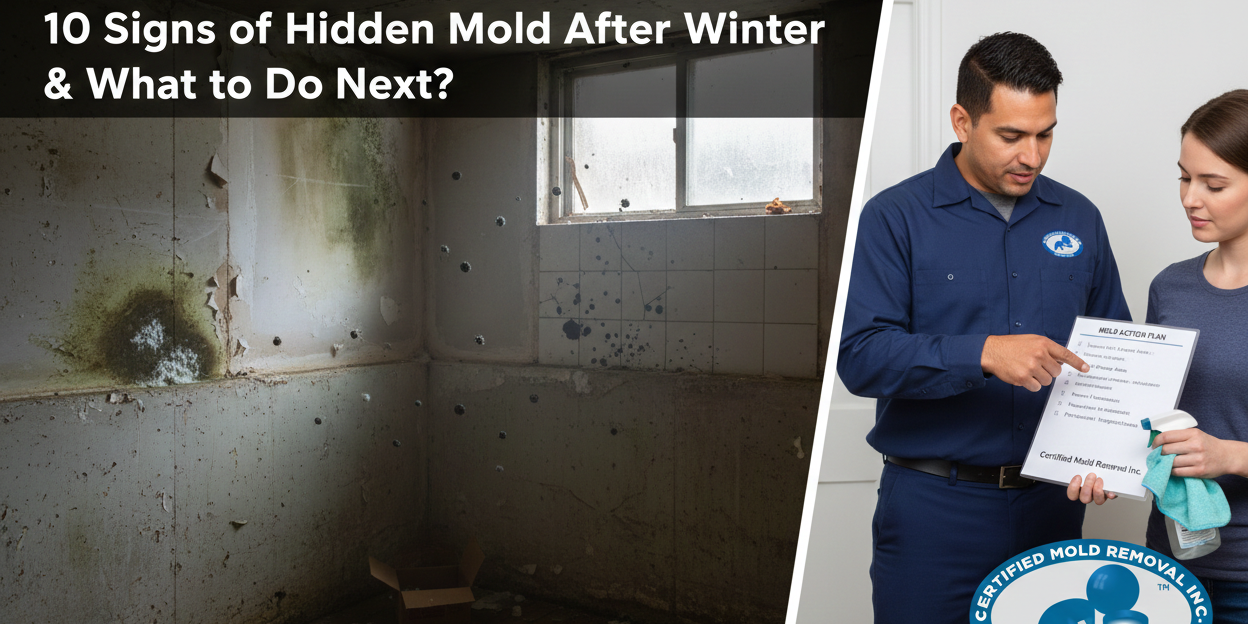
Imagine what three months of closed windows and cranked-up heat can do to your house. Spoiler alert: it’s not pretty.
You probably don’t realize this, but your home during winter is a mold incubator. Warm air inside, freezing temperatures outside, and condensation everywhere. Mold absolutely loves this setup. Most people have no clue there’s a problem until they start noticing things are off.
Here’s what we see constantly when we go out for mold inspection after winter. If any of this sounds familiar, you’ll want to keep reading.
1. That Funky Smell in Certain Rooms
Walk into your basement or that spare bedroom you haven’t used much, and immediately smell something musty? Yeah, that’s not just stale air from being closed up all winter. Mold has this distinctive earthy smell—some folks compare it to dirty socks. Others say wet cardboard.
The frustrating part is that you can air out the room for days and the smell comes right back. Air freshener won’t cut it, so for mold inspection after winter, call us.
2. Random Spots Appearing on Walls
Last fall, your walls were fine. Now there are these weird discolored patches. It could be black (the classic mold color everyone knows), but we find green, yellow, orange, and even pinkish growth, too. Sometimes it just looks like your wall got dirty somehow.
Pay attention to corners and anywhere near windows. That’s prime real estate for mold. Winter mold detection starts with just using your eyes and noticing what’s different. Those tiny spots in February can become massive colonies by May if you ignore them, so don’t.
3. Paint That’s Peeling or Bubbling Up
Your paint job was solid before winter. Now it’s bubbling like air is trapped beneath, or the paint is peeling off in strips. Your wallpaper may be separating at the seams or buckling in weird ways.
This is moisture damage. Water got behind there—probably from condensation—and created the perfect little mold habitat.
4. Everyone in the House Feels Sick
Your daughter’s been coughing for two weeks. Your husband complains about headaches every morning. You’ve got a runny nose that won’t quit. The doctor says it’s probably allergies.
But you all feel fine at work and school. Symptoms only act up at home, especially in certain rooms. That’s your first clue something’s in the air. Mold spores trigger allergic reactions and respiratory issues, particularly in kids and anyone with asthma. Your body knows something’s wrong before your brain figures it out. Don’t wait until things get worse. Call us for mold remediation services.
5. Window Areas Look Trashed
Remember wiping condensation off your windows every morning in January? (Or maybe you didn’t remember, which is also common.) Either way, check out those window frames and sills now.
If you’re seeing black streaks, rotting wood, or crumbling caulk, moisture did a number on those areas. Don’t waste time. Ask us about our mold remediation services.
6. Floors Doing Strange Things
Hardwood floors don’t just warp randomly. The carpet shouldn’t feel damp in April, when it’s been dry outside for weeks. If you’re seeing cupping in your floorboards or your basement carpet has a permanent musty dampness, there’s a moisture problem.
Since mold loves growing on subfloors and in carpet padding, you might have a serious situation brewing that you can’t even see yet. Have us check that out through our mold inspection services.
7. Water Stains That Never Went Away
Maybe a pipe burst during that cold snap in February. The roof leaked during that wet snowstorm. Whatever happened, if there’s still a brown stain on your ceiling or wall, you’ve got more than cosmetic damage to worry about.
People make this mistake all the time—they think once the leak stops, problem solved. No, that water already soaked into your drywall, insulation, and framing. Mold doesn’t need a constant drip to grow. It just needs that initial moisture to get established, and then it feeds on the building materials themselves. If you don’t want that getting worse, call our team for winter mold detection as soon as you see the signs.
8. Humidity That Won’t Drop
Grab your phone and download a humidity app, or buy a cheap hygrometer from Home Depot. Check your basement, bathroom, anywhere that felt damp during winter. If you’re consistently reading above 55-60%, you’re in trouble.
High humidity is mold’s favorite condition. Basements where the humidity is pushing 75% often have mold, though homeowners often have no idea. “It always feels a little damp down here,” they’d say. If that sounds like you, consider our mold inspection services.
9. Pets Acting Weird or Getting Sick
This one surprises people. Your cat’s been sneezing constantly. Your dog developed a cough that the vet can’t really explain. They seem lethargic or are scratching themselves raw.
Animals react to mold exposure just like people do, sometimes worse. We’ve had customers tell us their dog’s health issues were completely cleared up after we did the remediation work. The vet had run every test and couldn’t figure it out—turned out it was the air quality in the house the whole time.
10. Bathroom Grout and Caulk Falling Apart
Your bathroom takes the most abuse from humidity. Winter makes it ten times worse because of the temperature difference. Every hot shower creates a ton of condensation that settles on cold surfaces.
Look at your tile grout. Is it discolored, cracking, or does it feel soft when you press on it? How about the caulk around your tub or shower—is it black, peeling, or spongy? That’s water penetration, which means mold behind your tiles.
What You Need to Do
Recognize your house in any of these descriptions? Time to stop hoping it’ll go away on its own.
Trying to DIY mold cleanup is usually a bad call. You end up spreading spores around, making yourself sick during the process, and not solving the moisture problem that caused it. Leave it to pros instead. Give Certified Mold Removal Inc. a call. Let’s figure out what winter left behind in your house and get it cleaned up properly. Your family deserves to breathe clean air.