Mold Removal & Remediation in River Edge, NJ
Call (201) 773-1466 For Same Day Mold Testing in pany in River Edge, NJ.
-
- River Flooding: River Edge sits on dense, tightly packed soil that holds water instead of letting it drain quickly. Areas close to the Hackensack River face rising water tables that worsen during heavy storms.
- Humid Summers: Muggy East Coast summer air enters your basement, causing condensation to form on walls, ceilings, and stored items.
- Older Construction: There are many Cape Cod, split-level, and colonial homes in River Edge that were constructed immediately following WWII. These foundations were poured before modern thick plastic vapor barriers or under-slab drainage systems became standard building practice. Water easily enters these older homes through small settling cracks.
-
- Foundation Seepage: Ground pressure and poor grading can direct water through your block foundation, causing basement water damage.
- Heavy Storm Runoff: With so many paved streets and driveways blocking the soil, heavy rain has nowhere to sink. This directs water straight toward your foundation walls.
- Spore Germination: Trapped moisture allows microbial contamination to spread, settling on your walls, ceilings, and AC units.
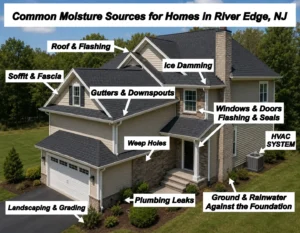
Seeing where water enters your home during your mold inspection determines where we need to test prior to starting your River Edge, NJ cleanup project.
Certified Mold Removal Inc. Service Links:
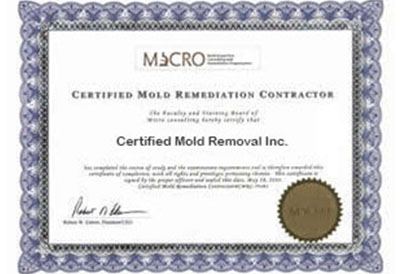
Professional Mold Testing & Mold Inspection in River Edge, NJ
-
- Thermal Imaging Cameras: Cameras equipped with Infrared technology are used to locate hidden moisture issues behind walls.
- Moisture Meters: These are used to determine if surfaces such as wood, plaster, or concrete contain excessive moisture.
- Airborne Mold Testing: Air-O-Cel cassettes are used with a Bio-Pump to collect air samples to determine if physical contamination has spread airborne.
- Direct Surface Testing: Swab sampling is used to verify the specific type of visible growth on suspected building materials or contents.
- Lab Analysis:An Independent, AIHA-accredited laboratory will analize the test samples under strict chain-of-custody protocols.
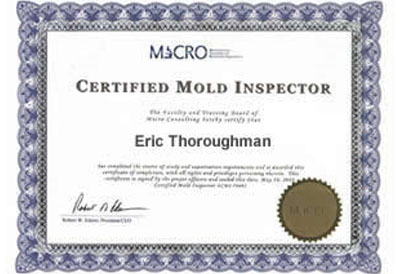
Eric Thoroughman with almost three decades of mold inspection and testing service in River Edge, NJ is IICRC and MICRO certified.
Mold Removal For Your Basement, Crawl Space, Attic, Bathroom, Kitchen, Garage, or Closet
- Basement: The combination of cool concrete surfaces, poor natural cross-ventilation, and continuous groundwater seepage makes your basement the most common site for mold removal.Earthy odors are usually the first sign of trouble. Fungi thrive on porous organic materials such as wood framing, cardboard storage boxes, and fiberglass insulation backings.
- Crawl Space: These narrow, unfinished spaces beneath your house often have an exposed dirt floor. When this is the case, moistuire is continuously released into your home. This moisture rises via the stack effect, carrying spores up into living areas. Crawl space mold remediation requires professional structural drying, and the installation of a thick plastic vapor barrier.
- Attic: The need for attic mold remediation typically point to roof leaks or poor ventilation. When warm, humid air escapes from bathrooms or kitchens into a poorly ventilated attic, it hits the cold underside of the roof sheathing. This causes condensation, leading to microbial growth on these surfaces.
- Bathroom & Kitchen: Mold removal in your kitchen or bathroom is common, as they are areas constantly exposed to water. Problems regularly form along tile grout lines, underneath leaking sink cabinets, and behind appliances like dishwashers and refrigerators. Addressing these areas requires containment, air scrubbing machines prior to beginning any remediation activities.
- Garage & Closet Areas: Garages are often problematic due to their uninsulated doors and damp concrete flooring. Closets, especially those located against cold exterior walls, suffer from poor airflow. Stagnant air traps moisture from humid weather or damp clothing, allowing contamination to form on shoes, and clothing.
Thomas Candella ensures all containment zones maintain the correct negative air pressure during every River Edge, NJ mold remediation project.
The Truth About Black Mold: Health Risks and Toxic Species
For reliable mold inspection and remediation planning in River Edge, NJ, trust the team led by company founder Robert Ky.
Why Bergen County Property Owners Choose Certified Mold Removal
FREQUENTLY ASKED QUESTIONS:
What factors lead to mold growth in River Edge homes? River Edge’s geography, defined by its namesake proximity to the Hackensack River and high water tables, often leads to moisture intrusion in lower levels. In a River Edge property, water typically seeps through foundation masonry or condenses on cool surfaces, providing the necessary environment for mold to flourish on drywall, wood framing, and organic storage items.
Can mold develop in the attic of my River Edge home? Yes. Attic mold is a common issue in the area, often resulting from bathroom exhaust fans that are not properly vented to the roof exterior. During the winter, this trapped humidity condenses on the cold roof sheathing, allowing mold to colonize the rafters and insulation.
What is the IICRC S520 standard for professional removal? The IICRC S520 is the industry-recognized benchmark for professional mold removal. Adhering to this protocol ensures that mold is physically extracted under strict containment, using specialized air filtration and cleaning techniques to prevent cross-contamination into clean areas of the home.
What is “Structural Drying” in professional remediation? Structural drying involves using high-capacity industrial dehumidifiers to extract moisture from building materials like studs, subfloors, and sill plates. This is a critical step because mold will regrow if the structural components are not returned to a “dry standard” before new finishes are installed.
How much does mold remediation cost for a typical residence? Standard residential services typically start at $2,500. For properties requiring extensive basement remediation or structural drying of complex residential layouts, costs generally range from $4,000 to $14,500 depending on the scope of the damage.