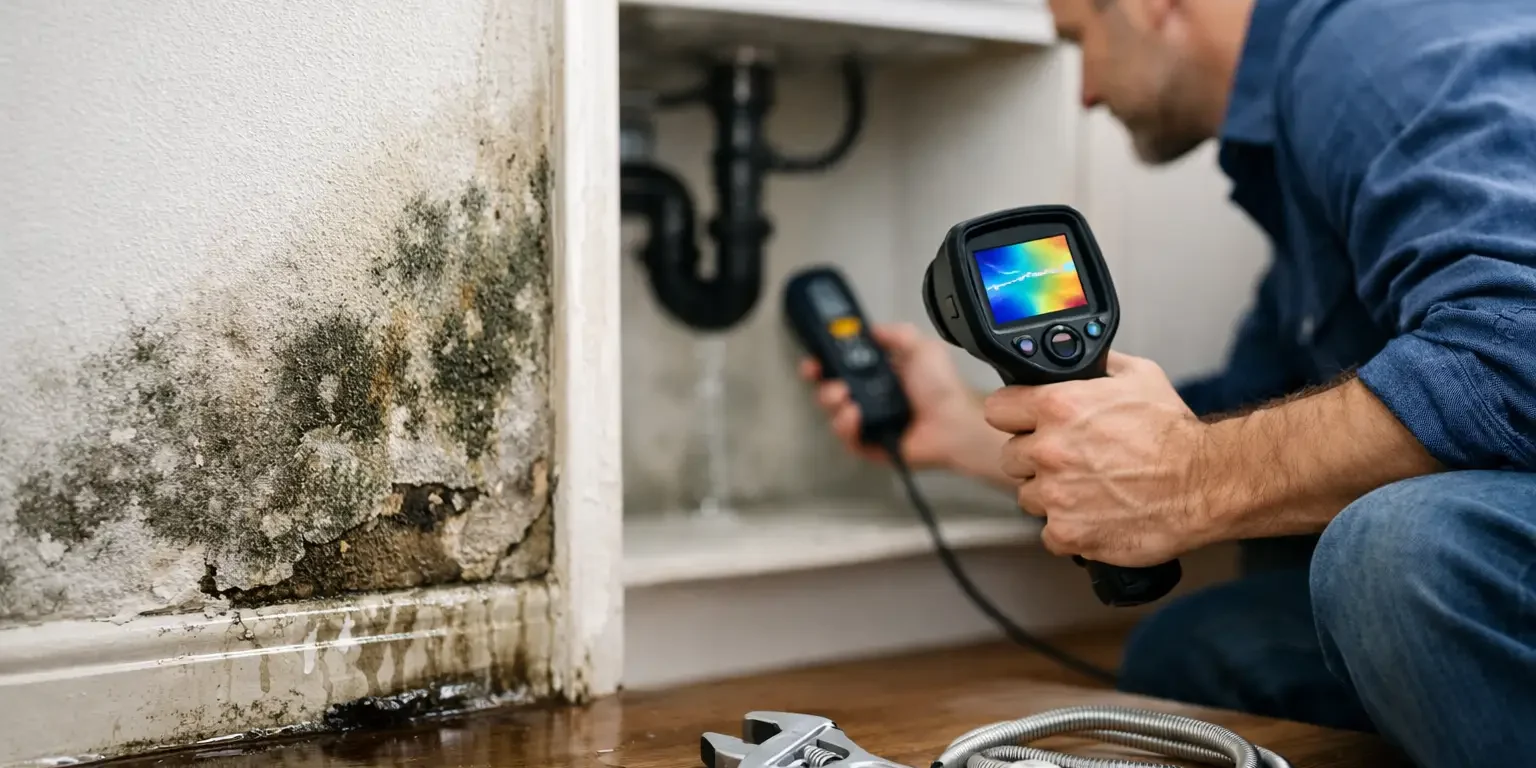
A mold patch on a ceiling or baseboard rarely starts there. What you see is usually the final clue, not the source. That is why leak detection for mold matters so much. If the moisture problem is missed, cleanup becomes temporary, and mold often returns.
For homeowners, property managers, and business owners, the real issue is not just staining or odor. It is the combination of moisture, time, and hidden building cavities. A bathroom supply line can drip behind drywall for weeks. A roof flashing defect can wet insulation after every storm. An HVAC drain problem can keep a utility room damp enough to support growth without a single dramatic flood.
The right response starts with diagnosis, not guesswork. Not all mold is dangerous, but any persistent moisture source deserves attention because it can affect indoor air quality, damage materials, and increase the scope and cost of remediation.
Why leak detection for mold comes before cleanup
Mold needs moisture to grow. That sounds obvious, but it is where many failed jobs begin. People wipe a surface, paint over a stain, or remove a small section of damaged drywall without identifying how water got there in the first place. The visible growth may disappear for a short time, but the damp conditions remain.
Proper leak detection for mold is about tracing moisture back to its origin. In practice, that means separating symptoms from causes. The symptom might be a musty smell in a closet, bubbling paint near a window, or dark spotting around an AC vent. The cause could be a plumbing leak, condensation from poor ventilation, roof intrusion, foundation seepage, or elevated indoor humidity.
That distinction matters because each source is corrected differently. A pinhole pipe leak requires plumbing repair. Condensation around ducts may point to insulation issues or airflow imbalance. Water entering from outside may involve roofing, flashing, grading, or masonry defects. If the source is misidentified, the mold problem keeps cycling.
The most common hidden moisture sources
In residential and commercial buildings, the worst leaks are often the quiet ones. Burst pipes get immediate attention. Slow and intermittent leaks do not.
Bathrooms and kitchens are common starting points because supply and drain lines are concentrated there. Sink cabinets, refrigerator water lines, dishwasher connections, toilet seals, and shower assemblies can all leak in ways that stay concealed. By the time flooring swells or drywall softens, moisture may already be inside adjacent walls.
Roofs are another major culprit. A roof leak does not always show up directly beneath the breach. Water can travel along framing, insulation, and ceilings before staining appears in a different room. Around chimneys, vent penetrations, skylights, and flashing transitions, even a small opening can create a recurring moisture pattern that supports mold.
HVAC systems are frequently overlooked. Condensate drain line clogs, overflowing pans, poorly insulated ductwork, and high indoor humidity can all create conditions mold likes. This is especially relevant in basements, mechanical rooms, and upper-floor utility spaces where moisture can linger unnoticed.
Basements and lower levels present a different challenge. Water intrusion there is often blamed on one event, but the real issue may be chronic seepage, poor drainage, or seasonal humidity. When cardboard storage, carpeting, or finished walls are involved, mold can spread behind surfaces before anyone realizes what is happening.
What professionals look for during leak detection for mold
A proper investigation is not based on smell alone and it should not rely on alarm tactics. It should follow evidence.
The first step is visual assessment. Inspectors look for staining, warped materials, rusted fasteners, peeling paint, swollen trim, and surface growth patterns. They also evaluate where mold appears in relation to plumbing fixtures, exterior walls, windows, roofing lines, and HVAC components. The location and shape of damage often tell an experienced inspector whether water is dripping, wicking, condensing, or penetrating from outside.
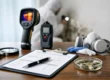
Moisture mapping comes next. Moisture meters help identify elevated readings in drywall, wood, flooring, and other materials. Thermal imaging can help highlight temperature differences that suggest damp areas, though it does not confirm active water by itself. Used properly, it helps narrow the search and reduce unnecessary demolition.
In some cases, the investigation includes humidity readings and indoor environmental conditions. If a building is consistently too humid, mold may be driven by condensation rather than a single leak. That changes the correction plan. Instead of opening multiple walls looking for plumbing damage, the solution may involve ventilation, dehumidification, insulation, or HVAC adjustment.
When conditions warrant, sampling may also be part of the process. That can help determine whether suspicious material is mold, how far contamination may have spread, and what level of containment is appropriate before removal begins.
Signs the leak is still active
A common mistake is assuming the water problem is over because the surface dried out. Active leaks are not always obvious. Sometimes the best clue is repetition.
If staining grows after rain, the source may be exterior. If odors get worse after showers or overnight HVAC use, condensation or ventilation may be involved. If one wall keeps testing wet after cleanup, there may still be a plumbing issue inside the cavity.
Another warning sign is material deterioration that does not match a one-time event. Repeated paint failure, recurring caulk discoloration, soft baseboards, and persistent dampness in the same area usually point to an unresolved moisture source. Mold returning in the same location is especially significant. That generally means source correction was incomplete or never happened.
When a small problem is not actually small
A few square inches of visible mold can come from a much larger hidden issue. This is especially true when the affected material is drywall, insulation, subflooring, or cabinetry. The visible portion may only be the edge of the problem.
That is why surface cleaning has limits. If the material behind the finish remains wet, mold can continue growing where you cannot see it. In occupied homes and commercial buildings, improper disturbance can also spread spores and contaminated dust into clean areas. That is one reason certified containment and controlled removal matter when damage extends beyond a minor, isolated spot.
There is also a cost issue. Early leak detection is usually less expensive than delayed remediation. A supply line drip caught behind a vanity may involve targeted drying and limited repairs. The same leak left unchecked can affect framing, adjacent rooms, flooring, and indoor air quality. The difference between those two outcomes is often timing.
Should you test, open the wall, or call a specialist?
It depends on what evidence you have. If a sink trap is visibly leaking and has dampened the cabinet below, the first step is to stop the leak and assess whether nearby materials dried properly. If there is staining with no obvious source, or if the affected area is inside a wall, above a ceiling, or around HVAC components, professional evaluation is usually the safer move.
Testing is useful when the situation is unclear, when health complaints are involved, or when property owners need documentation for tenants, transactions, or building management decisions. Opening a wall without a plan can create a bigger contamination issue if mold is already established behind it.
Certified Mold Removal Inc. approaches these situations the right way – find the moisture source, determine the extent of contamination, and build a remediation plan that protects occupants while addressing the underlying cause. That process is more disciplined than simply cutting out visible damage and hoping the problem ends there.
How to reduce the chance of mold after a leak
Once the source is corrected, speed matters. Wet materials should be dried promptly, and humidity should be controlled until readings return to normal. Areas that repeatedly trap moisture, such as tight closets on exterior walls, poorly vented bathrooms, or utility rooms with warm and cold lines close together, may need airflow or insulation improvements.
Routine observation helps more than most people realize. Check under sinks, around water heaters, near washing machine hoses, along window frames, and in basement corners. Pay attention to odors that appear before visible growth does. Buildings usually give warnings, but they are easy to dismiss until the damage becomes obvious.
If you manage multiple units or commercial spaces, create a response standard. Water incidents should trigger inspection, drying verification, and follow-up if odors or staining persist. That kind of consistency protects both occupants and property value.
The most effective mold prevention is not bleach, paint, or air fresheners. It is moisture control backed by proper investigation. If you suspect hidden water damage, act before the next humid week or rainstorm turns a manageable repair into a larger remediation job. The sooner the leak is found, the more options you keep.