A pipe bursts behind a wall, the carpet dries, and a week later the room looks normal again. That is exactly when water damage mold testing starts to matter. Mold does not wait for a dramatic black stain on the ceiling. It often grows where moisture stayed trapped – inside drywall, under flooring, behind baseboards, or inside insulation – and by the time you smell it, the contamination may already be spreading.
For homeowners, property managers, and business owners, the real question is not just whether mold exists. The question is how far moisture traveled, whether indoor air has been affected, and what needs to be removed, cleaned, or dried to stop the problem from returning. Good testing is not a scare tactic. It is a diagnostic step that helps separate minor, localized issues from contamination that requires formal containment and remediation.
When water damage mold testing is worth doing
Not every leak automatically requires extensive sampling. If a small, clean-water spill was dried immediately and no materials stayed wet, testing may not add much value. But when water sat for more than a day or two, entered wall cavities, affected porous materials, or caused a musty odor, the risk changes quickly.
Testing is especially useful after roof leaks, appliance line failures, sump pump backups, storm intrusion, bathroom overflows, or slow plumbing leaks that went unnoticed. It also matters when people in the building are reporting odor, irritation, or worsening indoor air quality even though visible mold is limited. In those cases, the visible damage is often only part of the picture.
Commercial buildings and tenant-occupied properties have another layer of risk. Delays can lead to complaints, liability concerns, and larger restoration costs. A documented testing process gives owners and managers a clearer basis for decisions, especially when multiple rooms, units, or HVAC pathways may be involved.
What water damage mold testing actually tells you
A proper investigation does more than say yes or no to mold. Mold is natural in the environment, so the presence of spores alone is not the whole story. The value comes from understanding conditions, concentration, location, and likely source.
Testing can help determine whether elevated spore levels are present indoors compared with normal exterior conditions, whether hidden growth is likely behind building materials, and whether the moisture event is recent or part of a longer-term problem. It can also support a written remediation scope by identifying the affected areas and helping define containment needs.
That distinction matters. If the problem is limited to a small area around a sink cabinet, the response may be straightforward. If testing suggests migration into adjacent walls, flooring systems, or air pathways, a much more controlled process is required to protect occupants and avoid cross-contamination.
Inspection comes first, not blind sampling
One of the biggest mistakes in this industry is treating testing like a shortcut. It is not. The best water damage mold testing starts with a detailed inspection by a trained professional who understands moisture behavior, building materials, and contamination pathways.
That inspection should look at the source of water, the category of materials affected, visible staining, humidity levels, odor patterns, and the likely route moisture followed through the structure. Moisture meters, thermal imaging, and direct observations help narrow down where sampling is actually useful.
Blind air sampling without a real inspection can produce incomplete or misleading results. A room may test low one day while a wall cavity a few feet away is actively contaminated. On the other hand, normal background mold can be misrepresented by unqualified contractors trying to turn a manageable issue into an expensive project. Proper diagnosis protects you from both underreacting and overpaying.
The most common testing methods
Air sampling is often used when hidden mold is suspected or when indoor air quality concerns are part of the complaint. It compares indoor conditions with outdoor control samples and can help identify elevated airborne spores. Air testing can be useful, but it has limits. Mold behind a sealed wall may not show strongly in room air, and short-term air movement can influence results.
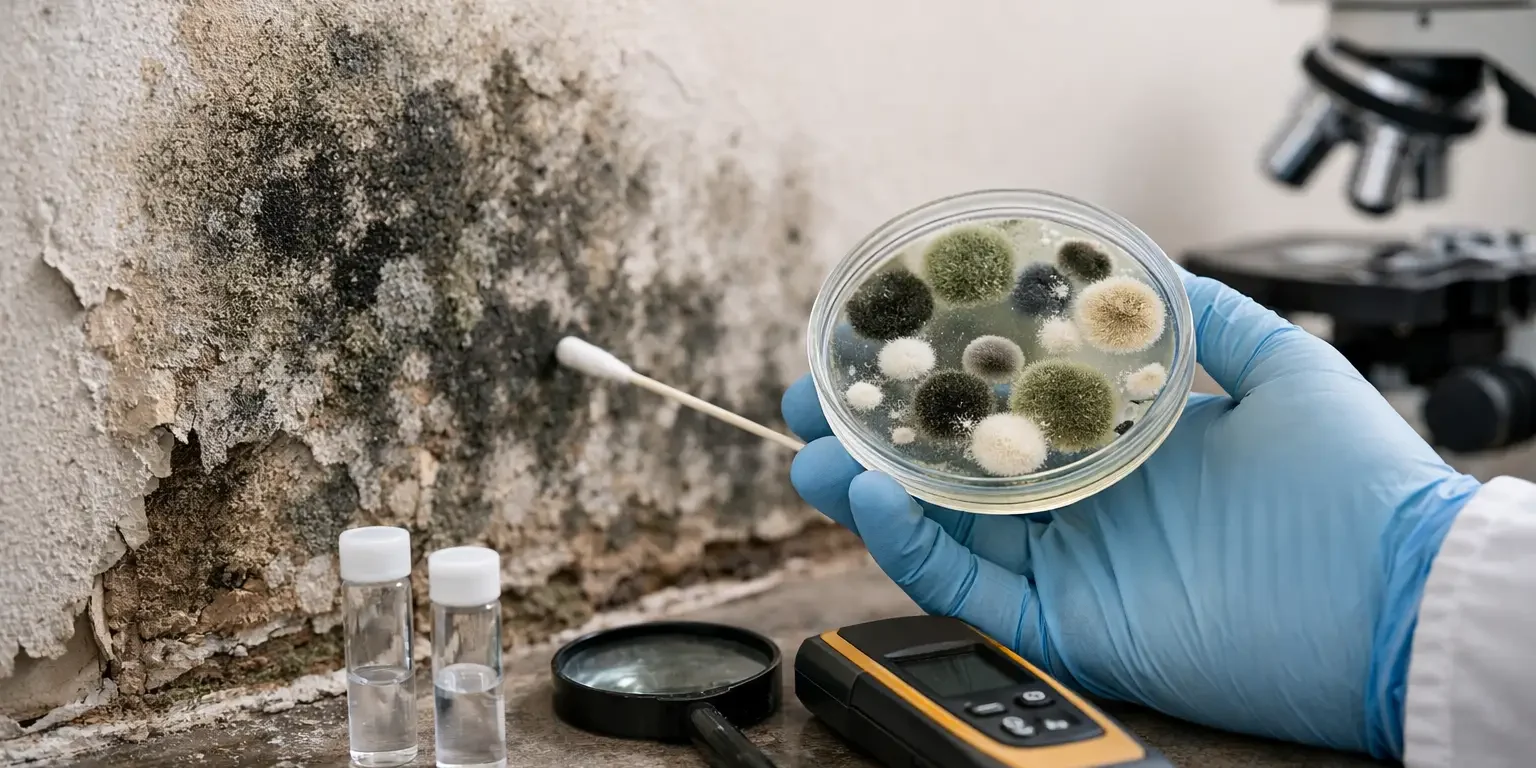
Surface sampling is used when visible growth or suspicious residue is present. This may involve swab, tape-lift, or bulk samples taken from affected materials. Surface testing helps identify what is growing on a specific area, but it does not always tell you how far contamination extends.
Cavity sampling may be considered when there is strong evidence of hidden contamination inside walls, ceilings, or floor systems. This is more targeted and can be valuable after significant water intrusion, especially when demolition decisions need to be made carefully.
In many cases, the strongest approach is a combination of visual assessment, moisture mapping, and selective sampling. Testing should answer a practical question, not just generate a lab report.
Why the source of moisture matters more than the mold type
People often focus on species names because that sounds decisive. In reality, the more urgent issue is usually uncontrolled moisture. If the source was never corrected, cleaning alone will fail. If wet materials remain in place, mold can return quickly even after an aggressive treatment.
That is why qualified professionals start by identifying whether the water came from plumbing, roofing, condensation, exterior penetration, humidity imbalance, or drainage failure. The longer materials stayed wet, the greater the chance that drywall, insulation, wood trim, carpeting, or subfloors absorbed enough moisture to support growth.
Not all mold is equally hazardous, and not every finding should trigger alarm. But recurring moisture is always a building problem. A disciplined testing and inspection process helps determine whether the issue is isolated or systemic.
What happens after the results come back
Test results should lead to a clear next step. If findings show no unusual indoor amplification and materials are dry, you may only need repairs and continued monitoring. If results support active contamination, the next phase should focus on source correction first and remediation second.
That usually means repairing the leak or water entry point, isolating affected areas if needed, removing unsalvageable porous materials, cleaning remaining structural surfaces, and controlling airborne spread with proper containment and filtration. In larger or more sensitive projects, a written remediation protocol is often the safest path because it defines scope, work practices, and post-cleanup expectations.
This is where certification and process matter. General contractors may be capable of repairs, but mold response requires a different level of contamination control. Disturbing affected material without containment can spread spores into occupied areas, HVAC systems, and contents that were not originally impacted.
When not to rely on DIY kits
Store-bought mold tests appeal to people who want quick answers, but most do not provide enough context to guide safe action. Since mold spores exist almost everywhere, a positive result from a DIY plate or strip rarely tells you whether there is an abnormal indoor condition or where the actual source is located.
Worse, these kits can create false confidence. A limited sample may miss hidden contamination, especially after water moved into closed cavities. If you are dealing with a recent leak, a musty odor, recurring staining, or tenant complaints, the money is usually better spent on a professional inspection with targeted testing.
That is particularly true in occupied homes with children, older adults, or individuals with respiratory sensitivity, and in commercial settings where downtime and documentation matter. Speed matters, but accuracy matters more.
Choosing a qualified mold testing company
Look for a company that explains its process clearly, inspects before sampling, and avoids making extreme claims before evidence is collected. The right team should be able to discuss moisture sources, testing limitations, remediation thresholds, and what type of containment may or may not be necessary.
Credentials matter, but so does discipline. You want professionals who follow recognized standards, document findings carefully, and base recommendations on conditions in your building rather than fear. In markets like New Jersey and surrounding service areas where storms, humidity, and older housing stock often intersect, that level of technical judgment can make a major difference.
Certified Mold Removal Inc. approaches mold issues this way – diagnose first, identify the moisture source, test where it adds value, and build the remediation plan around actual conditions rather than assumptions.
If your property has had a leak, flood, or persistent moisture problem, do not wait for visible growth to become the deciding factor. The right testing at the right time can protect indoor air, limit structural damage, and give you a safe, defensible plan before a manageable issue becomes a much larger one.