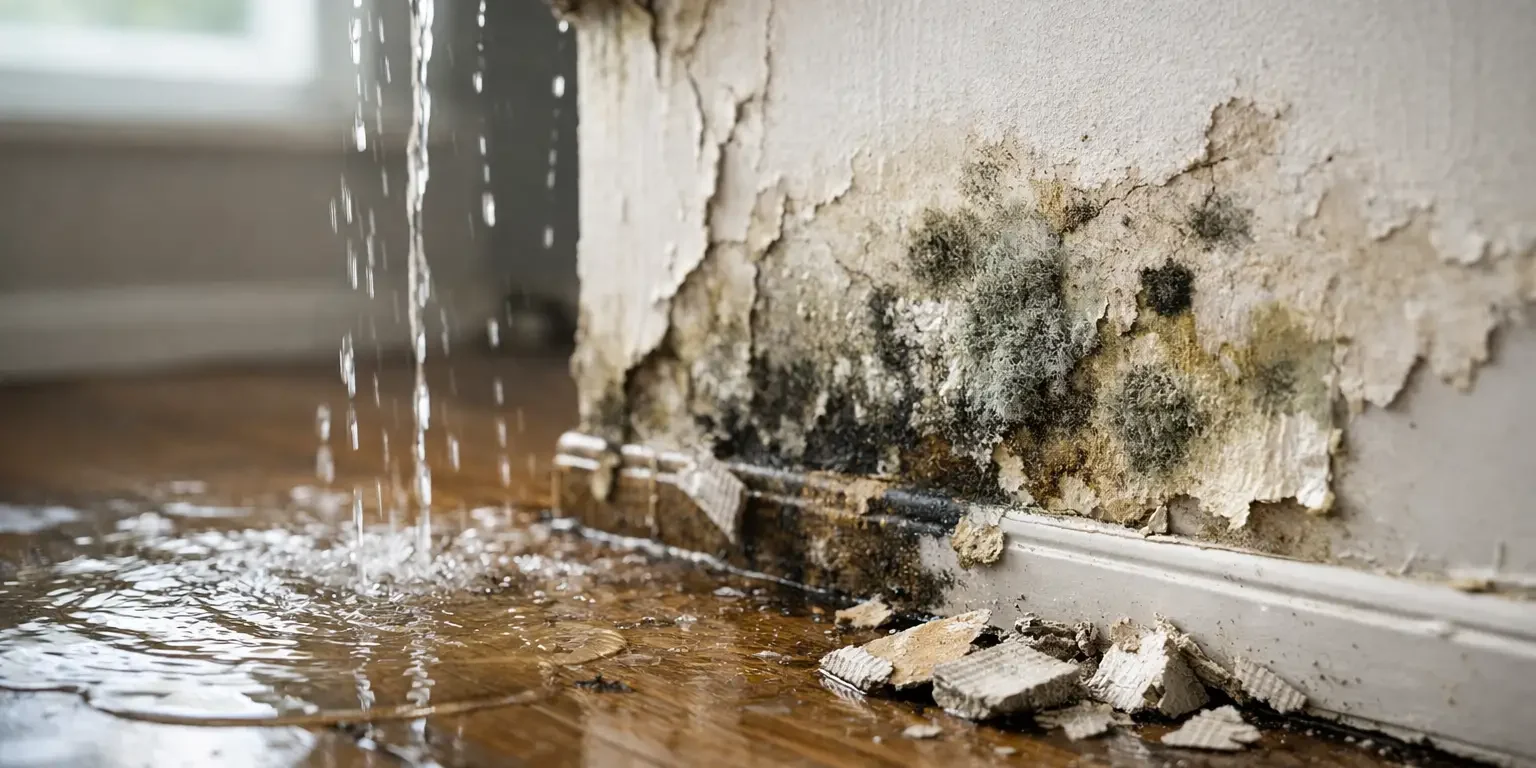
A burst supply line behind a wall can look like a minor cleanup issue at noon and become a mold concern before the week is over. The water damage mold timeline moves quickly because many building materials – drywall, insulation, carpet backing, wood framing, and paper-faced finishes – hold moisture where ordinary cleaning cannot reach.
The practical goal is not to panic at every wet spot. Not all mold is dangerous, and not every water event leads to contamination. The goal is to stop the water source, remove moisture thoroughly, and verify that concealed areas are dry before mold has the opportunity to establish itself. Delays, incomplete drying, and cosmetic-only repairs are what turn a manageable loss into a larger remediation project.
The water damage mold timeline at a glance
Mold spores are naturally present indoors and outdoors. They become a problem when they land on damp organic material and remain wet long enough to grow. Under favorable conditions, mold growth can begin within 24 to 48 hours after water damage. Visible growth often takes longer, commonly appearing within several days to a week, but it may be developing out of sight well before you see discoloration.
The exact timeline depends on the type and amount of water, indoor temperature, humidity, air movement, and how quickly professional drying begins. A small, clean-water leak found immediately is very different from a sewage backup, storm intrusion, or appliance leak that saturates a wall cavity for several days.
The first 24 hours: Stop the source and control the spread
During the first hours, water travels farther than most property owners expect. It can move beneath flooring, wick upward into drywall, soak insulation, and migrate through ceiling cavities. A stain in one room may be the visible edge of a larger moisture path.
Turn off the water source if possible, protect electrical safety, and document the damage for insurance purposes. Remove standing water promptly and move salvageable belongings away from wet surfaces. Fans may help with limited surface moisture, but they are not a substitute for proper extraction, dehumidification, and moisture measurement when materials have been saturated.
This is also the point at which hidden damage should be considered. If water came from a supply line inside a wall, an overflowing fixture, a roof opening, or a leaking HVAC component, the affected assembly may need inspection even if the room appears mostly dry.
At 24 to 48 hours: Conditions can support mold growth
Once porous materials stay damp for a day or two, mold can begin colonizing. This does not mean a home will suddenly be covered in visible mold at the 48-hour mark. It means the response window is narrowing, particularly in humid weather or in areas with limited ventilation.
Drywall is a frequent concern because its paper facing can support growth, while the gypsum core can retain moisture. Wet carpet padding, cellulose insulation, engineered wood flooring, and upholstered furnishings can also remain damp after the surface feels dry. A musty odor during this phase is a reason to investigate, not a diagnosis by itself.
If drying has not been completed by this point, professional moisture mapping can identify whether water remains in wall cavities, subfloors, ceilings, or other concealed building materials. The right response depends on the readings and the source of water, not on a guess based solely on appearance.
Days 3 through 5: Hidden damage becomes more likely
By the third day, materials that were not properly dried may show warning signs: bubbling paint, swollen baseboards, warped flooring, a persistent damp smell, or new staining. Mold may still be invisible behind trim, under flooring, or inside a wall. That is why painting over a water stain or running a household fan for a few hours does not resolve the underlying risk.
This is the stage where improper cleanup can make matters worse. Disturbing suspected moldy materials without containment can spread particles to adjacent rooms. Bleach is also not a reliable solution for porous building materials. It may lighten visible staining while leaving moisture, embedded growth, and damaged material behind.
A qualified inspection should focus first on the moisture source and extent of impact. If mold is present, a written remediation plan should address containment, controlled removal of affected materials where necessary, HEPA filtration, detailed cleaning, and verification that the moisture problem has been corrected.
Days 5 through 7: Visible mold and material deterioration may appear
After a week of unresolved moisture, visible mold becomes more likely. It may appear as black, green, gray, white, or brown spotting, but color alone cannot identify the species or determine risk. Growth can also be hidden, so the absence of visible mold does not prove that a wet wall or floor system is clean and dry.
At this stage, building materials may be deteriorating as well. Drywall can soften, wood can swell, adhesives can fail, and flooring can buckle. For property managers and business owners, delaying action can also affect tenant comfort, employee concerns, room availability, and the overall cost of restoration.
The longer moisture remains, the more likely the project will require removal of unsalvageable porous materials rather than drying alone. Fast, technically correct intervention is usually the most cost-effective option.
What changes the timeline after different water events?
The source of water matters. A clean supply-line leak caught quickly may allow some materials to be dried and saved. Water from an overflowing toilet, dishwasher, or exterior flooding can introduce additional contaminants and may require a more cautious cleanup approach. The category of water can change as time passes and water contacts dirty surfaces or sits stagnant.
The building itself also matters. Older homes may have multiple layers of flooring and wall finishes that trap moisture. Finished basements can conceal water behind paneling or beneath carpeting. In coastal and high-humidity parts of New Jersey, including Monmouth County, ambient humidity can slow drying and raise the stakes after roof leaks, storm damage, or basement seepage.
A thermal camera can be useful for locating temperature differences associated with moisture, but it does not replace moisture meters or a thorough inspection. Testing may be appropriate when the scope of contamination is unclear, occupants have ongoing concerns, or documentation is needed. Testing should support a clear remediation decision, not be used to create fear.
When to call a certified mold professional
Call for professional help promptly when water has affected more than a small, easily dried area, when materials stayed wet longer than 24 to 48 hours, or when you notice a musty odor, recurring stains, warped finishes, or visible mold. Immediate help is especially appropriate after water enters walls, ceilings, insulation, HVAC-adjacent areas, or commercial spaces.
A disciplined process protects both the building and the people using it. Certified Mold Removal Inc. begins with diagnosis: identify the moisture source, evaluate the affected areas, recommend testing when it provides meaningful answers, and establish the correct scope of work. Source correction comes before remediation because removing visible mold without fixing the leak simply creates a repeat problem.
Avoid contractors who promise a quick spray-and-go solution without checking for hidden moisture. A proper response may involve containment and removal, or it may involve drying and minor repairs. It depends on the extent of water intrusion, the materials involved, and whether growth is actually present.
Protect the next 48 hours
The best time to address water damage is before the water damage mold timeline reaches the visible-growth stage. Keep affected areas isolated when practical, do not cover wet materials with new flooring or drywall, and do not assume a dry surface means a dry structure.
A fast inspection provides clarity when the stakes are high. It can confirm what is wet, what can be saved, what needs controlled removal, and what steps will return the property to normal indoor conditions. Acting early protects your family, tenants, employees, and the value of the property without turning a water event into a fear-based crisis.