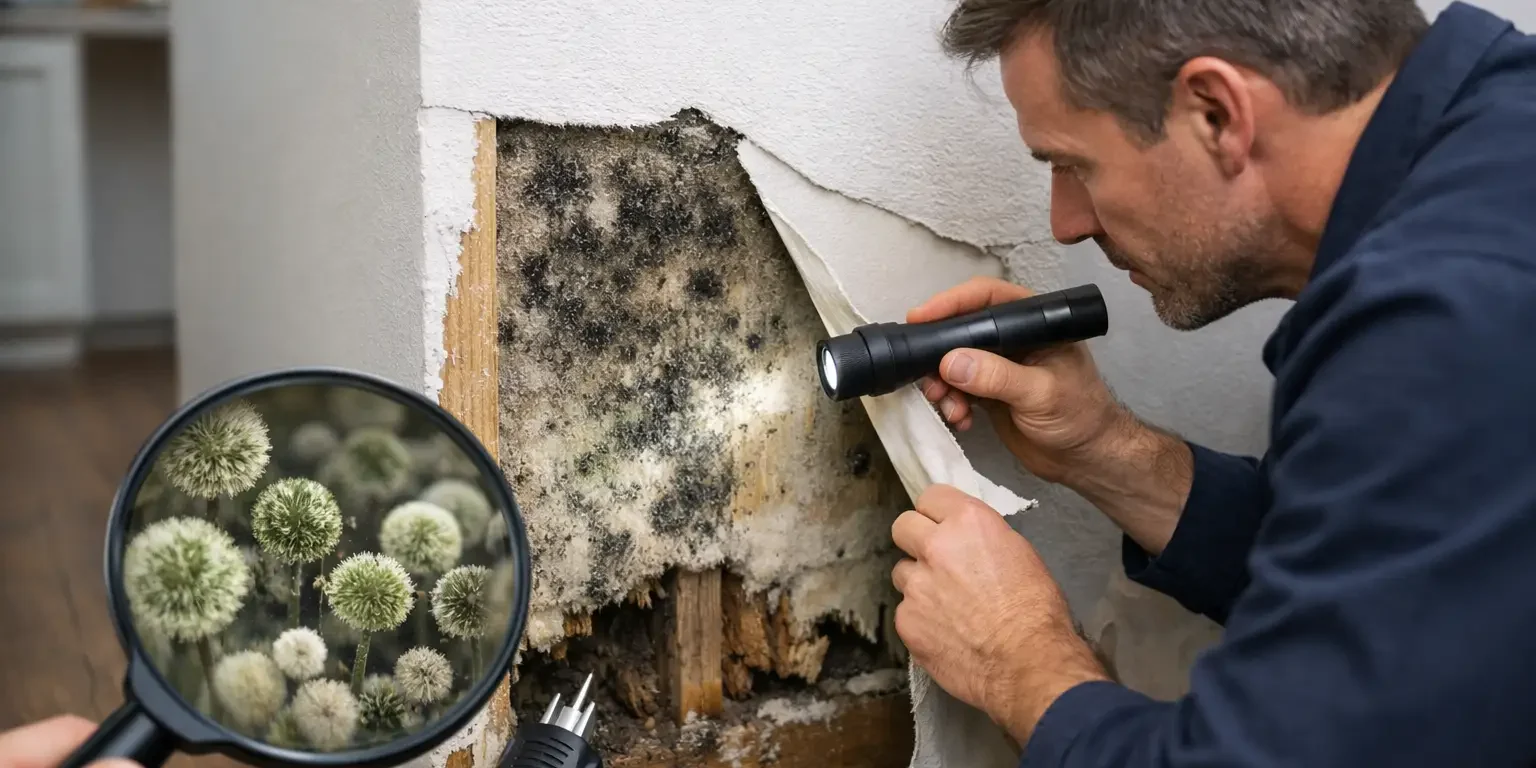
A room can look perfectly clean while moisture and mold growth are developing behind a wall, under flooring, or above a ceiling. Knowing how to detect hidden mold means looking beyond surface stains and focusing on the conditions that allow growth: unwanted water, elevated humidity, and building materials that stay wet too long. The goal is not to panic over every discoloration. It is to find the source early, protect occupants, and prevent a manageable problem from becoming a larger remediation project.
Start With the Moisture Story
Mold needs moisture to grow. That makes the history of the space more useful than a quick visual scan. Think back to leaks, flooding, plumbing repairs, roof issues, appliance overflows, window failures, or a basement that repeatedly feels damp after heavy rain. Even a small leak inside a wall can keep drywall, insulation, framing, or flooring wet long enough to support hidden growth.
Pay particular attention to areas near bathrooms, kitchens, laundry rooms, utility closets, exterior walls, crawl spaces, basements, and HVAC equipment. In homes across New Jersey and the surrounding region, seasonal humidity, wind-driven rain, ice-dam damage, and older plumbing connections can all create conditions that are easy to miss until an odor or stain appears.
A repaired leak is not always the end of the issue. If materials were not thoroughly dried after the water event, mold may continue growing out of sight. The question is not simply, “Was the pipe fixed?” It is, “Were the affected materials dry, and did the moisture source stay corrected?”
Signs of Hidden Mold You Should Not Ignore
A musty odor is often the first practical clue. It may be strongest when a room has been closed up, when the HVAC system starts, or after humid weather. Odor alone does not identify the type or amount of mold, but a persistent earthy smell deserves investigation, especially when there is a known moisture history.
Other warning signs can be subtle. Peeling paint, bubbling wallpaper, warped baseboards, soft drywall, recurring condensation, rust around vents, and unexplained stains may point to water moving where it should not. A ceiling stain below a bathroom or roofline may be old, but it should not be assumed harmless without confirming that the area is dry and stable.
Health symptoms can also prompt a closer look, although symptoms cannot diagnose mold exposure by themselves. If occupants notice irritation, coughing, congestion, or symptoms that consistently improve away from a particular building, consider the building conditions alongside other possible causes. A qualified inspection evaluates the environment rather than making medical conclusions.
How to Detect Hidden Mold Without Creating a Bigger Problem
Homeowners and property managers can perform a careful, non-invasive review before calling a professional. Check under sinks, around toilet bases, behind washing machines, near water heaters, and inside lower cabinet areas. Use a flashlight to inspect corners, ceiling edges, window trim, and the back of closets that share an exterior wall. Look for active moisture, material damage, or changes in color and texture.
Do not start tearing open walls, pulling up wet flooring, or scraping suspicious material. Disturbing a contaminated area can release particles into the room and make containment more difficult. It can also destroy useful evidence about the moisture path. If a material is visibly wet, focus first on stopping the water source and limiting access to the area.
Consumer moisture meters can help identify suspiciously damp building materials, but they require context. Readings vary by material type, meter setting, and baseline conditions. A high reading near a shower wall may justify further evaluation; it does not, by itself, prove mold is present. Likewise, a low reading today does not rule out growth from a past leak that already dried.
Professional Inspection Finds What a Surface Check Cannot
A proper mold inspection begins with the building, not a sales pitch. The inspector should ask about leaks, repairs, odors, humidity, occupancy concerns, and prior water damage. They should examine likely moisture pathways and use appropriate tools to evaluate conditions behind finished surfaces when warranted.
Moisture detection equipment can identify elevated moisture in drywall, wood, and other materials. Thermal imaging may reveal temperature differences associated with dampness, missing insulation, or air leakage. It is useful for narrowing the search, but it does not see mold through a wall and should not be treated as a standalone answer. Findings need to be confirmed through moisture measurements and a physical assessment.
In some cases, limited exploratory openings are the responsible next step. A small, controlled opening may reveal wet insulation, staining, microbial growth, or an active plumbing failure. The right approach depends on the location, the material involved, the extent of water damage, and whether occupants are at increased risk from disturbed contamination.
Certified Mold Removal Inc. approaches suspected hidden mold by identifying the moisture source first, documenting conditions, and developing a clear remediation protocol when work is needed. That sequence matters. Removing visible growth without correcting the leak, humidity issue, or drainage problem invites the same problem to return.
When Mold Testing Helps – and When It Does Not
Testing can be useful, but it is not a substitute for an inspection. If visible mold growth and a clear moisture source are present, the practical need is usually source correction and proper remediation, not a test result that merely confirms what is already evident.
Sampling becomes more valuable when growth is suspected but not visible, when a musty odor has no obvious cause, after a water event, or when a property owner needs documentation to make informed decisions. Depending on the situation, a professional may recommend surface samples, air samples, or material samples. Each has limitations. Air results can change with ventilation, weather, cleaning activity, and how the building is used. A single sample should be interpreted alongside the inspection findings, not in isolation.
Be cautious with anyone who relies on a quick air test to declare a building safe or unsafe without investigating moisture. There is no single universal “mold number” that tells the full story. The critical questions are where moisture is coming from, whether materials are contaminated or damaged, how far the condition extends, and what work is required to return the area to normal.
Common Places Hidden Mold Develops
Hidden growth follows water, which is why a careful inspection often focuses on concealed cavities and material layers. The most frequent locations include:
- Behind shower walls, tub surrounds, and bathroom vanities where grout, caulk, plumbing, or waterproofing has failed.
- Under kitchen and bathroom sinks, behind refrigerators with water lines, and around dishwasher connections.
- Beneath laminate, vinyl, carpet, or wood flooring after an overflow, slow leak, or basement seepage.
- Inside wall cavities below roof leaks, around windows, or under second-floor bathrooms.
- In basements, crawl spaces, attics, and HVAC-adjacent areas where condensation or humidity remains uncontrolled.
The location affects the remediation plan. A small issue under a sink may require limited removal and drying. Moisture that traveled beneath flooring or through multiple wall cavities may require broader containment, removal of affected materials, and detailed cleaning. The extent should be based on documented conditions, not guesswork.
Avoid Shortcuts That Spread the Problem
Bleach, fragrance sprays, paint, and household cleaners may temporarily change the appearance or smell of an area, but they do not correct wet materials or an active moisture source. Painting over stains can also make future investigation harder. If porous materials are significantly affected, surface cleaning alone may not be enough.
Fans and dehumidifiers can help with minor, newly discovered moisture when used correctly, but they are not a replacement for professional drying or remediation after substantial water intrusion. Moving air across contaminated material without containment can spread particles to other areas. The safest course depends on the size of the affected area, the materials involved, and whether the condition is active.
For commercial properties, the stakes can be higher because hidden moisture may affect tenant spaces, employee work areas, inventory, and daily operations. Early documentation and a defined scope of work help property managers act quickly while avoiding unnecessary disruption.
Act on Evidence, Not Fear
Not all mold is dangerous, and not every odor means a major contamination problem. But persistent moisture, unexplained material damage, or a recurring musty smell should not be ignored. A certified, standards-based inspection provides a practical answer: identify the source, determine the extent, and recommend only the work the property actually needs.
If you suspect hidden mold, preserve the area as much as possible, address any active water source immediately, and arrange a qualified assessment before opening building materials or attempting cleanup. A clear diagnosis is the most reliable way to protect your property, your indoor air, and the people who depend on the space.