A damp basement wall, a leak beneath a kitchen sink, or a musty odor after a storm can become a much bigger indoor air concern when it is handled carelessly. This guide to safe mold containment explains what containment is meant to do, when it is appropriate, and why simply spraying a visible spot is not a reliable solution.
Containment is not cosmetic cleanup. It is a controlled process used to keep disturbed mold spores, dust, and contaminated materials from moving into clean areas of a home or business. Done correctly, it protects occupants while allowing qualified remediation work to proceed. Done poorly, it can spread contamination through hallways, HVAC systems, furnishings, and occupied rooms.
What Safe Mold Containment Is Designed to Prevent
Mold needs moisture and an organic surface to grow. When materials are disturbed during cleanup, microscopic particles can become airborne. That does not mean every mold discovery is an emergency or that every type of mold creates the same level of concern. It does mean that the work area must be assessed before anyone starts tearing out drywall, lifting carpet, or running fans.
Safe containment separates the affected work zone from unaffected areas. Professional crews typically use barriers, controlled entry points, and air-management equipment selected for the size of the project and the condition of the building. The goal is simple: keep what is inside the work area from migrating elsewhere while the moisture source and damaged materials are addressed.
This is why source correction comes first. A containment barrier around an active plumbing leak, roof leak, foundation intrusion, or chronic humidity issue is only a temporary measure. If the water problem continues, mold can return behind the barrier or spread into adjacent materials.
When a Small Cleanup Can Become a Containment Job
A small, isolated spot on a hard, nonporous surface may not require a full containment setup. The decision depends on more than square footage. Location, material type, moisture history, visible growth, occupant sensitivity, and the chance of disturbing hidden contamination all matter.
For example, a small patch on bathroom tile caused by surface condensation is very different from staining on a drywall ceiling below a recurring roof leak. Tile can usually be cleaned and dried. Water-damaged drywall is porous, can hold contamination beneath the surface, and may need to be removed under controlled conditions.
Containment is more likely to be necessary when growth is extensive, the affected materials are porous, demolition is required, or contamination may be present inside wall cavities, crawl spaces, attics, or HVAC-adjacent areas. It is also a prudent step in occupied commercial spaces, multi-unit properties, and homes where infants, older adults, or people with respiratory sensitivities may be present.
The Core Steps in a Guide to Safe Mold Containment
A proper containment plan begins with inspection, not plastic sheeting. The affected area should be evaluated for the moisture source, the likely extent of damage, and conditions that may indicate hidden growth. Where testing is appropriate, sampling can help support a written remediation protocol and establish a clearer picture of indoor conditions.
1. Stop the moisture at its source
Before cleanup begins, correct the condition that allowed mold to grow. That may mean repairing a pipe, stopping exterior water intrusion, improving drainage, drying flood-affected materials, or addressing elevated humidity. Remediation without source correction is not a lasting repair.
Drying also needs to be deliberate. Opening windows or placing a household fan in a contaminated room can be counterproductive if it sends particles into other rooms. The right drying approach depends on the building, weather, extent of water damage, and whether mold has already developed.
2. Establish a controlled work area
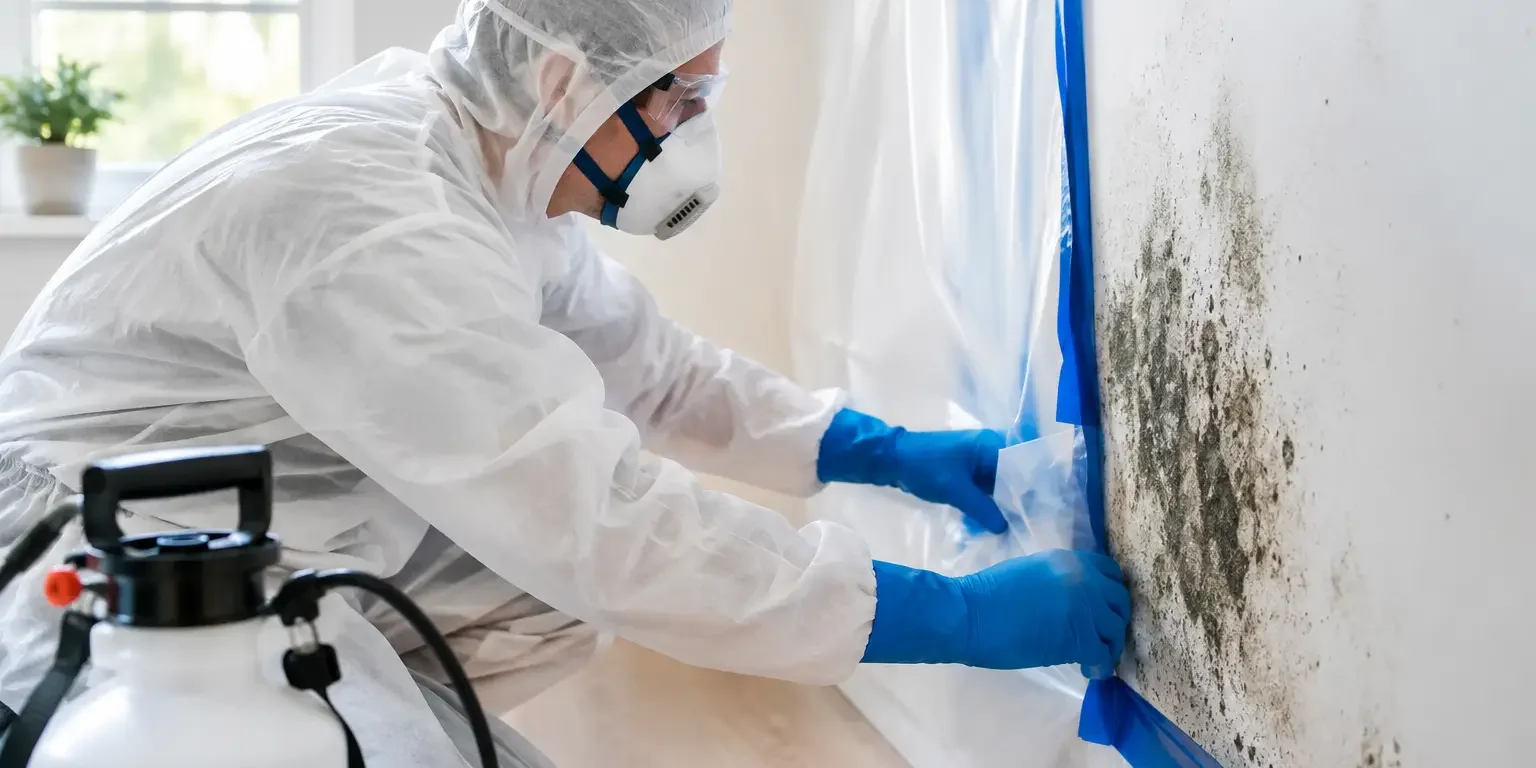
The work zone is separated from clean spaces using temporary barriers and a defined entry and exit procedure. The barrier must be properly sealed around edges, doors, vents, and other openings that could allow air to bypass the enclosure.
A loose sheet of plastic taped over one doorway is not automatically effective containment. If workers are removing drywall or other affected materials, the pressure changes and physical disturbance can force particles around gaps. The enclosure must fit the scope of work, not merely look protective.
3. Control airflow, not just access
Effective containment considers where air is moving. In many remediation situations, professionals use negative air pressure so air moves into the contained work area rather than out into clean portions of the property. Appropriate air filtration equipment can capture fine particles before air is exhausted or recirculated according to the remediation plan.
This is one reason ordinary fans and standard household vacuum cleaners are poor substitutes for professional equipment. They may move or redistribute dust rather than capture it. Air handling must be selected, positioned, and monitored correctly to protect indoor air quality.
4. Remove affected materials carefully
Not every material can be cleaned successfully. Nonporous surfaces can often be cleaned when they are structurally sound and the moisture issue has been corrected. Porous materials such as wet drywall, insulation, carpet padding, and ceiling tiles may require removal when contamination is established.
Removal should be performed inside the containment area with methods that limit dust. Materials are then bagged or wrapped before being carried through the property. Carrying uncovered debris through a living room, lobby, or common hallway defeats the purpose of containment.
5. Clean, verify, and restore the area
After removal and detailed cleaning, the area must be dry and free of visible debris. The containment should remain in place until the remediation work is complete and the space meets the project’s clearance criteria. Depending on the situation, post-remediation verification or additional testing may be appropriate before barriers come down.
Only then should reconstruction begin. Installing new drywall or flooring before moisture conditions are resolved can conceal an unresolved problem and create costly repeat work.
Common Containment Mistakes That Spread the Problem
The most damaging mistakes often happen before a professional is called. Homeowners and maintenance teams may understandably try to act quickly, but speed without control can turn a localized issue into a larger cleanup.
Avoid dry-scraping visible mold from drywall, aggressively brushing affected materials, or using a fan to “air out” a contaminated room. Do not rely on fragrance products or paint to solve a musty odor. Odor can be a clue that moisture or hidden growth remains, and covering the surface does not correct the underlying condition.
Another frequent mistake is treating every dark stain as proof of a severe hazard. Mold should be taken seriously, but fear-based assumptions do not replace an inspection. A qualified assessment identifies what is affected, what caused it, and whether professional containment is actually required. That approach protects both health and budget.
When to Call a Certified Mold Professional
Call for qualified help when water damage has been present for more than a brief period, growth returns after cleaning, odors persist, building materials feel damp, or visible mold appears beyond a small and clearly isolated area. Immediate professional evaluation is also wise after significant leaks, flooding, sewage backups, or when occupants report symptoms that seem to worsen in a particular area of the building.
For property managers and business owners, containment decisions also involve operational continuity. A poorly isolated remediation project can disrupt tenants, employees, customers, or neighboring suites. A documented protocol and controlled work plan make it easier to protect occupied areas while repairs move forward.
Certified Mold Removal Inc. approaches mold concerns by identifying the source first, determining the appropriate scope, and using standards-based containment when conditions call for it. For homeowners and property managers across New Jersey and nearby service areas, that means clear recommendations rather than unnecessary alarm.
A mold problem is most manageable when it is addressed before moisture damage expands. Protect the area, avoid disturbing suspect materials, and get a qualified assessment before cleanup choices create a larger indoor air issue.