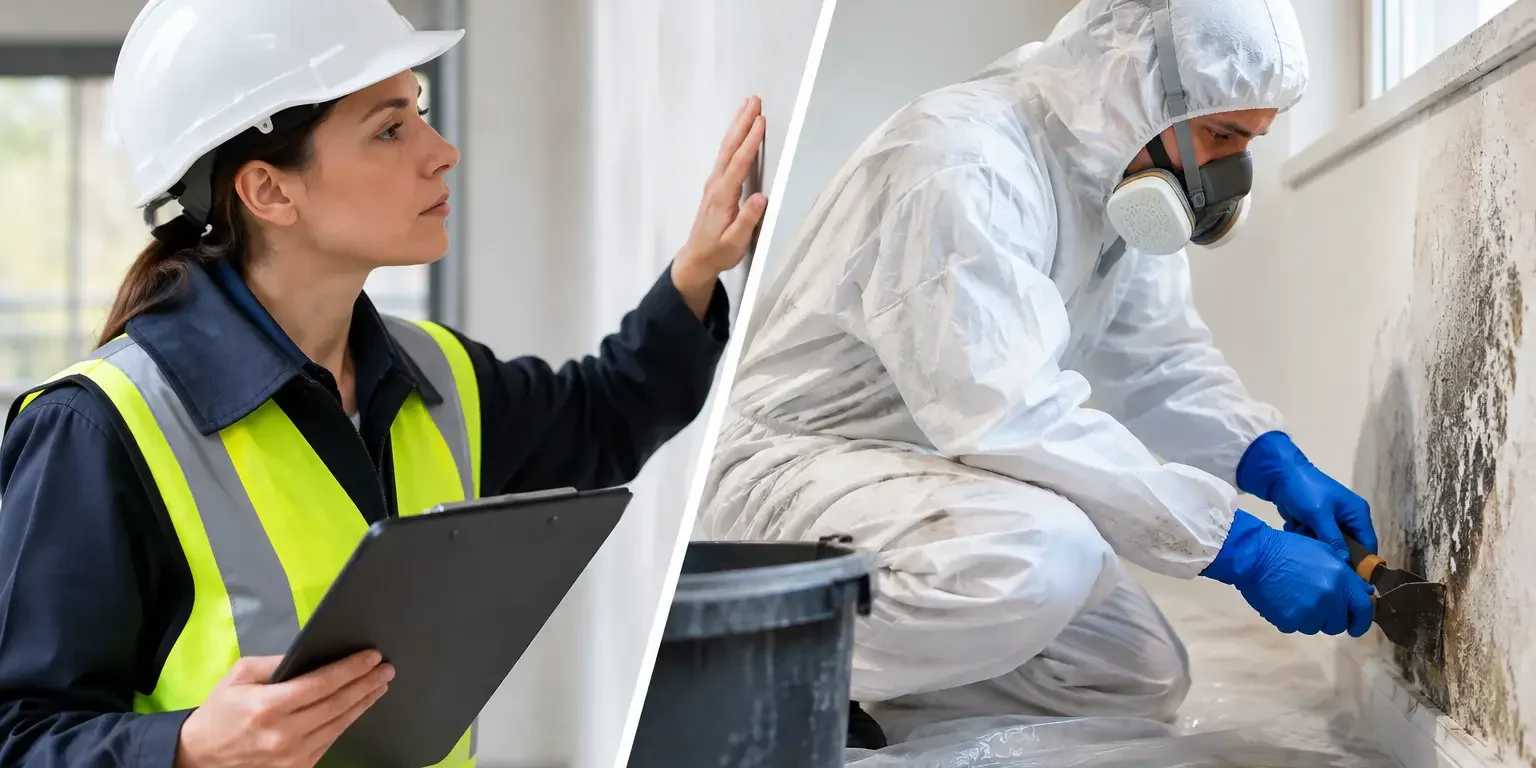
A dark spot under a bathroom vanity, a musty odor after a basement leak, or staining around a window can create immediate concern. But inspection versus remediation is not a choice between two competing services. They are separate stages of a responsible mold response: one determines what is happening and why; the other corrects the conditions and removes contamination when removal is warranted.
Confusing the two can cost property owners time and money. Remediating before the moisture source is understood may lead to recurring growth. Delaying remediation after a clear assessment, on the other hand, can allow damage and contamination to spread. The right next step depends on the size of the affected area, the materials involved, the building’s moisture history, and the needs of the people using the space.
Inspection Versus Remediation: Two Different Jobs
A mold inspection is an investigative service. Its purpose is to identify visible conditions, locate likely moisture sources, assess the extent of suspected impact, and determine whether further testing or a written remediation protocol is appropriate. An inspector may examine areas around plumbing, roofing, windows, HVAC components, crawl spaces, attics, basements, and previously water-damaged materials.
Remediation is the controlled work performed after the problem has been properly defined. It can include establishing containment, removing affected porous materials, cleaning salvageable surfaces, using HEPA filtration, correcting the moisture source, and completing post-work verification where needed. It is not simply spraying a chemical on visible staining.
That distinction matters because mold is a symptom of moisture. If a contractor treats the surface but leaves a slow pipe leak, poor drainage condition, roof intrusion, or elevated humidity problem in place, the building remains vulnerable. A professional process starts with cause, not cosmetic cleanup.
When an Inspection Should Come First
An inspection is especially valuable when the scope is unclear. Visible mold may represent a localized surface issue, but it can also point to concealed moisture behind drywall, beneath flooring, or inside a wall cavity. Odors without visible growth also deserve investigation, particularly after flooding, plumbing failures, roof leaks, or long periods of high indoor humidity.
For homeowners, a focused inspection can prevent unnecessary demolition. For property managers and business owners, it creates documentation that helps establish a rational scope of work, protect occupants, and reduce disruption. A written assessment is also useful when several parties are involved, such as an owner, tenant, insurer, maintenance team, or restoration contractor.
Testing is not automatically required in every situation. When visible mold and an active moisture source are obvious, the priority may be correcting the water issue and removing affected materials under appropriate controls. Testing can be useful when there is no visible growth but indoor air quality concerns persist, when the source is difficult to locate, when conditions need to be documented, or when clearance verification is requested after remediation.
A credible inspector should explain what testing can and cannot tell you. Sample results are one part of the evidence, not a substitute for a thorough building investigation. No responsible professional should use a single sample to create fear or pressure you into unnecessary work.
Signs You Should Not Delay the Assessment
Act promptly when you see recurring discoloration, peeling paint near moisture, warped building materials, condensation that does not resolve, or a persistent musty odor. The same is true after a significant water event, even if surfaces appear dry. Moisture can remain inside assemblies where it is not visible from the room.
Urgency is about preventing a manageable condition from becoming a larger repair, not about assuming every spot of mold is dangerous. A measured, standards-based assessment gives you facts and a clear plan.
What Proper Mold Remediation Looks Like
Once the affected area and moisture source have been identified, remediation should follow a defined scope. The goal is to remove contamination safely while limiting the chance of spreading particles into clean areas of the property.
The process often begins by addressing the water source. That may mean repairing a plumbing leak, resolving a roof or window intrusion, improving drainage, or correcting a humidity issue. Drying and moisture control are central to the work. Without them, even excellent cleaning will not deliver a lasting result.
Next comes containment. Depending on the scope and location, trained technicians may isolate the work area with physical barriers and maintain controlled airflow. This is particularly important when demolition or removal could disturb contaminated material. Technicians use appropriate personal protective equipment and specialized filtration equipment to protect the work zone and surrounding indoor spaces.
Affected porous materials, such as damaged drywall, insulation, carpeting, or particleboard, may need removal if they cannot be effectively cleaned. Nonporous and some semiporous materials may be cleaned when their condition allows. The correct decision depends on the material, the level of impact, structural condition, and whether moisture exposure has compromised it.
After removal and cleaning, the area is dried, detailed, and evaluated. In certain projects, post-remediation verification may be performed to confirm that the work area meets the established cleaning goal before reconstruction begins. This step is particularly useful in larger projects, commercial spaces, rental properties, or situations involving sensitive occupants.
Why DIY Cleanup and General Contracting Can Fall Short
Small, isolated surface growth may be manageable for a property owner when the source is obvious, the material is nonporous, and the area can be cleaned without disturbing hidden contamination. But DIY efforts become risky when there is water-damaged drywall, recurring growth, a large affected area, HVAC involvement, strong odors, or uncertainty about what is behind a wall or beneath flooring.
The common mistake is treating remediation as a cleaning project. Scrubbing, bleaching, painting over staining, or installing new drywall before the cavity is dry can conceal the evidence without correcting the condition. Disturbing damaged materials without containment can also move debris into adjacent rooms.
General contractors may be excellent at rebuilding, but diagnosis and controlled contamination removal require a different discipline. The most reliable sequence is assessment, source correction, remediation, verification when appropriate, and then reconstruction. Keeping those stages organized protects the property and avoids paying twice for the same repair.
Choosing the Right Scope for Your Property
There is no single mold response that fits every building. A small bathroom issue caused by a failed caulk joint is different from widespread basement moisture after drainage problems. A single-family home has different operational concerns than an occupied office, retail location, apartment building, or medical practice.
Ask the professional explaining the scope to answer direct questions: What is the likely moisture source? What materials are affected? Is containment needed? Which materials can be saved? How will the area be dried? What is the plan for preventing recurrence? A clear answer to these questions is more valuable than vague promises or alarming language.
For properties in Monmouth County and nearby communities, seasonal humidity, coastal weather, basement moisture, and storm-related water intrusion can all complicate the picture. A local specialist should account for the building’s construction, ventilation, drainage, and recent water history rather than relying on a one-size-fits-all recommendation.
Certified Mold Removal Inc. approaches mold concerns with the full sequence in mind: investigate the source, define the scope, perform controlled remediation when needed, and help return the space to normal conditions. That approach is designed to protect occupants while keeping the work practical and cost-conscious.
The Decision Is About Evidence, Not Fear
Inspection versus remediation becomes straightforward once you know the role of each service. Inspection provides the evidence needed to make a sound decision. Remediation puts that decision into action through source correction, containment, removal, cleaning, and drying.
If you can see mold, smell persistent moisture, or have recently dealt with water damage, do not wait for the condition to become more complicated. Start by identifying the cause and the true extent of the issue. A clear assessment gives you the confidence to repair what is necessary, avoid what is not, and protect the people and property that depend on the space.