A musty odor in a leasing office, dark spotting above ceiling tiles, or a recurring stain near an HVAC vent can quickly become more than a maintenance issue. Commercial mold remediation is designed to protect the people using a building while addressing the moisture conditions that allowed mold to grow in the first place. For property managers and business owners, the goal is not simply to make affected surfaces look clean. It is to correct the source, prevent cross-contamination, and return the space to normal operation as safely and efficiently as possible.
Mold is common in buildings where water, humidity, and organic materials come together. That does not mean every stain is an emergency or every mold concern requires a major demolition project. It does mean the problem deserves a disciplined evaluation before someone starts spraying chemicals, tearing out materials, or making promises based on fear.
Why Commercial Mold Problems Need a Different Response
Commercial properties are complicated environments. A moisture issue in one office suite may involve a roof penetration several floors above. Growth behind a restaurant wall may be linked to plumbing, condensation, or poor ventilation. In schools, medical offices, apartment common areas, warehouses, and retail spaces, the remediation plan must account for occupants, business operations, building systems, and the condition of the affected materials.
The cost of a poor response can extend well beyond the visible area. Disturbing mold without proper containment can spread particles to adjacent rooms or through air pathways. Closing off too much of a facility for too long can disrupt tenants, employees, customers, and revenue. On the other hand, reopening an area before the moisture problem and cleanup are properly addressed can lead to recurring damage and justified complaints.
That is why a qualified remediation company begins with diagnosis, not demolition. The scope should be based on what is actually present, where the moisture originated, how far the condition extends, and whether occupants may have been exposed to disturbed material. A standards-based process avoids both costly overreaction and the mistake of treating a serious issue as cosmetic.
The Commercial Mold Remediation Process
A proper project follows a clear sequence. The details vary by building and the extent of contamination, but skipping steps is where problems begin.
1. Inspect the affected area and identify the moisture source
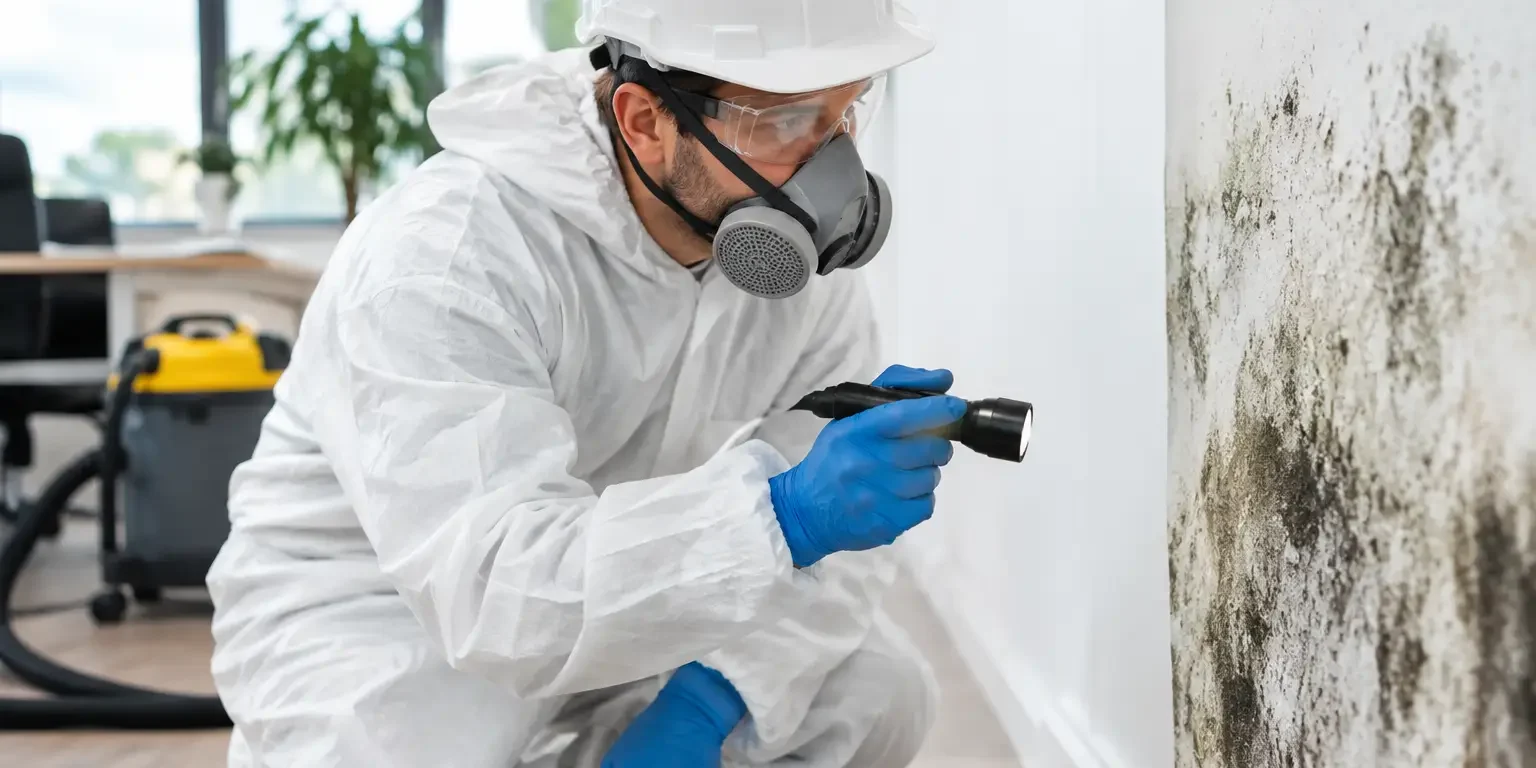
Visible mold is often only part of the picture. A professional inspection looks for water intrusion, plumbing leaks, elevated humidity, roof failures, condensation around HVAC equipment, and wet building materials. Moisture meters, thermal imaging, and careful visual assessment can help determine whether drywall, insulation, flooring, ceiling systems, or framing have been affected.
The source must be corrected or reliably controlled before remediation is complete. Removing mold from a wall while an active leak continues behind it is not remediation. It is a temporary appearance fix that invites the same problem back.
2. Determine whether testing is useful
Testing is not necessary for every visible mold condition, and an honest contractor should say so. When the extent and cause are clear, an inspection and remediation protocol may provide the information needed to proceed. Testing can be valuable when there is a concealed concern, a disputed indoor air quality issue, a need to document conditions for stakeholders, or a question about whether an area has been successfully returned to normal conditions.
Results must be interpreted in context. A lab report alone does not explain the source of moisture, the condition of the building materials, or the correct scope of work. It is one tool within a broader investigation.
3. Create a written scope and protect unaffected areas
Before work starts, the contractor should explain what will be removed, cleaned, contained, and repaired. For significant projects, this includes setting up physical containment barriers, maintaining controlled airflow when appropriate, and protecting nearby occupied spaces.
Containment is not a decorative layer of plastic. It is a method for controlling the work area so that removal activity does not spread contaminants into hallways, offices, tenant spaces, or ventilation pathways. The required level of containment depends on the size of the affected area, the materials involved, the building layout, and the sensitivity of the occupants.
4. Remove or clean affected materials correctly
Some porous materials cannot be reliably cleaned once mold growth is established and may need removal. Others, such as certain structural components or nonporous surfaces, can often be cleaned using appropriate methods. The right approach depends on the material, the degree of damage, and whether it can be returned to a clean, dry condition.
This is where unqualified work creates unnecessary risk. Fogging a fragrance or disinfectant into a room does not repair water damage, remove contaminated drywall, or dry wet cavities. Likewise, painting over staining without investigating the substrate may conceal the visible evidence while allowing the underlying issue to continue.
5. Dry, verify, and restore the space
Remediation is not finished when debris leaves the building. The affected area must be cleaned, dried, and evaluated before containment is removed. Where appropriate, post-remediation verification can provide documentation that cleanup objectives were met.
Only after this stage should repairs such as drywall replacement, repainting, flooring installation, or ceiling restoration move forward. Separating source correction, remediation, verification, and reconstruction helps ensure that the building is being restored on a sound foundation.
Protecting Operations During Remediation
Business interruption is a legitimate concern, especially for occupied offices, retail stores, healthcare practices, multi-tenant properties, and facilities with strict operating hours. The best plan balances safety with practical scheduling.
In some cases, work can be isolated and completed after hours or in phases so that unaffected portions of the property remain open. In other situations, an active leak, extensive contamination, or a highly sensitive environment may require more immediate restrictions. There is no responsible one-size-fits-all answer.
Clear communication matters. Building owners, managers, tenants, and staff should understand which areas are restricted, what work is being performed, how long it is expected to take, and what steps are being taken to protect indoor air quality. A remediation contractor should also coordinate with the people responsible for repairs to roofing, plumbing, HVAC, or drainage. Those systems often hold the key to preventing recurrence.
Warning Signs That Should Not Be Ignored
Mold is not always visible. A facility manager should investigate when there is a persistent musty odor, repeated ceiling or wall staining, bubbling paint, warped materials, ongoing condensation, or water damage after a storm, pipe leak, or equipment failure. Complaints of discomfort in a particular area may also justify an inspection, particularly when they coincide with known moisture issues.
Do not assume a space is clear because it dries out on the surface. Moisture can remain behind wall coverings, under flooring, inside ceiling cavities, or around mechanical equipment. The sooner a water event is assessed and dried, the more options a property owner usually has to limit damage and avoid a larger remediation project.
Choosing a Commercial Mold Remediation Contractor
The lowest estimate is not always the lowest cost. A contractor who begins removal without identifying the moisture source may leave you paying twice. A contractor who presents every minor spot as a catastrophic hazard may be selling fear rather than solutions.
Look for a company that can explain its inspection findings in plain language, provide a written scope, use appropriate containment procedures, carry proper insurance, and follow recognized industry practices. Certifications and training matter because commercial work requires more than general cleaning experience. Ask who will supervise the project, how occupants and unaffected areas will be protected, and how the company will confirm the work is complete.
For property owners and managers in New Jersey, Certified Mold Removal Inc. provides a full-service response that begins with proper assessment and source correction. The focus is straightforward: address the actual condition, protect the building’s occupants, and complete the work with the documentation and care commercial properties require.
A mold concern does not need panic, but it does need prompt, informed action. If moisture damage is visible, odors persist, or a leak has affected building materials, arrange a professional evaluation before the condition spreads or the next repair covers up evidence that should be addressed.