A musty odor after a basement leak, staining near a window, or recurring humidity in a bathroom can put any property owner on alert. Mold testing cost is often one of the first questions people ask, and it deserves a clear answer: the right price depends on whether testing is needed, how many areas are involved, and whether the inspection identifies a moisture problem that must be corrected.
A low quote may sound appealing, but testing that skips the building assessment, limits sampling without explanation, or provides no useful interpretation can leave you with more uncertainty than you started with. A professional evaluation should help you make a sound decision about cleanup, repairs, occupant safety, and next steps.
What Determines Mold Testing Cost?
There is no responsible flat rate for every home or commercial property. A small, visible area caused by a known plumbing leak requires a different level of investigation than an odor moving through several rooms, a damp crawl space, or water intrusion affecting a tenant space.
For many residential properties, a targeted mold inspection and testing visit may fall roughly in the $300 to $900 range. A more complex investigation involving several rooms, difficult-to-access areas, multiple samples, or a larger commercial building can cost $900 to $1,500 or more. These are planning ranges, not a substitute for a written scope, because the details of the property matter.
The main cost factors are the inspector’s time on site, the number and type of samples collected, laboratory analysis, travel, report preparation, and the complexity of finding the moisture source. Emergency response, extensive water damage, or an occupied business where operations must continue may also affect the scope.
Inspection and testing are not the same service
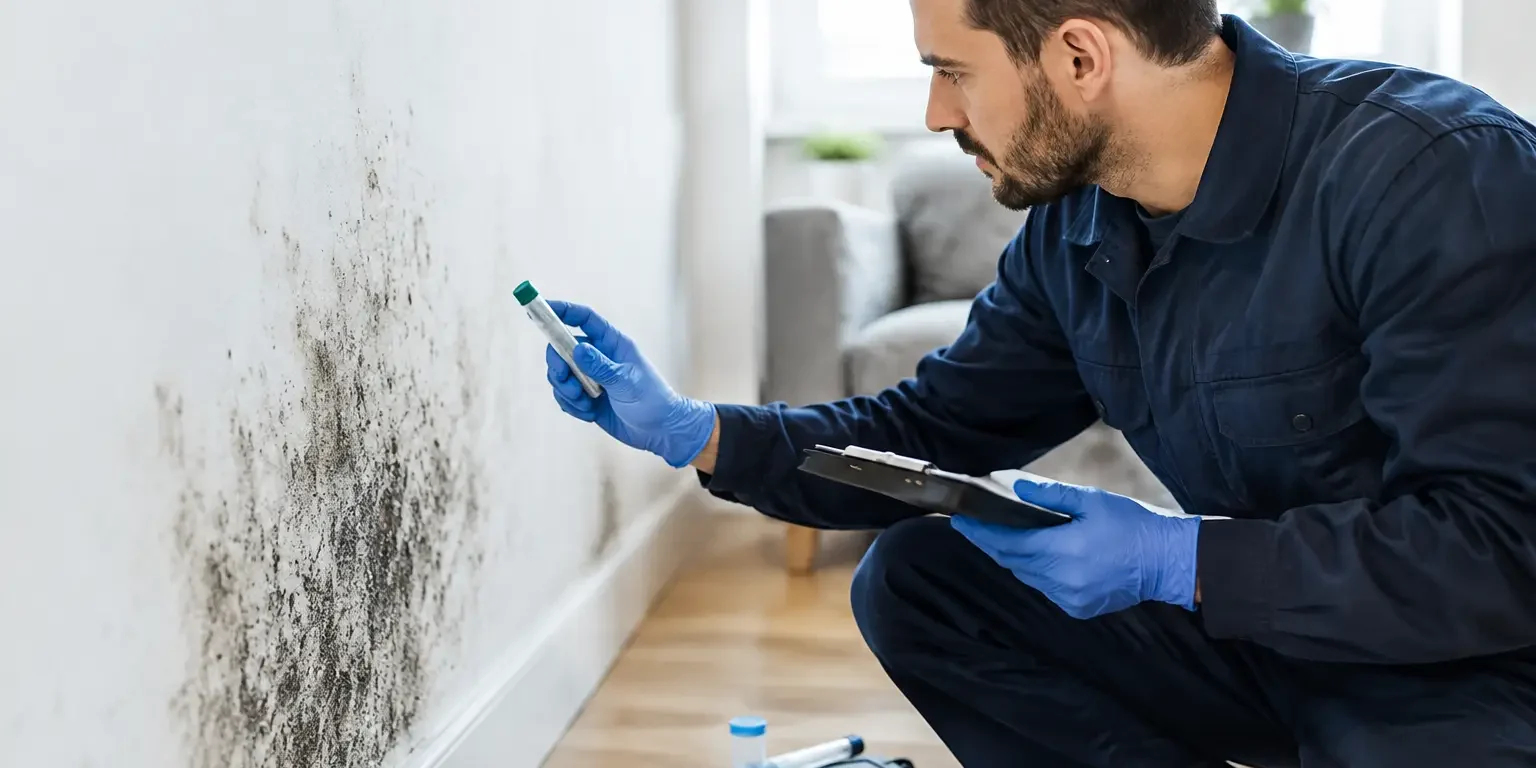
An inspection is the diagnostic work. A qualified professional looks for evidence of moisture, visible growth, water pathways, condensation, ventilation concerns, material damage, and conditions that allow mold to return. Depending on the situation, this may include moisture readings, thermal imaging, and a close review of likely problem areas.
Testing means collecting samples for analysis. Air samples can help compare indoor conditions with an outdoor control sample or with another area of the building. Surface samples may help identify growth on a specific material. In limited situations, bulk material samples may be appropriate. Each method has a purpose, and none should be used as a substitute for a careful inspection.
A credible provider explains why a sample is being taken, what the result can and cannot show, and how it will affect the recommendation. Testing every room without a building-specific reason is not necessarily thorough. It can simply add cost without producing clearer answers.
The number of samples changes the price
Laboratory fees are commonly charged per sample, so a larger sampling plan increases the total. A straightforward concern may call for one or two targeted samples plus an appropriate comparison sample. A home with odors on multiple floors or a commercial property with distinct affected zones may require more.
Be cautious with quotes that list only a very low starting price. Ask whether laboratory fees, report preparation, and comparison samples are included. You should also ask whether the quote covers a complete visual and moisture assessment or only the collection of a sample.
When Mold Testing Cost Is Worth It
Testing is especially valuable when the condition of the building is unclear. It can provide useful documentation after water damage, help investigate persistent odors or unexplained indoor air concerns, support a remediation plan, or establish conditions before and after professionally managed cleanup.
For landlords, property managers, and business owners, written findings can also help document a prompt, appropriate response to a reported concern. In shared buildings, that clarity matters. A complaint in one unit may be caused by a localized plumbing issue, a roof leak, a ventilation condition, or moisture traveling from another area. Guessing can lead to unnecessary work in the wrong place.
Testing may be less useful when there is clearly visible mold on a small, accessible, nonporous surface and the moisture source is obvious and corrected. In that situation, the priority is often safe cleaning, drying, and preventing recurrence. A professional should not use testing to create fear or sell work that the evidence does not support.
At the same time, visible mold should not be dismissed simply because it is small. Repeated growth, soft or damaged building materials, a strong odor, or a history of water intrusion may point to a hidden issue. The inspection determines whether the visible area is the full problem or only the part you can see.
What a Proper Quote Should Include
Before approving mold testing, request a scope that explains the work in plain language. You should know who will inspect the property, what areas will be evaluated, what testing is proposed, and what the final report will provide.
A useful quote should address the following:
- The inspection areas and the suspected moisture or water source
- The type and number of samples proposed, including any comparison sample
- Whether laboratory analysis and written findings are included
- Expected turnaround time for results and whether expedited analysis is available
- Any limitations, such as blocked access, occupied areas, or conditions that may affect sampling
The written report matters as much as the sample collection. It should explain the observations, identify moisture conditions where possible, interpret laboratory results in context, and provide practical recommendations. A sheet of laboratory numbers without an inspection narrative is not a remediation plan.
Why the Cheapest Test Can Become the Most Expensive Choice
Mold concerns are often tied to a building issue: a slow plumbing leak, poor drainage, roof damage, condensation, elevated humidity, or inadequate drying after a water event. If that source is not identified and corrected, cleaning alone may only provide a temporary improvement.
An incomplete investigation can also lead to overcorrection. Removing materials from broad areas without evidence, containment planning, or a defined scope can disrupt a home or business and increase costs unnecessarily. On the other hand, ignoring concealed moisture can allow damage to spread behind walls, under flooring, or in ceiling cavities.
This is why certification, insurance, and documented procedures should weigh heavily in your decision. A qualified specialist protects the property by diagnosing first, recommending only what the conditions support, and using appropriate controls if remediation is required. Certified Mold Removal Inc. follows that disciplined approach, from inspection and testing through source correction and managed cleanup.
Questions to Ask Before You Schedule
Ask whether the company performs an inspection before recommending samples, whether it uses an independent laboratory, and whether you will receive written findings. Ask how the provider determines sample locations and whether the same team can prepare a remediation protocol if conditions warrant it.
If the property has tenants, employees, children, older adults, or people with respiratory sensitivities, explain that when scheduling. The inspection team can consider occupancy, access, and the need to minimize disruption. For a business, it is also reasonable to ask how the investigation can be staged around operating hours.
Do not rely on odor alone, a home test kit alone, or a visual glance from a contractor who is not trained in mold assessment. Those methods may identify a concern, but they rarely answer the question that protects the building long term: where is the moisture coming from, and what must be done to stop it?
For property owners in Monmouth County and nearby service areas, timely action after a leak or recurring dampness can prevent a smaller issue from becoming a larger repair. The best investment is not the least expensive test on paper. It is a clear diagnosis that gives you a defensible, practical path to restore dry, normal indoor conditions.