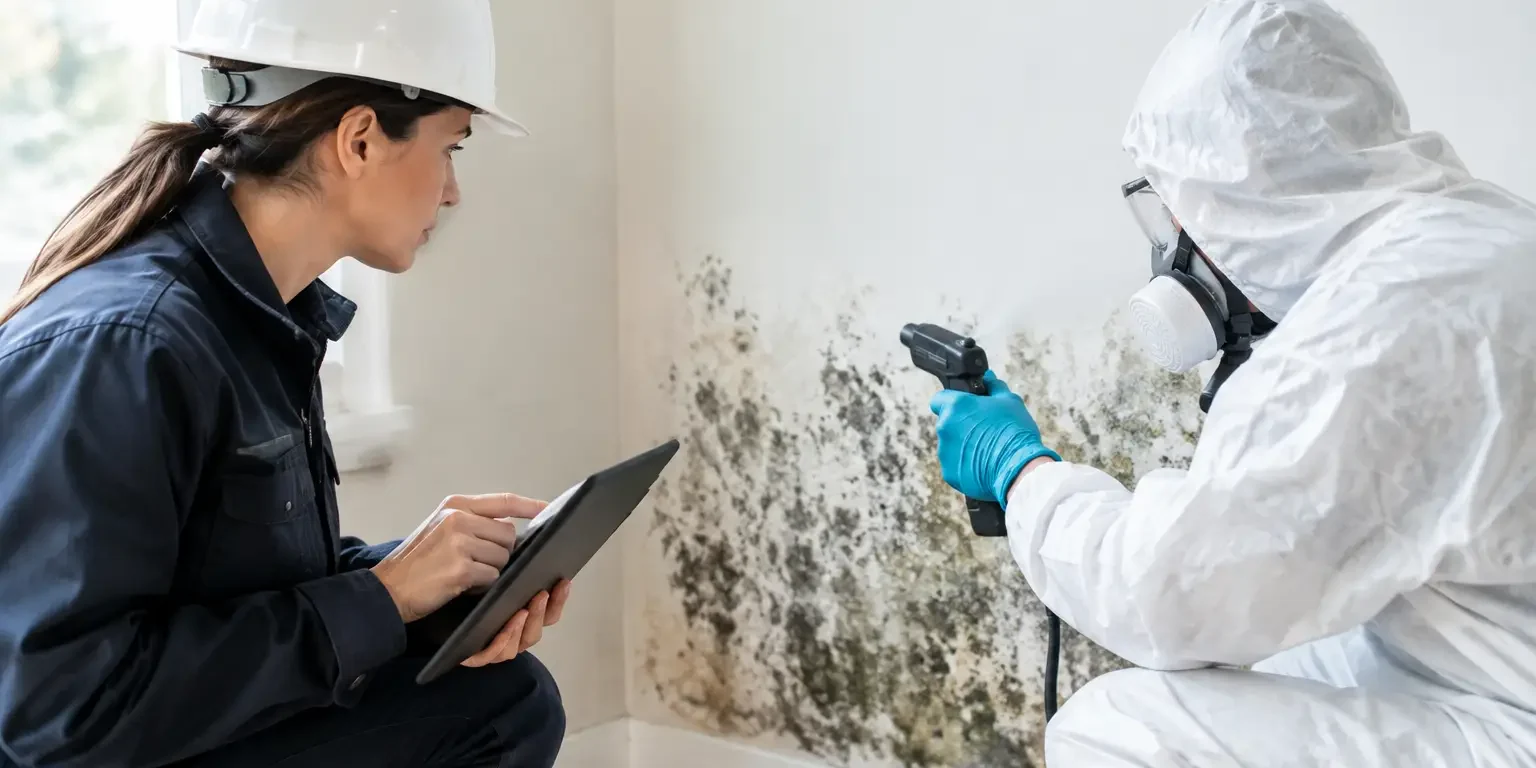
A dark patch on drywall, a persistent musty odor, or water damage after a leak creates one immediate question: who should you call? Understanding the assessor versus remediator distinction helps homeowners, property managers, and business owners make a safer decision before anyone begins tearing out materials or applying chemicals.
The right answer depends on the size of the issue, the building’s history, who occupies the space, and whether documentation may be needed for an insurer, tenant, buyer, or property file. What should not change is the order of work: identify the moisture source, determine the scope, create a plan, perform controlled cleanup, and verify that conditions have been properly addressed.
Assessor Versus Remediator: The Core Difference
An assessor evaluates the problem. A remediator performs the corrective work. Those roles can be handled by separate professionals, and in some situations, keeping them separate offers an added layer of objectivity.
A mold assessor may inspect affected and adjacent areas, investigate moisture conditions, identify likely causes, and recommend the appropriate scope of work. Depending on the circumstances, the assessment can include moisture mapping, visual documentation, limited material or air sampling, and a written remediation protocol. The goal is not simply to confirm that mold exists. The goal is to determine where it is, why it grew, how far the impact may extend, and what must be corrected to prevent recurrence.
A remediator follows that scope to safely remove or clean impacted materials, establish containment when needed, control dust and airborne particles, address the underlying moisture condition, and clean the work area. Good remediation is a controlled construction and environmental process, not a cosmetic cleaning service.
The terms are sometimes used loosely, especially by companies that offer both services. That is not automatically a concern. The more important question is whether the company can clearly explain its findings, document its recommendations, and show you why each part of the proposed work is necessary.
Why Diagnosis Comes Before Cleanup
Mold needs moisture. If a contractor removes visible growth without resolving the leak, drainage issue, plumbing failure, condensation, or humidity condition that fed it, the problem can return behind the next piece of drywall or flooring.
A proper assessment starts with the cause. For example, staining under a bathroom vanity may stem from a slow supply-line leak, but a recurring spot near an exterior wall may point to flashing, roof, window, or insulation issues. In a finished basement, the cause may be seasonal humidity, water intrusion, a failed sump system, or more than one condition at once.
That distinction affects the scope and cost of the work. A small, surface-level issue caused by a corrected spill does not require the same response as a concealed problem after a long-term leak. Fear-based sales tactics ignore that difference and treat every spot as a major emergency. A professional assessment should be factual: not all mold is dangerous, but moisture damage and microbial growth should be evaluated correctly before they spread or affect indoor conditions.
Testing can be useful, but it is not a substitute for inspection. If growth is visible and the moisture source is clear, the practical focus is often source correction and removal of impacted materials. Sampling may be more valuable when contamination is suspected but not visible, when occupants report recurring concerns, when the extent of impact is unclear, or when baseline and post-work documentation are needed.
When an Independent Assessor Makes Sense
Separate assessment and remediation can be particularly valuable in larger, more complex, or disputed situations. An independent assessor has no financial stake in performing the repair work, which can give owners, tenants, insurers, and facilities teams greater confidence in the scope.
Consider independent assessment when a claim involves significant damage, multiple rooms, recurring failures, a commercial property, or potential conflict between parties. It can also be appropriate when occupants have heightened health concerns, when a prior cleanup did not solve the problem, or when a detailed written protocol and clearance criteria are required before work begins.
Independence is only useful when it comes with real technical competence. Ask whether the assessor has relevant training, uses moisture and building-science evidence rather than speculation, and will provide a written explanation of findings. A vague report that says only “mold present” is not enough to guide safe work.
In New Jersey and neighboring markets, property conditions can vary widely by building age, coastal humidity exposure, basement construction, and maintenance history. The inspection should reflect the actual structure, not a generic checklist.
When One Qualified Company Can Handle Both Roles
For many residential and routine commercial projects, a qualified specialist can assess the issue, prepare a documented scope, correct the source, and complete remediation efficiently. This approach can reduce delays during an active leak or water event, when fast containment and drying matter.
The benefit is coordination. The same team understands what it found, why the work is recommended, and how the affected area should be restored to normal conditions. The risk, of course, is that an unqualified or aggressive contractor may recommend more demolition than the evidence supports.
The safeguard is transparency. Before approving work, request a clear explanation of the moisture source, affected materials, containment plan, cleaning methods, expected duration, and how completion will be evaluated. A credible company should welcome these questions. It should not pressure you to sign immediately based on alarming language or unverified health claims.
Certified Mold Removal Inc. approaches the work in that order: diagnose first, address the source, establish the appropriate controls, and complete remediation based on the documented condition. That process protects both the property and the people who use it.
What a Sound Remediation Plan Should Address
A remediation plan should be tailored to the building, but several elements should be clear before work starts. You should understand what materials will be removed or cleaned, what areas will be isolated, and how workers will prevent dust and debris from moving into unaffected rooms.
For a limited issue, the plan may involve local containment, removal of damaged porous materials, detailed cleaning, and drying. For a larger affected area, it may require more substantial containment, controlled air management, protection of contents, and staged cleaning. The right level of control depends on the scope, location, and condition of the materials, not on a one-size-fits-all price sheet.
The plan should also identify who is responsible for repairing the moisture source. Remediation without source correction is incomplete. If a roof, plumbing, foundation, ventilation, or drainage repair is required, that work should be coordinated and documented so the building is not left vulnerable to the same problem.
How to Evaluate the Professionals You Hire
Credentials matter, but so does the way a company uses them. Look for a provider that can explain its process in plain language, carries appropriate licensing and insurance, follows recognized safety practices, and provides written documentation rather than verbal promises.
Be cautious if you encounter any of these warning signs:
- A company declares a major contamination problem without inspecting the moisture source or affected materials.
- The proposed work is broad and expensive, but no written scope explains why it is necessary.
- Workers plan to disturb damaged materials without describing containment or cleaning controls.
- The contractor guarantees a specific test result before understanding the building conditions.
Ask who will perform the work, what training they have, whether the estimate separates source repairs from remediation, and whether post-remediation verification is appropriate for your project. For larger jobs, independent clearance testing can provide useful confirmation that the work area meets the agreed project criteria after cleaning is complete.
The Decision Is About Accountability
The assessor versus remediator question is not just about job titles. It is about accountability at every stage. Someone must identify the cause. Someone must define a reasonable scope. Someone must perform the work safely. And someone must be able to show that the job was completed according to the plan.
If you see visible growth, smell persistent mustiness, or have had a recent water event, avoid covering the area with paint or beginning demolition without a plan. A prompt, professional evaluation can turn an uncertain property problem into a defined repair process – and give you a clear path back to a dry, healthy space.