A musty basement in Scarsdale after a storm, a damp utility room in White Plains, or staining around a window line in a Rye office – these are the moments when Westchester County mold inspection stops being a vague idea and becomes an urgent first step. The goal is not to create panic. The goal is to find out what is actually happening, where the moisture is coming from, and whether the problem is limited or spreading through the building.
That distinction matters. Not every discoloration is mold, and not every mold issue is a major health emergency. But when moisture is left unresolved, mold can move behind drywall, into insulation, under flooring, and through HVAC pathways. A proper inspection gives homeowners, property managers, and business owners a clear answer before they spend money on the wrong fix.
What a Westchester County mold inspection should actually tell you
A real inspection is more than someone glancing at a wall and declaring a crisis. It should answer three practical questions. First, is mold actually present, and if so, where? Second, what water source or humidity condition is allowing it to grow? Third, what level of cleanup is appropriate for the size and location of the contamination?
That process matters because mold problems are usually moisture problems first. If the source is a roof leak, plumbing issue, foundation seepage, condensation pattern, or ventilation failure, simply wiping the surface or painting over a stain will not solve it. The growth will return, often larger and more expensive to correct.
A qualified inspector should evaluate visible conditions, hidden risk areas, and the building history. If there was a recent flood, recurring basement dampness, a past pipe break, or tenant complaints about odor, those details help narrow down where contamination may be active even if it is not fully visible yet.
Why mold issues are common in Westchester properties
Westchester County has a mix of older homes, renovated houses, multifamily buildings, retail spaces, and office properties. That variety creates different mold risks. Older homes may have chronic basement moisture, aging roof systems, or insulation gaps that lead to condensation. Newer or updated buildings can still develop mold if bathrooms are poorly vented, windows sweat seasonally, or hidden leaks go unnoticed behind finished surfaces.
The local climate adds pressure. Humid summers, wet springs, and storm-related water intrusion can all raise indoor moisture levels. In winter, temperature differences between indoor air and exterior walls can create condensation in attics, crawl spaces, and around poorly insulated penetrations. A good inspection accounts for these patterns instead of treating every property the same way.
Signs you should not ignore
Visible growth is the obvious warning sign, but it is not the only one. Persistent musty odor, bubbling paint, warped baseboards, dark spotting around vents, and repeated allergy-like symptoms in one area of a building can all point to moisture-driven contamination. So can a room that always feels damp even when the rest of the property seems normal.
There is also the issue of timing. If water damage happened in the last 24 to 48 hours, fast drying may prevent growth from taking hold. If materials stayed wet longer than that, the chance of mold increases significantly. Waiting weeks to “see if it goes away” often turns a targeted correction into a larger remediation project.
What happens during the inspection
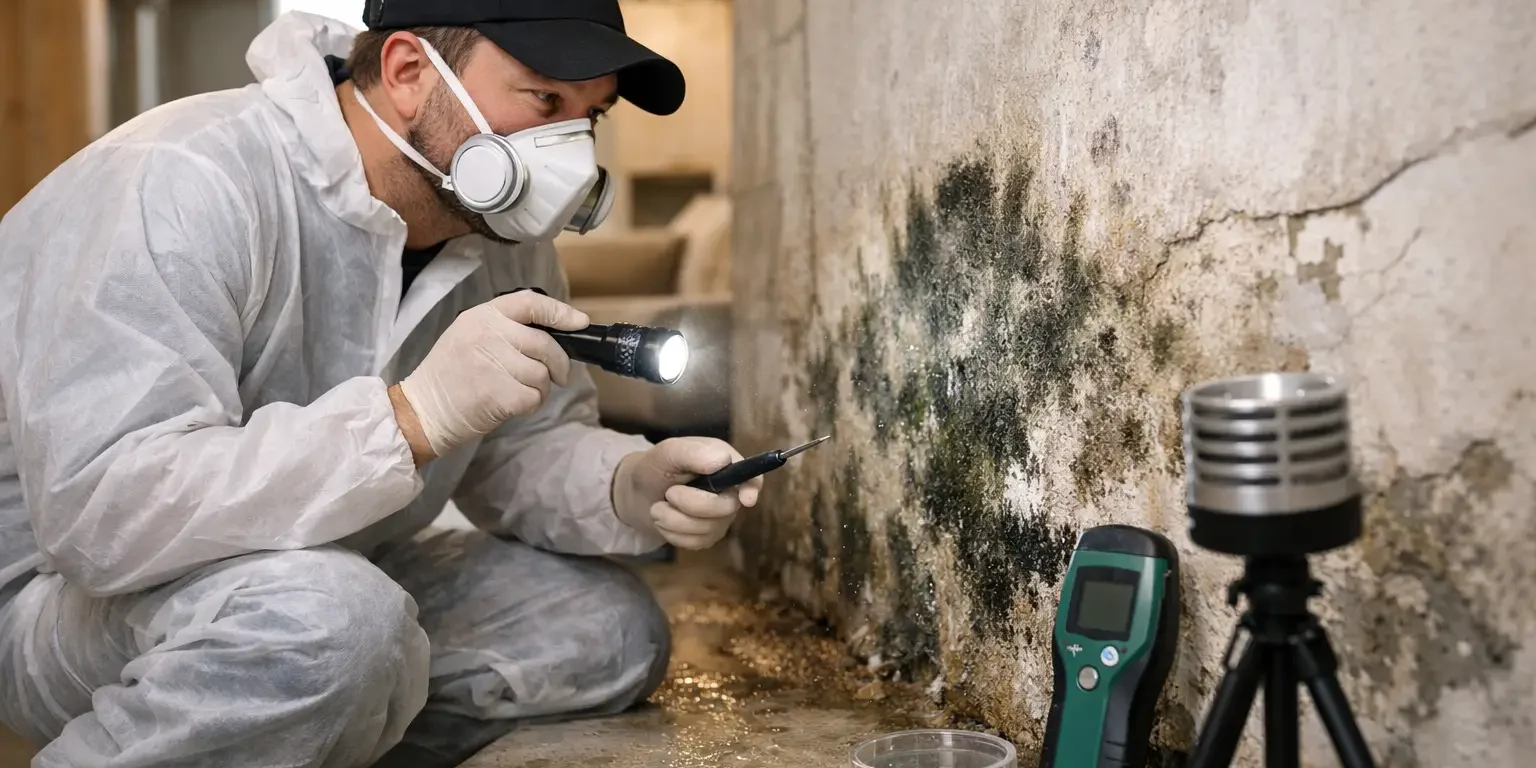
A professional mold inspection usually starts with a detailed interview and visual assessment. The inspector looks at the complaint area, tracks moisture pathways, checks adjacent materials, and assesses how air may be moving through the space. This is where experience matters. Mold often shows up away from the actual leak source, especially when water travels along framing, piping, or subfloors.
Moisture meters, thermal imaging, and humidity readings may be used to identify concealed dampness. Those tools are useful, but they should support the inspection, not replace judgment. A thermal image can suggest a cold or wet area, but it does not by itself confirm mold. That is why proper interpretation matters.
When needed, sampling can help clarify the picture. Air samples may be used to compare indoor and outdoor spore conditions, while surface samples can help identify what is growing on a material. Sampling is not necessary in every case. If mold is clearly visible on a water-damaged surface, the priority may be defining the extent, correcting the moisture source, and setting a safe remediation scope. Testing is most useful when the contamination is uncertain, hidden, disputed, or connected to indoor air quality concerns.
Inspection vs. testing vs. remediation
These terms are often lumped together, and that causes confusion. Inspection is the diagnostic phase. It identifies conditions, maps suspected impact, and helps determine the next step. Testing is one tool that may be used during inspection, but it is not the whole process. Remediation is the controlled removal and cleanup of affected materials under proper containment.
This distinction protects the property owner. If someone offers a quick answer without investigating the moisture source, the work may be incomplete. If someone jumps straight to demolition without defining the affected area, the cost can climb unnecessarily. The right approach is disciplined: diagnose first, correct the cause, then remediate to an appropriate standard.
When the answer is simple, and when it is not
Some mold situations are straightforward. A small, isolated area caused by a one-time plumbing leak may be limited to a few materials and a short cleanup plan. Other situations are more involved. If contamination has spread inside wall cavities, under carpeting, above ceiling tiles, or through multiple tenant spaces, the project can require containment, air filtration, selective demolition, and post-cleanup verification.
This is where honest assessment matters. Fear-based sales tactics help no one. Not all mold is dangerous, and not every finding justifies a major remediation job. At the same time, minimizing a serious moisture issue can put occupants and the building at risk. A professional inspection should give you a measured answer, not a dramatic one.
Choosing a qualified Westchester County mold inspection provider
Credentials and process should carry more weight than marketing claims. Look for a company that understands building science, moisture intrusion, containment practices, and standards-based remediation planning. You also want clear documentation. A useful inspection should produce findings you can act on, whether that means a repair, a cleanup protocol, or a broader remediation scope.
Speed matters too, especially after water damage or when tenants, employees, or family members are affected by odor and air quality concerns. Same-day response can make a real difference in limiting spread. But fast service should still be careful service. Rushed guesswork is not a substitute for proper diagnosis.
Certified Mold Removal Inc. approaches inspection the way it should be handled – identify the source, define the extent, and recommend the safest path forward based on actual conditions. That is a better standard than selling fear or pretending every stain is the same problem.
What to do before the inspector arrives
Do not paint over suspected growth, spray heavy chemicals, or tear open walls on your own. Those steps can disturb contamination, spread particles, and make the original source harder to identify. If the area is actively wet, limiting further water exposure is smart, but avoid aggressive cleanup until the condition is evaluated.
It also helps to gather context. Note when you first noticed the odor or staining, whether there was a leak or flood, and if the issue changes during rain, heat, or HVAC use. Those details can shorten the diagnostic process and lead to a more accurate recommendation.
For property managers and business owners, occupancy patterns matter as well. If complaints are tied to one suite, one floor, or one HVAC zone, that can point toward a hidden source. The more complete the building history, the more useful the inspection tends to be.
A mold problem rarely improves through delay. If you suspect an issue in your home, rental property, or commercial building, a professional inspection gives you something more valuable than a guess – a clear plan built around safety, source correction, and protecting the space before a manageable problem becomes a disruptive one.