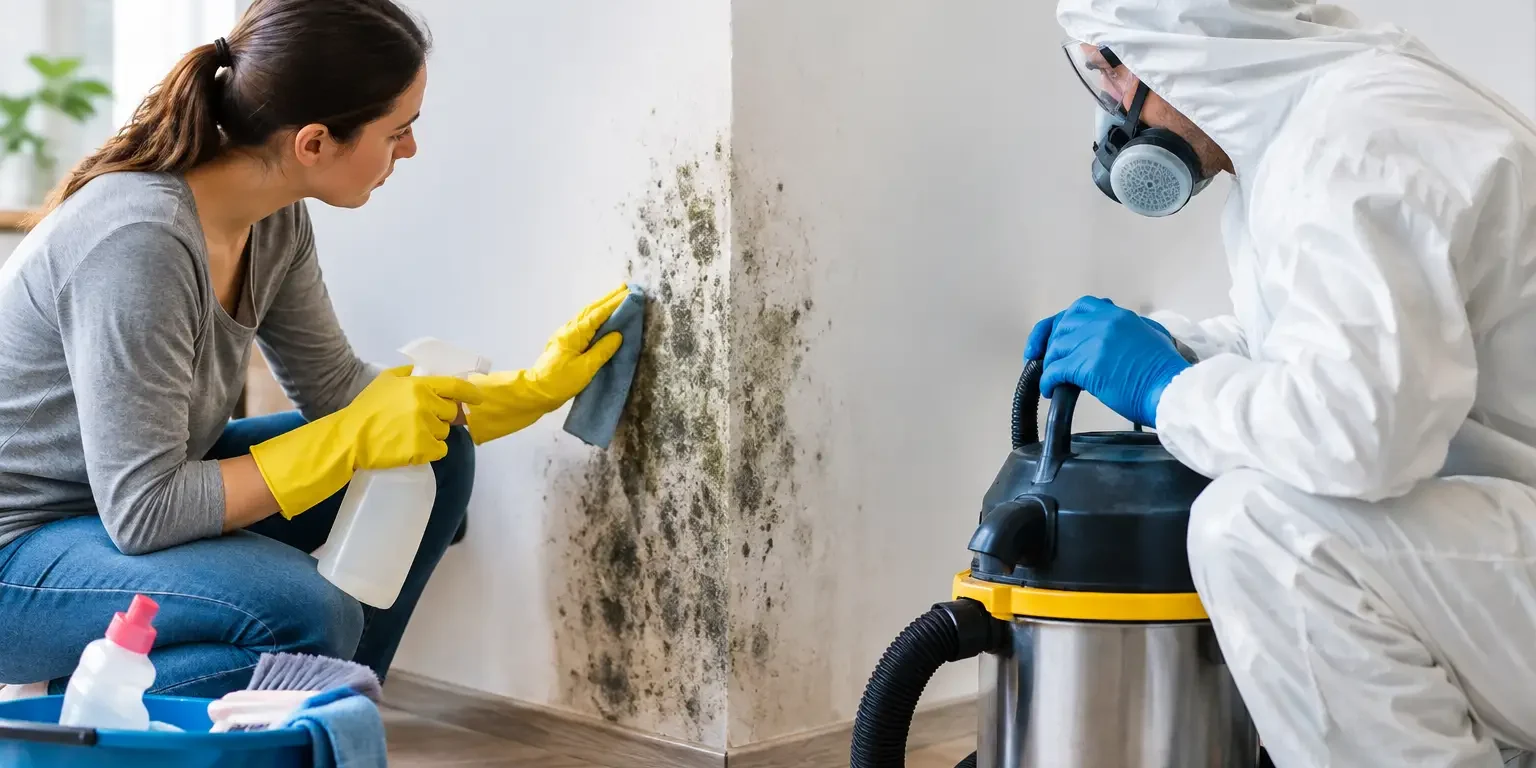
A few dark spots on a bathroom ceiling can look like a weekend cleaning job. But DIY versus remediation is not simply a choice between buying supplies and calling a contractor. The real question is whether you are dealing with a small, surface-level moisture issue or an active contamination problem that can spread through materials and indoor air when disturbed.
Not all mold is dangerous, and visible mold does not automatically mean a building-wide emergency. Still, mold growth is evidence of excess moisture. If the moisture source remains, wiping away what you can see may only hide a problem that continues behind drywall, under flooring, inside a wall cavity, or around HVAC components. A measured response protects your family, tenants, employees, and property without resorting to fear-based decisions.
DIY Versus Remediation: The Difference That Matters
DIY cleanup is limited cleaning performed by the property owner on a small, accessible area of nonporous material. Remediation is a controlled process designed to identify the moisture source, contain the affected area, remove or clean contaminated materials correctly, and return the space to normal conditions.
That distinction matters because mold is not only a stain. When colonies are scrubbed, sanded, torn out, or dried improperly, particles can become airborne and travel beyond the original area. A homeowner may remove visible growth from a wall, then later find musty odors or new growth in an adjacent room because the leak, condensation, or humidity condition was never corrected.
Professional remediation is not a more expensive version of cleaning. It is a process for controlling contamination and preventing recurrence. The scope should be based on the location, material type, amount of damage, history of water intrusion, and the people who occupy the property.
When a Small DIY Cleanup May Be Reasonable
A limited DIY approach can be reasonable when the affected area is small, easy to reach, and clearly tied to a minor moisture event that has already been corrected. For example, light surface growth on a small section of bathroom tile caused by poor ventilation is different from widespread growth on drywall after a plumbing leak.
The material makes a significant difference. Smooth, nonporous surfaces such as tile, glass, metal, and some sealed countertops can often be cleaned if the growth is limited. Porous materials such as drywall, ceiling tile, insulation, carpeting, untreated wood, and upholstered furnishings are more complicated. Mold can grow into these materials, not just on top of them. Cleaning the surface may not remove the contamination within.
If you handle a minor cleanup yourself, protect your skin, eyes, and breathing, keep the room ventilated, and avoid aggressive methods that scatter debris. Do not dry-brush, sand, or demolish mold-affected material. Clean the surface using an appropriate household cleaner, dry it thoroughly, and address the moisture condition that allowed growth in the first place. A bathroom exhaust fan, a repaired caulk joint, or better humidity control may be the real fix.
DIY work should stop when the situation is unclear. If you cannot see the full extent of the damage, cannot identify the moisture source, or suspect growth behind a finished surface, cleaning what is visible is not a reliable solution.
Signs You Need Professional Mold Remediation
Some situations call for inspection and a written remediation plan before anyone starts removing materials. This is especially true in homes with recurring water problems, rental properties where occupant safety and documentation matter, and commercial settings where disruption must be controlled.
Professional help is appropriate when you notice any of the following:
- Growth covers a large area, appears in multiple rooms, or returns after cleaning.
- Water damage affected drywall, flooring, insulation, carpeting, or other absorbent materials.
- There is a persistent musty odor without an obvious visible source.
- The issue follows a flood, a significant leak, sewage backup, roof failure, or long-term humidity problem.
- Occupants report respiratory irritation or have heightened sensitivity to environmental conditions.
- Mold may be concealed behind walls, beneath flooring, above ceilings, or inside mechanical areas.
A qualified inspection separates evidence from assumptions. Moisture readings, visual conditions, building history, and targeted sampling when appropriate help establish what is actually happening. Testing has value when it answers a specific question, not when it is used to create alarm. The goal is to determine the source, define the affected area, and recommend the right level of response.
Why Source Correction Comes Before Cleanup
Every mold project has two jobs: correct the moisture problem and address the contamination it created. Skipping either one can waste money.
Consider a basement with mold along a finished exterior wall. The visible growth may be the result of foundation moisture, a grading issue, a failed drain, a plumbing leak, or humid air condensing against a cold surface. Removing the wall finish without correcting the water pathway invites the same problem to return. On the other hand, repairing the water source without properly addressing damaged materials can leave odor, staining, and contamination behind.
This is why a credible contractor does not begin with demolition or chemical treatment alone. The first step is diagnosis. A proper scope explains where moisture is coming from, what materials are affected, how the work area will be controlled, and what needs to happen after removal to verify that the area is dry and clean.
What Certified Remediation Typically Includes
The exact process depends on the building and the extent of the damage, but professional remediation follows a disciplined sequence. Workers first isolate the affected area to limit cross-contamination. Depending on the project, this can involve physical barriers, controlled airflow, and specialized air-filtration equipment.
Affected porous materials may need to be removed under containment when they cannot be cleaned effectively. Nonporous and structural surfaces are cleaned using methods appropriate to the material and condition. The team manages debris carefully, cleans the contained space, and uses drying equipment where needed. The containment is not removed simply because the wall looks better. The work should be evaluated against the project scope and the corrected moisture condition.
For a property manager, this process also creates accountability. A documented protocol and clear work scope help communicate expectations to owners, tenants, insurers, and maintenance teams. For a business owner, controlled remediation can reduce the risk of spreading dust or contamination into occupied work areas and helps plan around operational needs.
The Cost Question: Cheap Now or Correct Once
DIY is often appealing because it appears less expensive at the start. For a genuinely small, surface-level issue, that may be true. The cost calculation changes quickly when a hidden leak, damaged drywall, recurring humidity, or cross-contamination is involved.
An incomplete cleanup can lead to repeated repairs, replacement of additional materials, tenant complaints, lost time, and reduced confidence in the property. Overreaction can also be costly. No one should recommend extensive work without evidence that it is needed. The best outcome is a scope that is neither minimized nor inflated: fix the cause, remove what cannot be salvaged, clean what can be restored, and document the result.
In older homes and complex commercial buildings, the apparent size of the mold patch is not always the size of the problem. A professional assessment is often the most cost-effective next step because it prevents random demolition and focuses resources where they will actually solve the issue.
How to Choose the Right Response
Start with the facts. Where is the growth? What got wet? How long has moisture been present? Is the material porous? Has the issue returned? Who occupies the building? These answers guide the decision better than the color or appearance of the mold.
If the area is minor, accessible, on a cleanable surface, and tied to a resolved moisture issue, careful DIY cleanup may be sufficient. If the area is extensive, hidden, recurring, water-damaged, or affecting occupants, bring in a qualified mold professional before disturbing it.
For homeowners and property decision-makers in New Jersey, New York, Pennsylvania, and Connecticut, Certified Mold Removal Inc. provides inspection, testing, written remediation protocols, and controlled removal for situations that require more than surface cleaning. The objective is straightforward: identify the cause, protect the occupied space, and complete only the work the property truly needs.
When mold is present, do not let panic make the decision for you – and do not let a small visible patch convince you that the moisture problem is over. A calm, evidence-based assessment is the safest way to protect the building and the people inside it.