A basement can smell damp for weeks while every room upstairs appears perfectly normal. That is where the search for the best indoor air quality tests begins – not with a gadget, but with a clear question: what changed in the building, and what could be affecting the people inside?
For homeowners, property managers, and business owners, indoor air testing can provide useful answers. It can also create unnecessary concern when results are collected without a building inspection, moisture investigation, or professional interpretation. The right test depends on the condition you are trying to confirm. A particle monitor cannot locate a hidden plumbing leak. A mail-in mold plate cannot tell you whether growth is active inside a wall.
The most reliable approach is to match the test to the suspected problem, correct the source, and then verify that indoor conditions have returned to normal.
What the Best Indoor Air Quality Tests Actually Measure
There is no single test that evaluates every indoor air concern. Air quality is affected by moisture, ventilation, outdoor conditions, cleaning products, combustion sources, construction dust, pets, and the condition of the building itself. A good testing plan separates those variables instead of treating every unusual reading as proof of a hazardous problem.
Mold air and surface sampling
Professional mold testing may include air samples, surface samples, or both. Air sampling compares the types and concentrations of airborne fungal particles in a concerned area with an appropriate outdoor or control sample. Surface sampling can help identify visible or suspected growth on a material.
These tests are most useful when paired with a detailed inspection. A lab result does not show where moisture is entering, whether building materials are damaged behind a finished surface, or whether a small finding is related to the odor or complaint. Sampling should answer a defined question, not replace diagnosis.
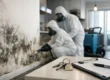
A certified inspector looks for the conditions that support growth: active leaks, wet insulation, staining, condensation, poor drainage, elevated humidity, and HVAC-related moisture. If the source remains, cleaning alone is temporary.
Moisture and humidity testing
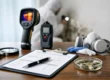
For mold-related concerns, moisture testing is often more valuable than an air sample at the start. Moisture meters can identify elevated readings in drywall, flooring, trim, and framing. Thermal imaging may help locate temperature differences that point to wet areas, although it does not confirm moisture by itself.
Relative humidity also matters. Persistent indoor humidity above roughly 60 percent can support mold growth and dust mites, especially in basements, bathrooms, laundry areas, and poorly ventilated spaces. A hygrometer is inexpensive and useful for tracking conditions, but it cannot tell you whether wall cavities or subfloors are wet.
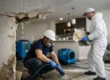
If a property has had a roof leak, pipe break, foundation seepage, appliance overflow, or repeated condensation, a professional moisture assessment is a sensible first step. It identifies what needs to be dried, repaired, or opened before contamination spreads.
Particle and ventilation monitors
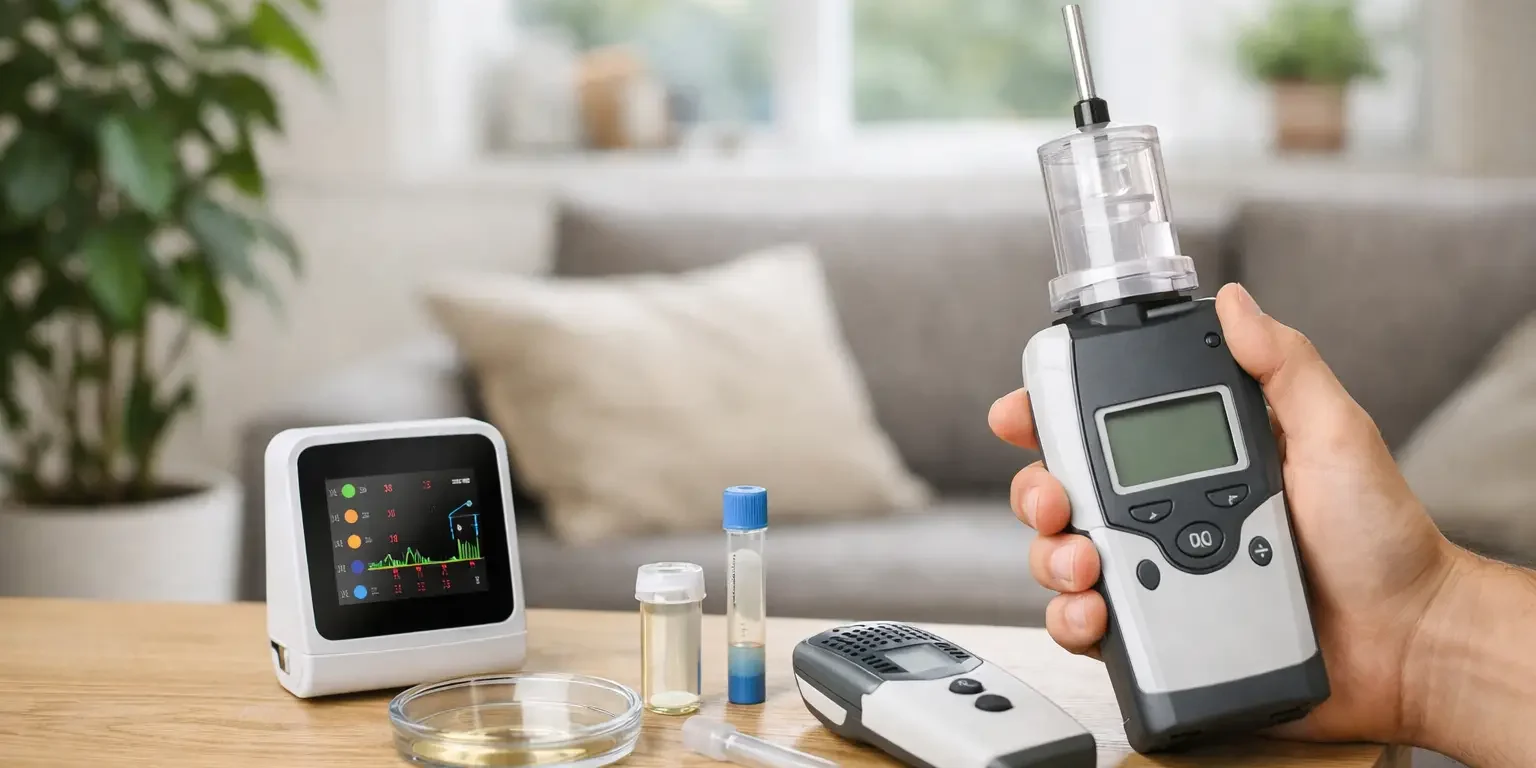
Consumer indoor air monitors commonly measure fine particulate matter, carbon dioxide, volatile organic compounds, temperature, and humidity. These devices can be helpful for spotting patterns. For example, particle levels may rise during cooking, renovations, fireplace use, or when outdoor smoke enters through open windows. Carbon dioxide trends can suggest that a crowded room needs better ventilation.
They should not be used as medical or mold diagnostic tools. VOC readings are particularly broad. They may change after painting, cleaning, storing fuel-powered equipment nearby, installing new furniture, or using fragranced products. A high reading tells you to investigate the source and improve air exchange, not necessarily that a specific contaminant is present.
Use a monitor over several days rather than reacting to one number. Note weather, occupancy, cooking, cleaning, windows, and HVAC operation. Patterns are more useful than a single spike.
Radon testing
Radon is an odorless gas that can enter buildings through soil and foundation openings. Because you cannot see or smell it, a dedicated radon test is the only way to know the level. Short-term tests can be useful for screening, while longer testing periods better reflect average exposure.
Radon testing is separate from mold and general air monitoring. It is still a worthwhile part of a complete indoor environmental plan, particularly for lower levels of a home and before a real estate transaction. If results are elevated, mitigation should be handled by a qualified professional.
DIY Kits Versus Professional Indoor Air Testing
DIY kits appeal because they are fast and inexpensive. They can be useful for basic screening, such as tracking humidity in a basement or conducting an approved radon test. But DIY mold kits have significant limits.
Settle plates, for example, collect whatever lands on them. Mold spores are naturally present indoors and outdoors, so growth on a plate does not prove a building has a hidden mold problem. It also cannot measure what occupants are breathing or establish whether the growth came from a meaningful source.
Mail-in air samples may provide data, but the collection method, sample timing, outdoor comparison, building conditions, and laboratory interpretation matter. Opening windows, running HVAC equipment, recent cleaning, rain, or a disturbance of dust can affect findings. Without a documented inspection, property owners may receive a report full of species names but no practical answer about what to repair.
Professional testing costs more because it should include more than sample collection. The value is in identifying the moisture source, selecting appropriate sample locations, maintaining proper documentation, interpreting results in context, and providing a clear remediation protocol when work is warranted.
When Testing Is Worth the Cost
Testing is not automatically necessary whenever someone sees a small area of mold. If there is a minor, clearly defined issue caused by a known and corrected source, the priority may be removing affected material safely, cleaning the area appropriately, and controlling moisture.
Testing becomes more valuable when the situation is uncertain, recurring, concealed, extensive, or connected to a building complaint. Common examples include persistent musty odors, repeated water intrusion, unexplained staining, occupant concerns that improve away from the property, suspected contamination after water damage, or a disagreement about the condition of a rental or commercial space.
For property managers and business owners, independent documentation can be especially useful. It creates a factual record of conditions, repairs, and any recommended corrective work. That is preferable to guessing, delaying, or hiring a contractor who begins demolition without first determining why the problem developed.
How a Proper Mold-Focused Assessment Should Work
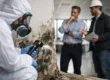
A credible assessment starts with the building, not a sales pitch. The inspector should ask about leaks, flooding, humidity history, odors, renovations, HVAC performance, and the timing of occupant concerns. They should inspect accessible areas and use moisture-detection tools where conditions indicate a possible hidden issue.
If samples are needed, the plan should explain what will be sampled, why that location was selected, and how the results will be used. The report should distinguish between observations, moisture findings, laboratory data, and recommended next steps. It should also address source correction before remediation work begins.
This process protects the owner from two costly mistakes: ignoring a concealed moisture problem and paying for unnecessary cleanup based on fear rather than evidence. Certified Mold Removal Inc. approaches inspections and remediation with that same discipline, focusing on conditions, source correction, containment, and safe cleanup rather than alarm-driven recommendations.
Choosing the Right Test for Your Situation
Start with the clearest symptom. A damp odor after a storm points toward a moisture inspection. Visible staining around a window calls for source investigation and material assessment. Dust and irritation that worsen during cooking or renovation may justify particle monitoring and ventilation improvements. A basement with no obvious issue but no previous radon result needs a dedicated radon test.
If you are buying, managing, or operating a property in areas with older housing stock, seasonal humidity, heavy rain, or finished basements, do not wait for visible growth to become extensive. Early investigation is generally simpler and less disruptive than repairing long-term moisture damage.
The best test is the one that produces an actionable answer. If a reading or sample result cannot tell you what to fix next, it is only part of the picture. Address the moisture, ventilation, or pollutant source promptly, then use qualified verification when the condition, scope, or health concerns call for it.