A musty odor upstairs, dark staining on roof sheathing, or damp insulation is not a cosmetic attic issue. It is a moisture warning. Knowing how to prevent attic mold starts with understanding one fact: mold needs available moisture to grow. Remove the moisture source, and you remove the conditions that allow a small problem to become a costly cleanup.
Attics are especially vulnerable because they sit between conditioned living space and outdoor weather. In New Jersey and nearby areas, winter condensation, summer humidity, wind-driven rain, and rapid temperature changes can all expose weak points in a home’s building envelope. The good news is that prevention is usually practical when the source is identified correctly.
Why attic mold develops
Most attic mold is caused by condensation, not a dramatic roof leak. Warm, moisture-laden air from bathrooms, kitchens, laundry areas, and living spaces rises into the attic through gaps around light fixtures, plumbing penetrations, pull-down stairs, ductwork, and unsealed wall tops. When that air reaches cold roof decking during winter, it can condense into water droplets.
Poor ventilation can make the problem worse, but ventilation alone is not always the answer. An attic with more vents but significant air leakage from the house can still accumulate moisture. Likewise, a roof leak, disconnected bathroom exhaust duct, wet insulation, or improperly installed vapor control layer may create localized growth even in a well-ventilated attic.
That distinction matters. Simply spraying a visible stain or adding a roof vent without diagnosing the moisture pathway may hide the symptom while allowing the underlying condition to continue.
How to prevent attic mold by controlling indoor moisture
The first line of defense is keeping household humidity at a reasonable level. During cold weather, indoor relative humidity that is too high can drive condensation into attic spaces, particularly in tightly sealed homes. A hygrometer provides a simple way to monitor conditions. Many homes do well around 30% to 50% relative humidity, though the appropriate winter setting depends on outdoor temperatures, window condensation, and the home’s construction.
Use bathroom exhaust fans during showers and for roughly 20 minutes afterward. Kitchen exhaust should vent outdoors when cooking produces steam. Clothes dryers must discharge outdoors through a properly connected, unobstructed duct. These are basic measures, but they are frequently missed in homes where attic moisture keeps returning.
Pay close attention to bathroom fan ducts. They should terminate outside, not into the attic, soffit cavity, or garage. Flexible ducts that sag, separate at a connection, or lack insulation can release humid air into the attic or allow condensation to collect inside the duct. A duct that exhausts onto a soffit can also allow moisture to be drawn back into nearby intake vents.
Seal air leaks before adding more ventilation
Air sealing is one of the most effective ways to prevent condensation on attic sheathing. The goal is to stop warm indoor air from reaching the cold attic in the first place.
Common leakage points include recessed lighting, attic hatches, plumbing stacks, electrical penetrations, open chases around chimneys, and gaps where interior walls meet the attic floor. These openings are often hidden beneath insulation, which is why a quick visual check may not reveal them.
An insulated, weather-stripped attic hatch deserves particular attention. A pull-down stair assembly can leak as much warm air as a poorly sealed window if it is not properly gasketed and insulated. Recessed lights also require care. Older fixtures may not be designed for direct insulation contact, and sealing work must account for clearance and fire-safety requirements.
Air sealing has a trade-off: a tighter house retains heat and can improve comfort, but it also makes mechanical ventilation and humidity management more important. The correct approach is not to leave random gaps in the home. It is to control where air moves and ensure moisture-producing rooms exhaust properly.
Keep the attic ventilation path open
A traditionally vented attic generally needs balanced intake and exhaust ventilation. Intake vents are commonly located at soffits, while ridge vents, roof vents, or gable vents provide exhaust. Outdoor air entering low and leaving high helps remove heat and incidental moisture from the attic.
The system only works when insulation does not block the soffit intake. In many attics, loose-fill or batt insulation has been pushed tight against the eaves, stopping airflow at the very point where it should enter. Properly installed baffles or ventilation chutes preserve an open channel from the soffit into the attic while keeping insulation in place.
Do not assume that adding powered attic fans is the automatic solution. In some homes, powered fans can pull conditioned air from the living space through ceiling leaks, increasing energy loss and potentially feeding the moisture issue. Ventilation design depends on the roof configuration, existing vents, insulation levels, and whether the attic is vented or conditioned. A professional assessment can prevent expensive guesswork.
Inspect the roof and flashing after severe weather
Water intrusion from above can look different from condensation. Roof leaks often create concentrated staining near valleys, chimneys, skylights, plumbing vents, roof penetrations, or damaged flashing. Wet spots that worsen after rain, snow, or wind events point toward an exterior water entry issue.
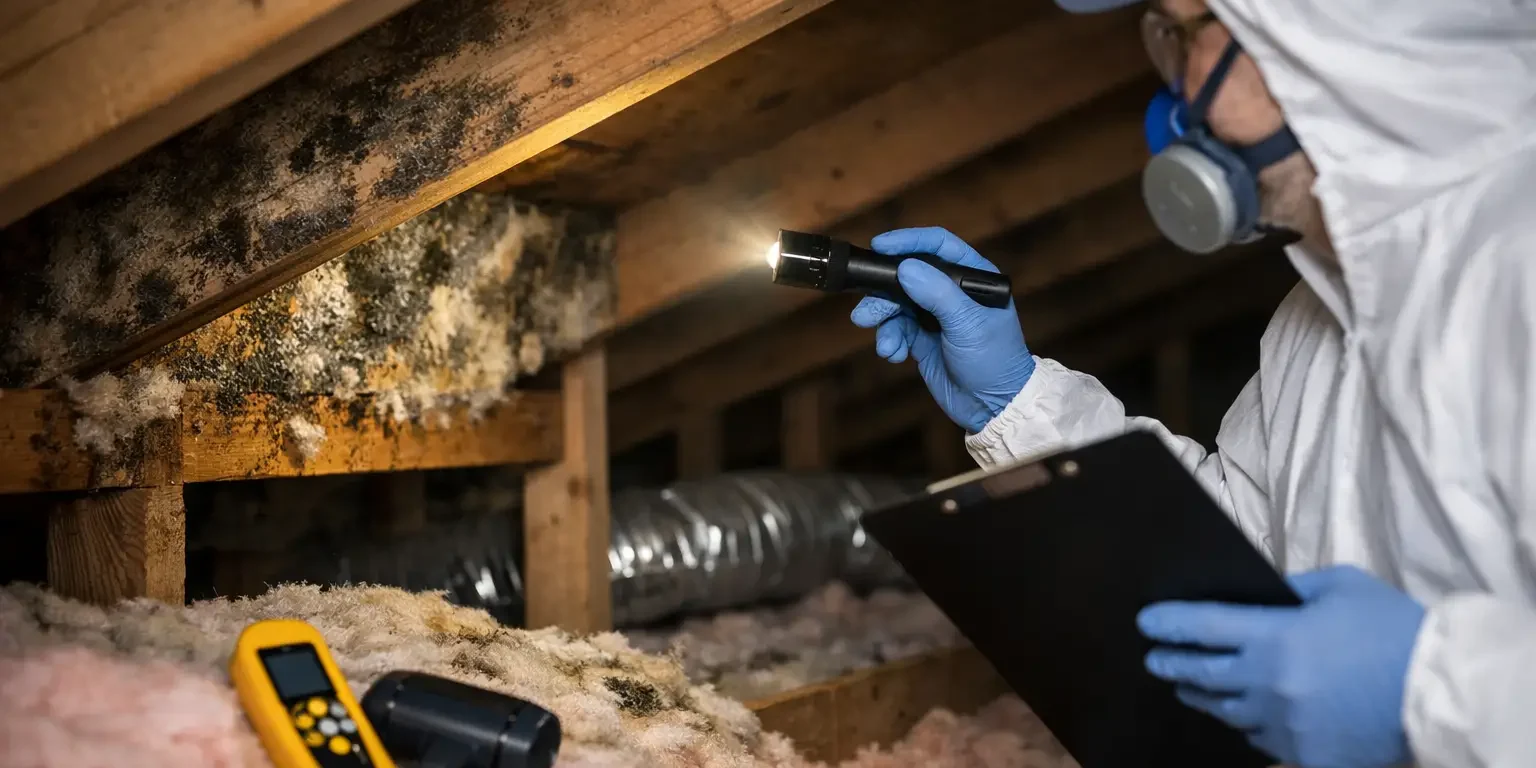
Inspect the attic after major storms with a flashlight. Look for fresh drips, wet wood, rusted fasteners, damp insulation, and water tracks. Check from a safe walking surface only. Stepping between ceiling joists can damage the ceiling below and create a fall hazard.
Outside, damaged shingles, clogged gutters, ice-dam history, and deteriorated flashing should be addressed promptly by a qualified roofing professional. Mold prevention is not separate from roof maintenance. Every delayed leak repair gives moisture more time to migrate into framing and insulation.
Protect insulation from moisture and compression
Insulation helps keep the ceiling below warmer and reduces the temperature difference that contributes to condensation. But insulation works only when it is dry, appropriately installed, and not compressed.
Wet insulation should not be ignored. It can lose effectiveness, hold moisture against building materials, and conceal the true extent of a leak or condensation problem. If insulation has been repeatedly damp or has visible growth, a qualified inspector should determine whether localized removal, source correction, and replacement are necessary.
Also look for uneven coverage. Thin or missing insulation near attic perimeters can create cold spots on ceilings and encourage condensation. The appropriate insulation level varies by home design and local climate, so adding material without first checking for air leaks can produce mixed results. Seal first, then insulate correctly.
Know when staining needs professional evaluation
Not every dark mark in an attic is active mold, and not all mold presents the same health concern. Still, visible growth, recurring condensation, a persistent musty smell, or water-damaged roof sheathing should be evaluated before the affected area expands.
Avoid dry-brushing, pressure washing, or using household bleach on porous attic wood. These methods can disturb particles, fail to correct the moisture source, and leave the building material damp. Covering stains with paint is also not remediation. It can make future inspection harder while the underlying conditions remain unchanged.
A qualified mold professional can distinguish between an active moisture condition, old staining, roof leakage, condensation, and ventilation-related issues. When sampling or a written remediation protocol is warranted, the work should be based on the condition of the structure, not fear-based claims or a one-size-fits-all cleanup recommendation.
For homeowners and property managers, early diagnosis protects more than the attic. It can help preserve insulation performance, roof framing, indoor air quality, tenant comfort, and property value. Certified Mold Removal Inc. approaches attic conditions by identifying the water or humidity source first, then recommending corrective work and containment measures appropriate to the scope.
A practical seasonal attic check
A brief attic check twice a year can catch problems before they spread. Schedule one inspection during the coldest part of winter, when condensation is most likely to show itself, and another after the humid season or a major storm period. Bring a flashlight and look for dampness, staining, disconnected ducts, blocked soffits, and changes in odor.
If you find active moisture, do not wait for a larger visible patch to appear. Document what you see, limit unnecessary traffic in the attic, and arrange a professional evaluation. A dry, properly sealed, correctly ventilated attic is not just a mold-prevention measure. It is a sign that the home is managing moisture the way it should.