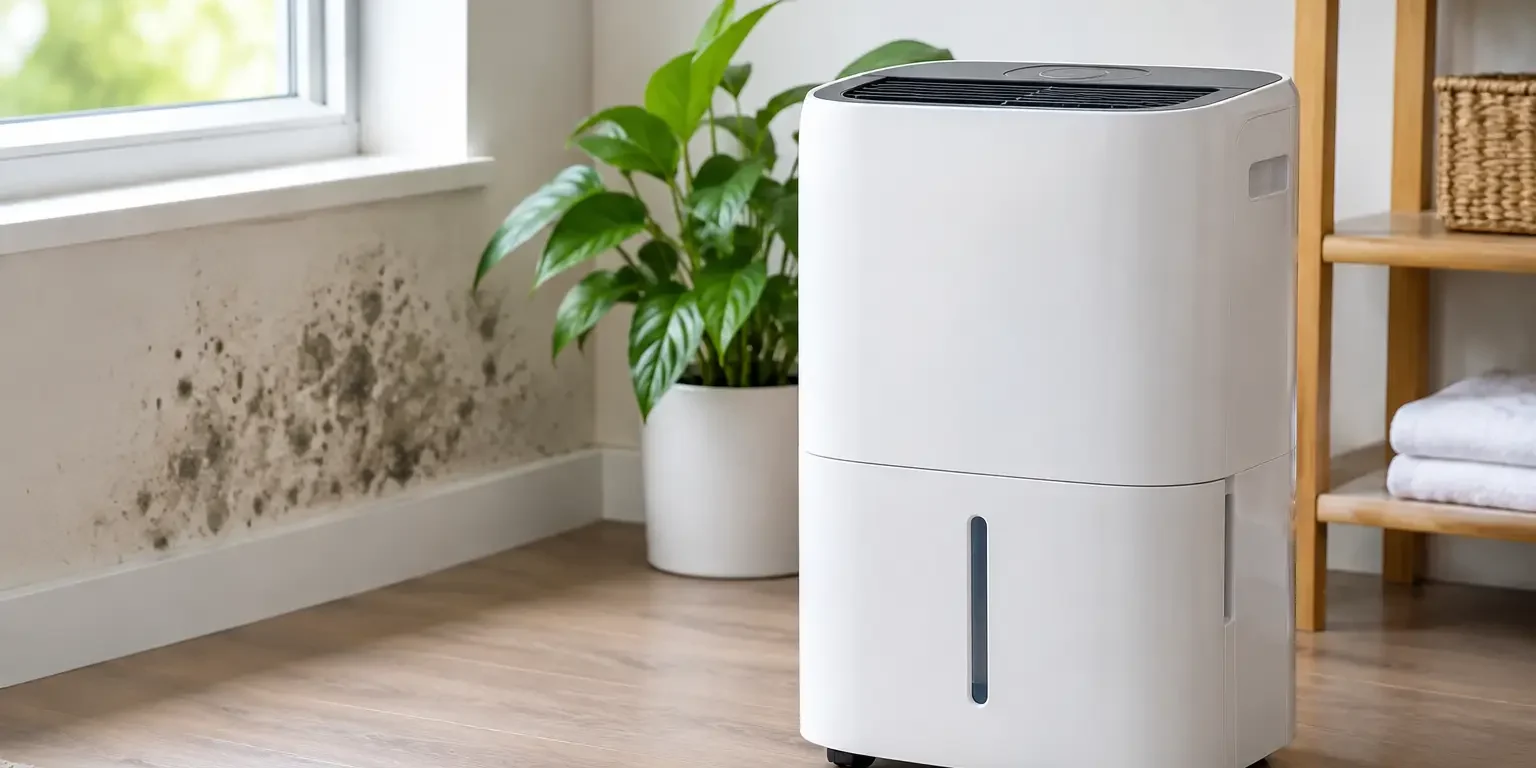
A dehumidifier can be a valuable moisture-control tool, but only if it is set to do the job it was designed for. The best dehumidifier settings for mold usually keep indoor relative humidity between 35% and 50%, with 45% as a practical target for many homes and businesses. That range reduces the moisture mold needs to grow without making the building uncomfortably dry.
A lower reading is not automatically better. Running indoor humidity too low can dry out wood flooring, trim, furniture, and musical instruments. The goal is controlled, stable humidity – not turning a damp basement into a desert. More importantly, a dehumidifier is not a substitute for correcting a leak, flood source, drainage issue, or ventilation failure.
Set Humidity Between 35% and 50%
For most properties, set the humidistat to 45% relative humidity and monitor the results for several days. This setting gives the unit room to cycle while keeping moisture below the level where mold growth becomes more likely. If a basement, crawl space, storage area, or bathroom has a known moisture history, a setting closer to 40% may be appropriate.
Avoid allowing sustained humidity above 55%. Once indoor humidity approaches or exceeds 60%, condensation and damp building materials become more likely, particularly around cold exterior walls, windows, pipes, and HVAC equipment. In summer, this is a common issue in New Jersey, New York, Pennsylvania, and Connecticut, where humid outdoor air can enter through open doors, foundation gaps, and poorly sealed windows.
Readings below 35% are not usually necessary for everyday mold prevention. If a dehumidifier cannot achieve 50% or the humidity rises again shortly after it shuts off, do not assume the unit simply needs a lower setting. The unit may be undersized, poorly placed, or working against an active moisture source.
Use a Separate Hygrometer
The display on a dehumidifier is useful, but it is not always a complete picture of the room. Place a separate digital hygrometer several feet away from the machine, away from direct airflow, windows, or exterior doors. This helps confirm whether the room as a whole is actually reaching the target humidity.
For larger basements or commercial spaces, take readings in multiple locations. One corner may be at 45% while a closed storage room, behind a finished wall, or near a sump area remains damp. Mold does not need the entire building to be humid. It only needs a localized wet surface and time.
Choose Continuous Operation When the Area Is Wet
Most dehumidifiers offer a humidistat setting, continuous mode, or both. Under normal conditions, the humidistat setting is the more efficient choice. Set it around 45%, allow the unit to cycle, and check that the space remains dry.
Continuous operation makes sense after a water event, during a period of unusually high humidity, or while drying a persistently damp area. It may also be necessary in a basement with moisture intrusion until the underlying condition is evaluated and repaired. Continuous mode should be temporary, not a way to ignore a building problem for months.
If you can smell a musty odor, see staining, notice peeling paint, or find visible growth, running a dehumidifier continuously may slow additional moisture-related damage. It does not remove existing contamination from materials, clean settled spores, or establish what caused the issue. Mold remediation begins with diagnosis and source correction, not with masking the conditions.
Match the Unit to the Space
A small portable unit may perform well in a bedroom but struggle in a large finished basement, open floor plan, or multi-room commercial area. Capacity matters, but so do airflow, ceiling height, doors, insulation, and the amount of moisture entering the space.
A unit rated for a large room can still underperform if it is expected to control humidity across closed rooms. Keep interior doors open when practical, or use separate equipment for isolated problem areas. In a commercial property, consider whether the HVAC system, ventilation design, or building envelope is allowing humid air to move through the space faster than the dehumidifier can remove it.
Do not place the unit tightly against a wall or inside a closet unless the manufacturer specifically permits it. It needs clearance for air intake and exhaust. Place it near the dampest area when possible, but not where it can be exposed to standing water or block an exit path.
Drain It Properly
An overflowing collection bucket can shut down the unit at the exact time it is needed most. For an ongoing moisture-prone area, use a properly installed gravity drain or condensate pump if the equipment supports it. Check the hose periodically for kinks, clogs, or poor connections.
Emptying the bucket manually is acceptable for a short-term situation, provided it is done consistently. It is not a reliable plan for an unattended basement, rental property, or business location. A dehumidifier that has stopped running because its tank is full provides no moisture control at all.
Adjust Settings by Season and Building Conditions
The best setting can change with weather and use. In humid summer weather, a 40% to 45% setting may be needed in basements and lower levels. In winter, indoor humidity can naturally drop as outdoor temperatures fall, so a 45% to 50% setting may be sufficient. Watch for window condensation, which can signal excess indoor moisture even if the central thermostat appears normal.
Bathrooms, laundry rooms, kitchens, and spaces near pool equipment or mechanical systems may need additional ventilation rather than a lower dehumidifier setting alone. Exhaust fans should vent outdoors, not into attics, crawl spaces, or enclosed cavities. A dehumidifier removes moisture after it enters the room; effective ventilation helps prevent excessive moisture from accumulating in the first place.
For vacant homes, set a reliable unit around 45% to 50%, confirm the drainage arrangement, and have someone check the property regularly. A power outage, failed pump, frozen coil, or plumbing leak can change conditions quickly.
Clean and Maintain the Equipment
A dirty filter restricts airflow and reduces performance. Check it according to the manufacturer’s instructions, especially during heavy use. Clean the bucket, drain port, and accessible surfaces to prevent slime buildup and odors. If the unit freezes up, shuts down repeatedly, or runs constantly without lowering humidity, it may need service or may be too small for the load.
Also inspect the room itself. Look for wet insulation, damp carpet edges, condensation on pipes, staining around foundation walls, or signs of water near windows and appliances. The dehumidifier’s behavior can provide useful information. A unit that suddenly runs all day after years of normal cycling may be responding to a new leak or a developing building-envelope problem.
When a Dehumidifier Is Not Enough for Mold
A dehumidifier is preventive equipment. It can help keep dry materials dry, but it cannot make a wet wall cavity, soaked subfloor, or hidden plumbing leak safe by itself. It also does not determine whether discoloration is mold, identify the extent of contamination, or tell you whether material removal is necessary.
Professional assessment is warranted when visible mold covers more than a small isolated area, returns after cleaning, follows a water loss, produces a persistent odor, or appears near HVAC components or inside building materials. Property managers and business owners should act promptly when tenants or employees report recurring odors, dampness, or indoor air concerns. Delays can allow a manageable moisture issue to become a larger restoration project.
Certified Mold Removal Inc. approaches these situations by identifying the moisture source first, documenting conditions, and recommending a standards-based plan rather than selling fear. Not all mold conditions require the same scope of work, but every recurring moisture condition deserves a clear explanation and a safe corrective path.
Set your dehumidifier to 45%, verify the room with a separate hygrometer, and pay attention to what the equipment is telling you. If humidity will not stay under control or mold keeps returning, the next step is not a more aggressive setting – it is finding and correcting the source of moisture.