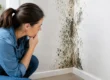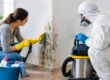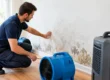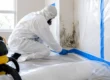
A leaking roof over a tenant suite, a musty odor near an HVAC return, or discoloration behind baseboards can become a business interruption issue quickly. This commercial mold response guide gives property owners, facility managers, and business operators a clear path from the first report to a properly controlled resolution. The priority is not panic. It is protecting occupants, stopping moisture, documenting conditions, and bringing in qualified help before contamination spreads.
Not all mold conditions present the same risk or require the same scope of work. What makes commercial properties different is the number of people affected, the complexity of building systems, and the cost of lost access to offices, retail space, schools, medical facilities, or multifamily common areas. A disciplined response protects health, operations, and the asset itself.
First Hours: Control the Water and Protect People
When mold is suspected, treat the moisture source as the immediate problem. Mold needs moisture to grow. If a pipe is leaking, a roof is actively admitting water, a drain has overflowed, or humidity has stayed elevated, source correction cannot wait until after cosmetic cleanup.
Start by restricting access to the affected area when conditions warrant it. Employees, tenants, visitors, and maintenance staff should not be asked to work around visible growth, wet materials, or strong odors while the cause is still unknown. This is especially relevant when the affected space has limited ventilation, when water has traveled through wall cavities or ceiling assemblies, or when occupants report irritation or odor concerns.
Your initial response should focus on four practical actions:
- Stop or contain the active water intrusion, if it can be done safely.
- Move sensitive equipment, records, inventory, and furnishings away from wet areas.
- Photograph the condition, including water staining, damaged finishes, and the apparent path of moisture.
- Record when the issue was discovered, which areas may be involved, and any prior leaks, repairs, or occupant complaints.
Do not start tearing out walls simply because discoloration is visible. Disturbing contaminated material without proper controls can distribute particles into adjacent areas or HVAC pathways. Likewise, spraying household chemicals, painting over stains, or running ordinary fans can make a manageable situation harder to assess.
Determine Whether This Is a Surface Issue or a Building Issue
A small, isolated spot on a nonporous surface may be addressed differently than contamination linked to a recurring plumbing leak, hidden roof failure, failed waterproofing, or chronic humidity. The difference matters. Commercial mold response should be based on conditions, not assumptions or fear-based claims.
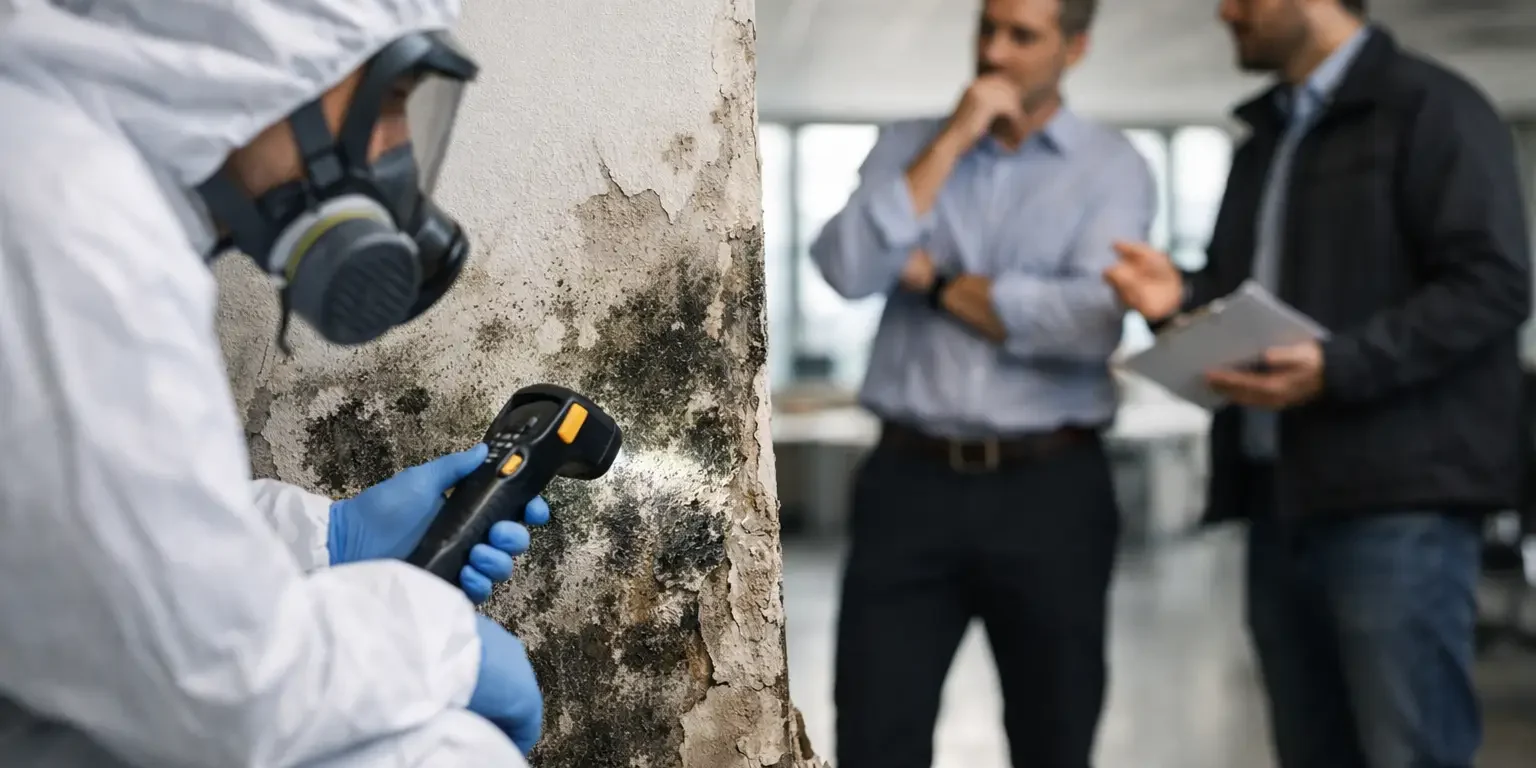
A qualified inspection looks beyond what is visible. The investigator should identify the moisture source, assess the extent of water impact, evaluate building materials, and look for pathways that allow moisture to remain trapped. Moisture meters, thermal imaging, visual inspection, and targeted sampling can each have a role, depending on the situation.
Testing is useful when it answers a real question. For example, samples may help document conditions, compare indoor and outdoor air profiles, evaluate a questionable material, or support a remediation protocol. Testing alone does not repair a building problem. A report without a source diagnosis can leave management with results but no workable plan.
Pay close attention to areas where commercial moisture problems commonly hide: above suspended ceilings, behind vinyl wall coverings, under carpeting, around window systems, in mechanical rooms, beneath sinks, near exterior walls, and around HVAC condensate lines. In larger buildings, a complaint in one suite may originate from a condition in a neighboring suite, an upper floor, or a common building system.
When an Emergency Response Is Appropriate
Some situations should move immediately to emergency response rather than routine scheduling. Examples include significant water intrusion, sewage-related water events, a ceiling collapse risk, widespread visible growth, a strong persistent odor affecting occupied areas, or contamination in a space serving vulnerable populations.
The right level of urgency depends on the extent of impact and whether the area can be isolated without disrupting critical operations. A small office storage room can sometimes be secured until an inspection takes place. A water-damaged medical office, daycare area, restaurant prep space, or densely occupied tenant floor may require faster containment and a more carefully planned operational response.
Build a Commercial Mold Response Plan Before Work Begins
Once the source and scope are understood, the work should be organized under a written remediation plan or protocol. This is where professional process separates real corrective work from a quick surface cleaning.
The plan should define the affected areas, materials to be removed or cleaned, containment requirements, worker protection, cleaning methods, moisture correction steps, and criteria for completing the work. It should also clarify who will communicate with tenants, employees, vendors, insurers, and building ownership.
For commercial properties, sequencing is often as important as the remediation method. A retail business may need work performed after closing. An office floor may need temporary relocation of staff. A multifamily property may need clear resident notices and access coordination. In some cases, completing the work in phases reduces disruption. In others, a short, controlled closure is safer and less costly than trying to keep an affected area operating.
There are trade-offs. Working after hours can protect revenue but may add labor costs. Phased work can preserve occupancy but extend the project timeline. The correct decision depends on the contamination location, the building layout, the nature of the business, and the ability to isolate work areas effectively.
Containment Is Not Optional When It Is Needed
Containment prevents dust and disturbed material from migrating from the work zone into clean spaces. The appropriate setup depends on the project, but it may include sealed barriers, controlled entry points, negative air pressure, and air filtration equipment. These measures are designed to keep remediation activity controlled rather than allowing it to affect corridors, occupied suites, or other building areas.
A contractor should also protect unaffected contents and establish clean work practices. That includes controlled removal of damaged porous materials where necessary, careful cleaning of salvageable surfaces, and proper handling of waste. Simply removing a stained section of drywall does not resolve the problem if wet framing, hidden materials, or the original leak remain unaddressed.
Be cautious of contractors who promise a universal treatment, rely only on fogging, or recommend major demolition before identifying the moisture source. Mold remediation is not a one-product service. It is a controlled process built around inspection findings, source correction, physical removal or cleaning where appropriate, and verification that materials are dry and conditions are normalizing.
Keep Documentation That Protects the Property
Commercial decisions often need to be explained later to owners, tenants, insurers, lenders, or future buyers. Good documentation supports those conversations and helps prevent repeat issues.
Maintain the initial incident record, inspection findings, photos, moisture readings, testing results when collected, remediation protocol, daily work notes, invoices, and completion documentation. If building operations are affected, also document tenant communications, temporary accommodations, and any areas taken out of service.
This record is not just administrative. It creates a maintenance history. If odor or moisture returns months later, management can compare the new condition with prior work and determine whether the issue is related, recurring, or entirely separate.
Verify the Work Before Returning the Area to Normal Use
A space should not return to normal use simply because the visible staining is gone. The moisture source must be corrected, affected materials must be properly addressed, containment must be removed carefully, and the area must be cleaned and dried according to the project plan.
Post-remediation verification may include a visual assessment, moisture confirmation, documentation review, and testing when the protocol or project conditions call for it. The goal is to confirm that the work was completed as intended, not to create a false sense of certainty from a single measurement.
For larger or more sensitive projects, independent verification can add useful separation between the party performing the work and the party evaluating completion. For smaller, clearly defined jobs, the appropriate verification process may be more straightforward. Again, it depends on the building, the scope, and the risks associated with returning the space to occupants.
Reduce the Chance of a Repeat Event
The best commercial mold response includes prevention after the immediate problem is resolved. Inspect roof penetrations, plumbing connections, exterior seals, drainage systems, condensate lines, and mechanical spaces on a regular schedule. Track humidity in areas with recurring moisture concerns, and respond promptly to ceiling stains, warped flooring, peeling finishes, or recurring odors.
Facility teams should also have a simple escalation process. Staff need to know who receives water-damage reports, who can authorize emergency mitigation, where shutoff information is kept, and when an outside specialist should be called. Delays often occur not because a building lacks resources, but because no one is sure who owns the next decision.
For commercial properties in New Jersey and surrounding service areas, Certified Mold Removal Inc. provides inspection, testing, written remediation protocols, source-focused remediation, and rapid emergency response. The right first call can prevent a localized moisture issue from becoming a larger occupancy, liability, and property damage problem.
When a building shows signs of moisture or suspected mold, act early, document carefully, and insist on a process that fixes the cause before the cleanup is considered complete.