A bathroom ceiling spot, a musty basement, or staining near a window is rarely just a cleaning problem. Mold growth causes usually begin with one condition: moisture that is staying where it should not. The visible growth may be small, but the water source behind it can affect drywall, framing, flooring, furnishings, and indoor air quality long before the full scope is obvious.
Mold needs moisture, a food source, and time. Most buildings already provide the food source through materials such as paper-faced drywall, wood, dust, carpet backing, and fabrics. The practical question for homeowners, property managers, and business owners is not whether those materials exist. It is where water or humidity is allowing mold to use them.
The Main Mold Growth Causes Inside Buildings
Water intrusion is the most common driver. A roof leak, plumbing leak, overflowing fixture, failed appliance hose, foundation seepage, or wind-driven rain can wet building materials quickly. If the materials are not thoroughly dried, mold can begin growing in as little as 24 to 48 hours under favorable conditions.
Some moisture events are obvious. A burst pipe or flooded basement gets immediate attention because the damage is visible. Others are slow and hidden: a pinhole leak inside a wall, a loose shower valve, a failed window seal, or water traveling beneath a floor after a dishwasher leak. Those slower problems often produce the most extensive contamination because they may continue for weeks or months.
High indoor humidity can create the same result without a single leak. Humid air condenses on cool surfaces, including windows, exterior walls, ductwork, pipes, and the back side of furniture placed tightly against an outside wall. In parts of New Jersey and the surrounding region, damp summers, heavy storms, and poorly managed basements can make humidity control a year-round property maintenance issue.
Poor Ventilation Traps Moisture Where It Matters
Bathrooms, kitchens, laundry rooms, and enclosed utility spaces generate substantial moisture. An exhaust fan that does not vent outdoors, is undersized, or is rarely used leaves that moisture inside. Steam then settles on walls, ceilings, cabinetry, and window frames.
Ventilation is not only about having a fan installed. It must move air effectively. A bathroom fan clogged with dust, a dryer vent restricted by lint, or an HVAC system with poor airflow can keep surfaces damp longer than they should be. Opening a window may help in certain weather, but during a humid day it can introduce even more moisture.
Water Damage That Was Dried on the Surface Only
One of the most overlooked mold growth causes is incomplete drying after a leak or flood. A carpet can feel dry while its pad, subfloor, or baseboards remain wet. Drywall may look normal even though insulation and framing inside the wall cavity hold moisture.
Fans alone do not prove that materials are dry. Proper water damage assessment involves identifying how far water traveled, checking moisture levels in affected materials, and determining whether drying is still possible or removal is necessary. The right approach depends on the type of water, how long materials were wet, the materials involved, and whether mold growth has already begun.
Why Mold Often Appears in Basements, Attics, and Bathrooms
These spaces have different problems, but they share a common theme: moisture is not being controlled at the building envelope or within the room.
Basements commonly develop mold because of foundation cracks, groundwater pressure, inadequate exterior drainage, leaking pipes, and elevated humidity. Storing boxes, furniture, or finished wall materials directly against a damp foundation wall can create a concealed environment where mold grows unnoticed.
Attic mold often points to a ventilation, insulation, or air-sealing issue. Warm, moist household air can rise into the attic through gaps around light fixtures, plumbing penetrations, attic hatches, and duct openings. When that air reaches cold roof sheathing in winter, condensation can form. Roof leaks can also be involved, which is why an inspection should distinguish between condensation patterns and direct water intrusion.
Bathrooms are exposed to daily steam, splashing water, and plumbing connections behind walls. Grout and caulk failures, slow toilet leaks, shower pan issues, and insufficient exhaust all raise the risk. Surface mildew around a shower may be manageable with routine cleaning and moisture control, but recurring growth, soft walls, persistent odors, or staining outside the wet area deserve closer attention.
Condensation Is a Warning Sign, Not Just a Seasonal Nuisance
Condensation occurs when humid air meets a cooler surface. A little moisture on a window during an abrupt temperature change does not automatically mean a mold problem. Repeated condensation, however, signals that humidity, insulation, airflow, or temperature conditions need correction.
Look for water droplets on windows, dampness around metal frames, sweating pipes, discoloration behind furniture, or a musty odor in closets along exterior walls. These signs can reveal a building performance issue before visible mold spreads.
Lowering indoor humidity may involve using properly sized dehumidification, repairing air leaks, improving ventilation, insulating cold surfaces, and correcting drainage or plumbing problems. The right solution depends on the source. Running a dehumidifier in a basement will not solve a roof leak, and sealing a wall without addressing trapped moisture can make damage worse.
Mold Growth Causes Can Be Hidden Behind Finished Materials
Visible mold is not always the starting point or the full extent of the issue. Moisture can move behind baseboards, under flooring, inside ceiling cavities, behind cabinets, and within wall systems. A persistent odor after water damage is a reason to investigate, even if the painted surface looks clean.
This is where diagnosis matters. Not every dark mark is mold, and not every mold condition requires the same response. A professional inspection can identify moisture patterns, assess affected materials, and determine whether sampling is useful. Testing can support a diagnosis in certain situations, but it should not replace a physical inspection or source investigation.
Be cautious of anyone who treats every spot as a catastrophic hazard or recommends major removal before identifying the water source. Mold remediation that ignores the moisture problem is temporary at best. The same conditions will continue feeding new growth.
When Cleaning Is Reasonable and When It Is Not
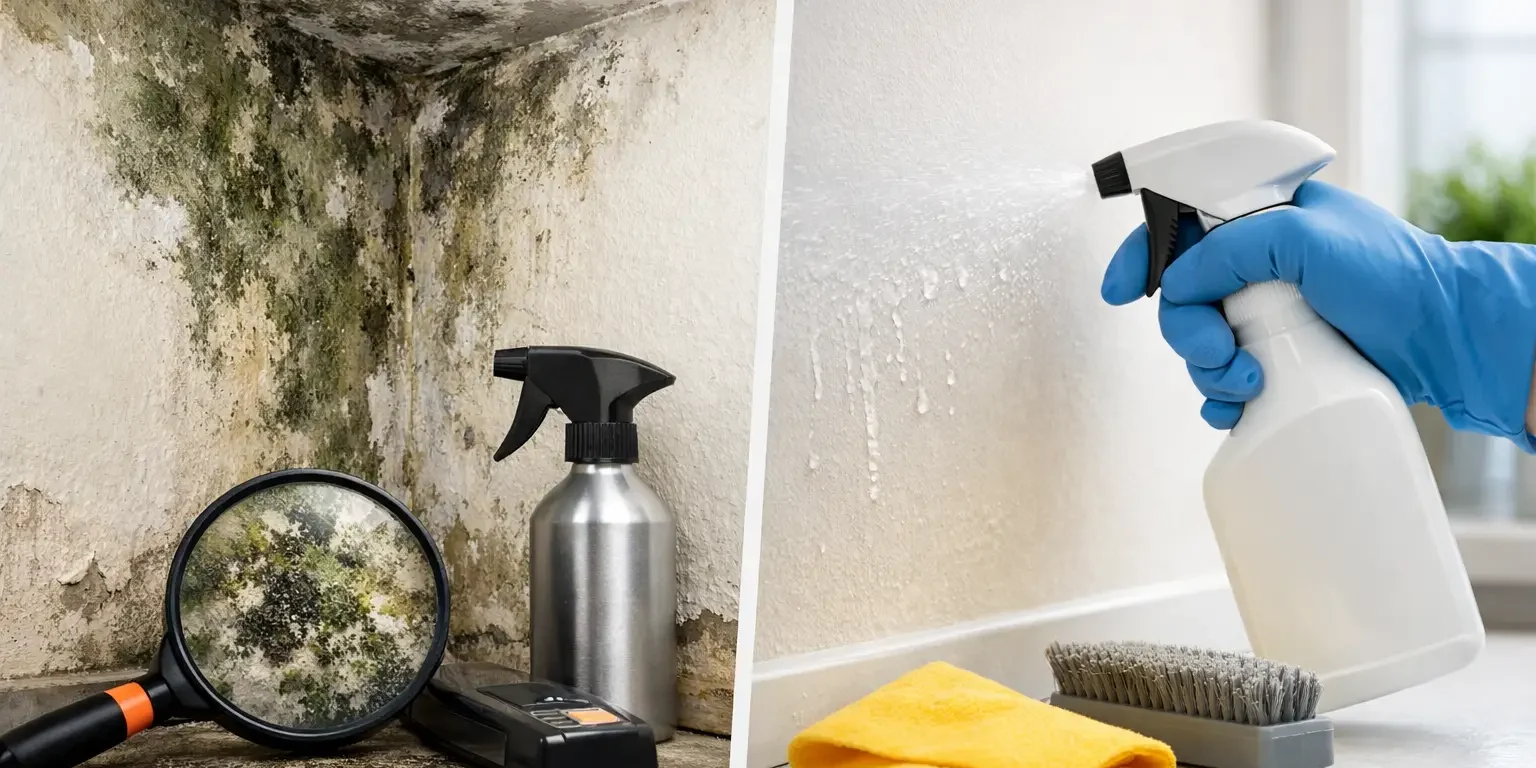
Small, isolated surface growth on a nonporous material may be addressed with careful cleaning and complete drying, provided the moisture source has been corrected. Even then, avoid dry scraping or aggressive brushing that can spread particles into the air. Porous materials such as drywall, insulation, carpet, and ceiling tiles are more difficult because growth can extend below the surface.
Do not paint over staining or apply fragrance products to cover odors. These methods may change the appearance of the room, but they do not remove contamination or dry wet materials. Bleach is also not a universal solution, particularly on porous surfaces, where it may not reach growth within the material and can leave excess moisture behind.
Professional help is especially appropriate when growth keeps returning, the affected area is extensive, water damage involved multiple rooms, occupants have respiratory sensitivities, or the source cannot be located. Commercial properties and rental buildings also require a disciplined response because tenant, employee, and operational concerns can escalate quickly.
Stop the Conditions That Allow Mold to Return
Effective remediation follows a straightforward order: locate the moisture source, correct it, contain and remove affected materials where needed, clean remaining surfaces using appropriate procedures, and verify that the area is dry before rebuilding. Skipping the first step is the costliest mistake.
For property owners, the practical prevention work includes repairing leaks promptly, keeping gutters and exterior drainage directed away from the foundation, maintaining bathroom and dryer ventilation, monitoring humidity, and checking areas beneath sinks and around appliances. After a water event, document the damage and act quickly rather than waiting for an odor or visible staining.
Certified Mold Removal Inc. approaches mold concerns with that same source-first mindset. A qualified inspection can separate a minor surface condition from hidden moisture damage and provide a clear remediation plan based on the actual building conditions.
If a stain is growing, an odor persists, or water damage was never fully assessed, treat it as a building moisture issue first. A timely, standards-based evaluation protects the people using the space and helps prevent a manageable repair from becoming a larger restoration project.